I sat down with former FBI agent Michael de la Peña to discuss the investigation into the 9/11 hijackers in Boston. During the 9/11 response, Michael and his partner were involved in reconstructing the hijackers’ movements in Boston and were the first to identify the hotel where Mohammed Atta and other members of the team had stayed.
We talked about how the investigation began, including the leads that came through the FBI hotline from people who recognized the hijackers, as well as the many interviews investigators conducted with people who had interacted with them.

Visualizzazione post con etichetta interviews. Mostra tutti i post
Visualizzazione post con etichetta interviews. Mostra tutti i post
2026/09/25

2026/09/01
Journalist David Burns on Covering 9/11 at Ground Zero
For the 25th anniversary of 9/11, I had the chance to interview journalist and photojournalist David Burns, who was at Ground Zero covering the aftermath of the attacks on the World Trade Center.
We talked about his memories of September 11, what he witnessed at Ground Zero and how covering one of the most consequential events in modern history affected him as a journalist.
David also shares his perspective, informed by his later experience as an EMT, on the response of first responders and on how preparedness has evolved since 9/11.
We talked about his memories of September 11, what he witnessed at Ground Zero and how covering one of the most consequential events in modern history affected him as a journalist.
David also shares his perspective, informed by his later experience as an EMT, on the response of first responders and on how preparedness has evolved since 9/11.
2026/07/21
Former FBI Special Agent Scott Decker Breaks Down the Amerithrax Investigation
In this interview, I speak with former FBI Special Agent Scott Decker about one of the most fascinating and complex criminal investigations in modern American history: Amerithrax.
In the weeks following 9/11, the United States was struck by a series of deadly anthrax attacks that killed five people, sickened seventeen others, and triggered one of the largest investigations ever conducted by the FBI.
During our conversation, we discuss how the investigation began, why investigators initially considered al-Qaeda as a possible suspect, how the FBI developed groundbreaking microbial forensic techniques to trace the anthrax spores, and why the investigation ultimately focused on Bruce Ivins.
In the weeks following 9/11, the United States was struck by a series of deadly anthrax attacks that killed five people, sickened seventeen others, and triggered one of the largest investigations ever conducted by the FBI.
During our conversation, we discuss how the investigation began, why investigators initially considered al-Qaeda as a possible suspect, how the FBI developed groundbreaking microbial forensic techniques to trace the anthrax spores, and why the investigation ultimately focused on Bruce Ivins.
2026/06/24
Responding to United 93 in the Aftermath of 9/11 with Former Red Cross Volunteer Cynthia Defibaugh
On September 11, 2001, United Airlines Flight 93 crashed near Shanksville, Pennsylvania, after passengers fought back against the hijackers.
In this interview, former Red Cross volunteer Cynthia Defibaugh shares her firsthand experiences responding to the crash in the aftermath of 9/11. We discuss her deployment to Shanksville, the work carried out by relief organizations, the memorials that were held, her interactions with the families of the victims, and the lasting impact the experience has had on her life.
More than two decades later, Cynthia offers a unique perspective on the response to Flight 93 and the human side of one of the most significant events in modern history.
In this interview, former Red Cross volunteer Cynthia Defibaugh shares her firsthand experiences responding to the crash in the aftermath of 9/11. We discuss her deployment to Shanksville, the work carried out by relief organizations, the memorials that were held, her interactions with the families of the victims, and the lasting impact the experience has had on her life.
More than two decades later, Cynthia offers a unique perspective on the response to Flight 93 and the human side of one of the most significant events in modern history.
2026/04/03
Inside the 9/11 Response with Former FDNY Fire Chief Richard Alles
I sat down with former FDNY Deputy Fire Chief Richard Alles, who was on the front lines during 9/11, for a conversation in which he shares a detailed, firsthand account of that day: what he saw and the reality of responding to an unprecedented tragedy.
We also talk about the aftermath, the long-term impact of toxic exposure at Ground Zero, and why he continues to advocate for the rights of first responders who are still suffering the consequences today, even decades later.
We also talk about the aftermath, the long-term impact of toxic exposure at Ground Zero, and why he continues to advocate for the rights of first responders who are still suffering the consequences today, even decades later.
2026/01/16
Inside Iraq: Intelligence from the Ground with Retired FBI Special Agent Robert Clifford
In this interview, retired FBI Special Agent Robert F. Clifford shares his firsthand experience working in Iraq after the 2003 invasion.
We talk about intelligence and counterterrorism on the ground, collaboration with Iraqi authorities, interagency dynamics with U.S. forces, the rise of al-Qaeda in Iraq, foreign fighters, early warning signs of ISIS, and the mistakes and lessons that still matter today.
A rare, ground-level perspective on Iraq — beyond headlines and hindsight.
We talk about intelligence and counterterrorism on the ground, collaboration with Iraqi authorities, interagency dynamics with U.S. forces, the rise of al-Qaeda in Iraq, foreign fighters, early warning signs of ISIS, and the mistakes and lessons that still matter today.
A rare, ground-level perspective on Iraq — beyond headlines and hindsight.
2025/09/11
World Trade Center: an interview with survivor Mikaila Cruz
An Italian translation is available here.

For this anniversary, we are offering our readers the personal account of survivor Mikaila Cruz, who escaped from Tower Two after the first plane hit. Mikaila's powerful testimony perfectly conveys the sense of chaos and despair lived by those who witnessed or survived this tragedy.
We would like to thank Mikaila for her kindness and willingness to help.
Undicisettembre: What happened to you on 9/11? Can you give me a general account of what you saw and lived on that day?
Mikaila Cruz: At that time I worked in Tower Two and I was not supposed to be in the building until 9:15, but I was asked to handle a presentation that was being given by the equity managers and bond managers of the company that I was working for, which was a fiduciary trust, an institutional bank. I got there at 8:30 and there were only a few people in the office, in the elevator there were probably six or seven IT professionals that were going to the 98th floor. My office was on the 95th floor, when I got off the elevator and I got to my desk my ex boyfriend called me on the phone. It was around 8:40, he asked me how my day was going and I said “I don't want to talk” because I had broken up with him.

I hung up the phone and then I heard the roar of an airplane engine. When the plane hit I didn't know it was a plane, I thought it was like a bomb. Someone from the opposite side of my floor said “We have to get out of here, I think a plane just hit Tower One”. The windows were from floor to ceiling and the impact shattered them and all of a sudden I felt wind come in from outside, so I immediately grabbed my briefcase, with my laptop still inside, and my purse and I ran towards the stairs. My coworker Lori grabbed me and pulled me into the elevator, I said “In an emergency situation, we cannot take the elevator.” and she said “No, we have to.” We went into the elevator together with another colleague by the name of Andrew and we descended to the 90th floor which housed the legal department and human resources. Another person we knew, Dave, ran in, I looked out into the hallway and I saw people running or being on their phones screaming; nobody came into the elevator, they were just panicked. The elevator doors closed, we went to the 78th floor which was a main elevator bank.
As we got out of the elevator, Andrew and Dave went into other elevators while Lori and I went to one that was directly across from us which had so many people that were pushing each other into it till someone said “No more people, no more people”. We got down to the lobby and Lori ran towards Liberty Street, when she run outside there were burning papers all over and a steel beam on the ground. There were firefighters and a lot of police officers trying to get people away from the building. I looked to my right and I saw my former manager Chris, the one who asked me to come in early that day, so he was already there. He said “Thank God, you're okay”. I called my manager Joanie, who was working from home, and she said “Oh my God, a plane just hit. Get out of the building.” I saw my coworker Roxanne walk into the elevator and I pulled her out, she said “Port Authority said there’s nothing wrong with Tower 2 and that we can get back to work”, I said “No, go home. Go home”.
As soon as I walked out of the building my friend Pete, who was living in Chicago, called me on the phone and said “Are you okay? What happened?” I said “I don't know. I think a plane just hit” My phone went dead and I heard another roar of an airplane engine, and when it hit Tower 2 there was complete pandemonium. People were running for their lives and I was knocked to the ground into a steel barricade that was there. Andrew saw me and he picked me up. When I looked up, I started to see people jumping out of Tower 1. I just got silent, I was looking and I was in shock. He grabbed me and said “We have to go to South Street Seaport.” We went to South Street Seaport and there were many people already. People were on the line online to use the pay phone, because nobody's phone was working. I had a PalmPilot back then, so I emailed my ex boyfriend and said “I'm okay, please let my mom and my brother know that I'm okay.” I was there waiting for Andrew to come back because he was trying to get in touch with his family. After he spoke to his sister and someone else I called him over and at that point the second tower started to collapse. At first it looked like the entire building was going to fall on itself, but then the debris started coming through the streets, and we were hit by a cloud of dust. We were knocked to the ground covered in debris, smoke and dirt. We got back up and we started walking. When we got to 20th Street there were people who were putting cups of water out there on a table for people like us who were walking and trying to get home. Andrew and I just sat there and he said “Do you have any money? Because I need to take the ferry to New Jersey”. I only had 2 dollars in my wallet and I gave them to him. We got to 35th Street and Third Avenue, he went to the entrance of the ferry and I got into a cab to go home.
I told the cab driver “I have no money. I'll go to an ATM.” and he said “That's okay. Don’t worry about it”. Miraculously enough the cab was new. People around us were jumping on top of cars trying to get inside but nobody noticed this cab, it was just by itself. We went over the bridge and he said “You're my first ride today”. I was so angry because I couldn't get in touch with my family, I was confused and I said “I don't care if it's your first ride, I really don't have any money, I'm sorry.” He said “Don’t worry, take care of yourself.” When I looked at the date of his license, it said September 11, 2001, so that really was his first ride ever.
I got to my mom’s home in Astoria, Queens around three o'clock that afternoon. My brother opened the door and he couldn't believe that I was there, he thought he was dreaming and he hugged me. My mom, who was working a few blocks away, thought that I had died when the second tower collapsed. She came home 15 minutes later and she also hugged me.
Undicisettembre: What did you do on the next days? Because, of course, you cannot go back to work to your office.
Mikaila Cruz: The next day I slept until like 11:30, my brother woke me up and he gave me a piece of paper with a phone number on it, it was the Port Authority phone number because they wanted me to call them to account for myself. That was required for all people who worked in the two buildings. So that's what I did as soon as I woke up.
Then I got into the shower and I had blisters on my feet, I was a mess. When I came out I started coughing up blood, I started feeling like something was in my throat and in my lungs.
Undicisettembre: How and when did your life get back to normalcy or a new normalcy? What happened to you after 9/11?
Mikaila Cruz: In the months before 9/11 my company was bought out by a mutual fund company in Florida. After 9/11 most of the people were moved to Short Hills, New Jersey, because that's where the servers were, but nobody called me, nobody asked if I needed to work. I was just in limbo. Then two weeks later, the CFO called me and he said “Could you come down to Florida to handle disaster recovery? Because there's nobody else that can do this but you and this other guy, Matthew”. We both went down to Florida on October 6, and I decided to move down there. While in Florida I left the company after one year and started a mortgage business with my then husband. I stayed there for the next 12 years before moving back to New York.

Undicisettembre: Do you have long standing health issues after 9/11?
Mikaila Cruz: Yes, I have chronic bronchitis from 9/11. When I had COVID and I was in ICU my lung capacity went down to 30%, because I had lung issues from 9/11 and COVID only made it worse. So, yes: there were and there still are problems with my lungs.
Undicisettembre: When did you go back to Ground Zero for the first time after 9/11?
Mikaila Cruz: On October, 11. They were still doing the cleanup. My friend Rose, who I used to work with, met me there and she said “Are you sure you can do this?” I said “Yeah, I need to do this.” We walked to the side of the site where nobody of the responders could see us, we kind of like snuck in between the fence just to see, but a firefighter came over and said “I don’t want you here, you should leave, there's a lot of dust” and we left. But I did go there pretty soon after the event.
Undicisettembre: Have you been to the 9/11 Memorial & Museum?
Mikaila Cruz: Yes, I'm friends with the curator. When they decided to come up with the idea of the museum, we consulted and it sounded amazing. I went there with my best friend Jen who is also a survivor. Everything was great, except for the fact that when you go in you hear the voices of the people from the planes and from the buildings; I think that that's something that should be heard on a headset or a personal phone, not when you walk through a museum, especially when you're directly involved with the tragedy.
Undicisettembre: What do you think of the Plaza with the two fountains and the Oculus, and what they did there?
Mikaila Cruz: They could not have done a better job. It shows. A lot people like some of my family members, when they come here from the Philippines or from other states, say that they feel something and I totally agree. I believe that, there are memories. There are so many strong memories that people had there and the way they passed was so tragic that you can only wonder what they were thinking or what they were feeling, and the water just represents purity. And I love that.
Undicisettembre: Other than the health issues, how does 9/11 affect your everyday life even today, if it does?
Mikaila Cruz: 9/11 doesn't affect my everyday life. It affects my life on the anniversary. On the anniversary to honor my friends I turn off my phone, I don't go on my computer, I don't connect with anybody until 3 o’clock which is when I got to my mom's house and I saw my family.
Undicisettembre: Do you think the city is still coping with this wound, or has it moved on?
Mikaila Cruz: No, I don't think there's any wound. I don't see it. Except on anniversaries when I walk through Manhattan and I'll see someone with a photo of a loved one that says “Never forget”. I also participate in the 9/11 Memorial Run almost every year. I didn't do it last year, but I do try to do it every year. When you get to the memorial you get very emotional, but other than that I don’t think New Yorkers themselves who are from here still feel wounded. It's always going to be there, but they don't show it.
For this anniversary, we are offering our readers the personal account of survivor Mikaila Cruz, who escaped from Tower Two after the first plane hit. Mikaila's powerful testimony perfectly conveys the sense of chaos and despair lived by those who witnessed or survived this tragedy.
We would like to thank Mikaila for her kindness and willingness to help.
Undicisettembre: What happened to you on 9/11? Can you give me a general account of what you saw and lived on that day?
Mikaila Cruz: At that time I worked in Tower Two and I was not supposed to be in the building until 9:15, but I was asked to handle a presentation that was being given by the equity managers and bond managers of the company that I was working for, which was a fiduciary trust, an institutional bank. I got there at 8:30 and there were only a few people in the office, in the elevator there were probably six or seven IT professionals that were going to the 98th floor. My office was on the 95th floor, when I got off the elevator and I got to my desk my ex boyfriend called me on the phone. It was around 8:40, he asked me how my day was going and I said “I don't want to talk” because I had broken up with him.
I hung up the phone and then I heard the roar of an airplane engine. When the plane hit I didn't know it was a plane, I thought it was like a bomb. Someone from the opposite side of my floor said “We have to get out of here, I think a plane just hit Tower One”. The windows were from floor to ceiling and the impact shattered them and all of a sudden I felt wind come in from outside, so I immediately grabbed my briefcase, with my laptop still inside, and my purse and I ran towards the stairs. My coworker Lori grabbed me and pulled me into the elevator, I said “In an emergency situation, we cannot take the elevator.” and she said “No, we have to.” We went into the elevator together with another colleague by the name of Andrew and we descended to the 90th floor which housed the legal department and human resources. Another person we knew, Dave, ran in, I looked out into the hallway and I saw people running or being on their phones screaming; nobody came into the elevator, they were just panicked. The elevator doors closed, we went to the 78th floor which was a main elevator bank.
As we got out of the elevator, Andrew and Dave went into other elevators while Lori and I went to one that was directly across from us which had so many people that were pushing each other into it till someone said “No more people, no more people”. We got down to the lobby and Lori ran towards Liberty Street, when she run outside there were burning papers all over and a steel beam on the ground. There were firefighters and a lot of police officers trying to get people away from the building. I looked to my right and I saw my former manager Chris, the one who asked me to come in early that day, so he was already there. He said “Thank God, you're okay”. I called my manager Joanie, who was working from home, and she said “Oh my God, a plane just hit. Get out of the building.” I saw my coworker Roxanne walk into the elevator and I pulled her out, she said “Port Authority said there’s nothing wrong with Tower 2 and that we can get back to work”, I said “No, go home. Go home”.
As soon as I walked out of the building my friend Pete, who was living in Chicago, called me on the phone and said “Are you okay? What happened?” I said “I don't know. I think a plane just hit” My phone went dead and I heard another roar of an airplane engine, and when it hit Tower 2 there was complete pandemonium. People were running for their lives and I was knocked to the ground into a steel barricade that was there. Andrew saw me and he picked me up. When I looked up, I started to see people jumping out of Tower 1. I just got silent, I was looking and I was in shock. He grabbed me and said “We have to go to South Street Seaport.” We went to South Street Seaport and there were many people already. People were on the line online to use the pay phone, because nobody's phone was working. I had a PalmPilot back then, so I emailed my ex boyfriend and said “I'm okay, please let my mom and my brother know that I'm okay.” I was there waiting for Andrew to come back because he was trying to get in touch with his family. After he spoke to his sister and someone else I called him over and at that point the second tower started to collapse. At first it looked like the entire building was going to fall on itself, but then the debris started coming through the streets, and we were hit by a cloud of dust. We were knocked to the ground covered in debris, smoke and dirt. We got back up and we started walking. When we got to 20th Street there were people who were putting cups of water out there on a table for people like us who were walking and trying to get home. Andrew and I just sat there and he said “Do you have any money? Because I need to take the ferry to New Jersey”. I only had 2 dollars in my wallet and I gave them to him. We got to 35th Street and Third Avenue, he went to the entrance of the ferry and I got into a cab to go home.
I told the cab driver “I have no money. I'll go to an ATM.” and he said “That's okay. Don’t worry about it”. Miraculously enough the cab was new. People around us were jumping on top of cars trying to get inside but nobody noticed this cab, it was just by itself. We went over the bridge and he said “You're my first ride today”. I was so angry because I couldn't get in touch with my family, I was confused and I said “I don't care if it's your first ride, I really don't have any money, I'm sorry.” He said “Don’t worry, take care of yourself.” When I looked at the date of his license, it said September 11, 2001, so that really was his first ride ever.
I got to my mom’s home in Astoria, Queens around three o'clock that afternoon. My brother opened the door and he couldn't believe that I was there, he thought he was dreaming and he hugged me. My mom, who was working a few blocks away, thought that I had died when the second tower collapsed. She came home 15 minutes later and she also hugged me.
Undicisettembre: What did you do on the next days? Because, of course, you cannot go back to work to your office.
Mikaila Cruz: The next day I slept until like 11:30, my brother woke me up and he gave me a piece of paper with a phone number on it, it was the Port Authority phone number because they wanted me to call them to account for myself. That was required for all people who worked in the two buildings. So that's what I did as soon as I woke up.
Then I got into the shower and I had blisters on my feet, I was a mess. When I came out I started coughing up blood, I started feeling like something was in my throat and in my lungs.
Undicisettembre: How and when did your life get back to normalcy or a new normalcy? What happened to you after 9/11?
Mikaila Cruz: In the months before 9/11 my company was bought out by a mutual fund company in Florida. After 9/11 most of the people were moved to Short Hills, New Jersey, because that's where the servers were, but nobody called me, nobody asked if I needed to work. I was just in limbo. Then two weeks later, the CFO called me and he said “Could you come down to Florida to handle disaster recovery? Because there's nobody else that can do this but you and this other guy, Matthew”. We both went down to Florida on October 6, and I decided to move down there. While in Florida I left the company after one year and started a mortgage business with my then husband. I stayed there for the next 12 years before moving back to New York.
Undicisettembre: Do you have long standing health issues after 9/11?
Mikaila Cruz: Yes, I have chronic bronchitis from 9/11. When I had COVID and I was in ICU my lung capacity went down to 30%, because I had lung issues from 9/11 and COVID only made it worse. So, yes: there were and there still are problems with my lungs.
Undicisettembre: When did you go back to Ground Zero for the first time after 9/11?
Mikaila Cruz: On October, 11. They were still doing the cleanup. My friend Rose, who I used to work with, met me there and she said “Are you sure you can do this?” I said “Yeah, I need to do this.” We walked to the side of the site where nobody of the responders could see us, we kind of like snuck in between the fence just to see, but a firefighter came over and said “I don’t want you here, you should leave, there's a lot of dust” and we left. But I did go there pretty soon after the event.
Undicisettembre: Have you been to the 9/11 Memorial & Museum?
Mikaila Cruz: Yes, I'm friends with the curator. When they decided to come up with the idea of the museum, we consulted and it sounded amazing. I went there with my best friend Jen who is also a survivor. Everything was great, except for the fact that when you go in you hear the voices of the people from the planes and from the buildings; I think that that's something that should be heard on a headset or a personal phone, not when you walk through a museum, especially when you're directly involved with the tragedy.
Undicisettembre: What do you think of the Plaza with the two fountains and the Oculus, and what they did there?
Mikaila Cruz: They could not have done a better job. It shows. A lot people like some of my family members, when they come here from the Philippines or from other states, say that they feel something and I totally agree. I believe that, there are memories. There are so many strong memories that people had there and the way they passed was so tragic that you can only wonder what they were thinking or what they were feeling, and the water just represents purity. And I love that.
Undicisettembre: Other than the health issues, how does 9/11 affect your everyday life even today, if it does?
Mikaila Cruz: 9/11 doesn't affect my everyday life. It affects my life on the anniversary. On the anniversary to honor my friends I turn off my phone, I don't go on my computer, I don't connect with anybody until 3 o’clock which is when I got to my mom's house and I saw my family.
Undicisettembre: Do you think the city is still coping with this wound, or has it moved on?
Mikaila Cruz: No, I don't think there's any wound. I don't see it. Except on anniversaries when I walk through Manhattan and I'll see someone with a photo of a loved one that says “Never forget”. I also participate in the 9/11 Memorial Run almost every year. I didn't do it last year, but I do try to do it every year. When you get to the memorial you get very emotional, but other than that I don’t think New Yorkers themselves who are from here still feel wounded. It's always going to be there, but they don't show it.
2025/04/04
Intervista all'ex agente speciale dell'FBI Mark Rossini sugli attentati contro le ambasciate in Africa del 1998
di Leonardo Salvaggio
Ho invitato nuovamente l'ex agente speciale dell'FBI Mark Rossini sul mio canale YouTube per un'intervista sugli attentati di al-Qaeda contro le ambasciate americane a Nairobi (in Kenya) e Dar es Salaam (in Tanzania) del 1998. Rossini è stato uno degli investigatori che hanno indagato su questo caso e quindi racconta la sua esperienza personale, oltre agli errori di intelligence che hanno permesso che gli attentati potessero avvenire.
Ho invitato nuovamente l'ex agente speciale dell'FBI Mark Rossini sul mio canale YouTube per un'intervista sugli attentati di al-Qaeda contro le ambasciate americane a Nairobi (in Kenya) e Dar es Salaam (in Tanzania) del 1998. Rossini è stato uno degli investigatori che hanno indagato su questo caso e quindi racconta la sua esperienza personale, oltre agli errori di intelligence che hanno permesso che gli attentati potessero avvenire.
2025/02/21
Intervista all'ex Agente Speciale Supervisore dell'FBI Chris Anglin
di Leonardo Salvaggio
Ho invitato sul mio canale YouTube l'ex Agente Speciale Supervisore dell'FBI Chris Anglin per un'intervista. Anglin ha fatto parte di varie Join Terrorism Task Force e dopo l'11/9 ha lavorato sul reperimento di informatori, attività che ha portato all'arresto di terroristi di al-Qaeda di alto profilo. In seguito è stato inviato a Guantanamo come interrogatore.
L'intervista è disponibile solo in inglese.
Ho invitato sul mio canale YouTube l'ex Agente Speciale Supervisore dell'FBI Chris Anglin per un'intervista. Anglin ha fatto parte di varie Join Terrorism Task Force e dopo l'11/9 ha lavorato sul reperimento di informatori, attività che ha portato all'arresto di terroristi di al-Qaeda di alto profilo. In seguito è stato inviato a Guantanamo come interrogatore.
L'intervista è disponibile solo in inglese.
2024/09/11
World Trade Center: an interview with survivor and activist Anne Marie Principe
by Leonardo Salvaggio. An Italian translation in available here.

For the twenty-third anniversary of 9/11, Undicisettembre is offering its readers the personal account of survivor Anne Marie Principe. Anne Marie was on her way to her office near the World Trade Center when the first plane struck. After surviving the attacks, she became an advocate for healthcare treatments and co-founded Affinity Healthcare Advocates (AHA), an organization dedicated to raising funds for 9/11 survivors' medical treatments and advocating for state and federal coverage of the healthcare costs associated with illnesses caused by the attacks.
Donations to support AHA are welcome and can be done at this address.
We would like to thank Anne Marie Principe for what she does and for her availability and willingness to help.
Undicisettembre: Can you give us a general account of what you saw and experienced on 9/11?
 Anne Marie Principe: At that time I had a small business on Greenwich Street, which was several blocks up from the towers. I came in on the ferry that morning, it was beautiful and perfect morning. There was a blue sky like we never see it here in New York City. As I was walking up the street, I heard the first plane hit, even if it didn't see it. I remained in the street with other people, we were all looking up, watching the hole in the tower with the smoke coming out and trying to figure out what it was.
We could not tell it was an airliner. We could only see a gaping hole in the building. There were birds on fire. People in the towers started to break windows, probably to breathe, to get air. The we saw something coming out of those windows. Initially, we thought it was furniture being thrown from the openings, then we realized it was people jumping.
Fifteen minutes later, we saw the second plane coming, but in a situation like that your brain does not compute what you are seeing. It was impossible to understand what was happening. At that moment it became apparent that this was intentional and that also the first one, as this second one, was an airliner and not a small aircraft. I remained in the streets, probably from shock. Before we had realized it was intentional we were all curious what it was and that people were okay, but the second plane changed it all: people were just heated screaming in shock, it was indescribable and all you could hear were sirens. To this day if I hear a continuous siren it unsettles me, it bothers me.
We saw rescuers coming to the scene, they weren't even talking to one another, they were concerned about running into that building to get people out, there wasn't time for them to talk or to stop.
There were lots of horrific things that we witnessed and we remained watching this in horror. That went on until we felt the ground shake beneath our feet. It was a sound like a freight train. We looked up and we saw the South Tower like it was melting. This also was incomprehensible: it just came down, it collapsed and debris flew everywhere. When the first tower came down people went quiet for the chaos and again all you could hear were sirens and horns going off.
I was not hit but I was covered in dust. There was another ferry location north of the World Trade Center and I started to walk four miles to get out of the city and take another ferry. While I was walking we felt and heard the second tower collapsing, we turned around and saw the North Tower was no longer there. It was gone. It had vanished. That was startling, to look and to see that these two tall powerful structures no longer existed. They were just smoking dust.
Once we got across the water to the landing we could still see what was going on. They kept us there at that site because at that time no one really knew. Were there other planes coming in? What will happen next? They didn't have information so they shut the roads down both for emergency vehicles to get through and for people to remain safe. So they didn't release us until about 4:30 or 5 o'clock that night. We couldn't get through to our families because the cellphone units were on top of the towers, so our cell phones and radios all went silent. Moreover of course many people were trying to make phone calls and it literally overloaded the system. So my family did not know that I was still alive.
I went to the emergency room immediately after and it didn't matter what they gave me, my body and my mind were so traumatized I just couldn't stop shaking.
I went back to the city the next day, and all the days after because it was my company and I didn't know what else to do. This had been my successful small business for many years. I had a lease, I had people I was responsible to, so I went in everyday hoping to recover, but that was not to come for us. On the contrary we almost begun to get sick immediately. You can hear my voice, my vocal cords were damaged by the dust. They were so irritated and burned, that it impacts my voice to this day.

Undicisettembre: How did you restart your company after 9/11?
Anne Marie Principe: I'm still not sure how we did anything. We had no phone lines, we had no internet, we had no access and our mail was even anthraxed so we couldn't get mail. It was almost impossible to run a business and that was how I came to form a small business lobby with some other small businesses. This amazing attorney named Jeannine Chanes stepped forward to help us form officially a small business lobby and we began to talk to our city council, our senators and our congress people to try to get our streets open and our phone lines back.
Those government agencies had no guideline for how to help us or what to do. They had to restore sewers which were over 100 years old, all the phone lines had to be restored too and this was New York, a city of 8 million people and 12,000 small businesses downtown alone without counting the residents. It was a monumental task for them. When the towers came down, they shook the surrounding areas so badly that they had also to ensure that the other buildings were safe for people to go into.
9/11 changed me forever, it was an incredible catalyst for change. When something that horrific happens to you people will say you don't have a choice, but indeed you do have a choice. You can either collapse, do nothing and fall into despair, or you can choose to go on and to do something. I felt so powerless. We all had lost businesses, colleagues, friends, and our city looked like it was bombed. You're in ruins and for me being able to do something gave me back that feeling of power that there was something I could do to help fix this, to make the change.
Undicisettembre: Would you like to tell us to tell us something about what you do now as an advocate for healthcare? Because you're still very involved with this, so I think it's very relevant.
Anne Marie Principe: While I was trying to get my business up and running again the things that were important to me had completely changed and I realized that the work that I was doing, which was successful, didn't make a difference and I wanted to make the difference. So I started to advocate for healthcare; there was a clinic downtown funded by Tom Cruise that was treating people, I worked with that foundation for some time raising funds to help other people get treated. I just found the place that I was supposed to be, I found something I was very good at. It was something that meant a lot to me and to other people.
It helped me to heal mental health wise, it made a tremendous difference for me and on how I see things. There are serious mental health issues in my community. These were civilians that were basically in a war zone that was under attack and people don't know how to cope with that. So finding ways to get people treated physically and mentally was very important to me.
I began to work with Capitol Hill a lot, because those people had the most power to create that change to pass bills to fund healthcare. Most recently, I've been working with a veterans coalition of fifty organizations of first responders, survivors and veterans who also experienced serious mental health issues, PTSD or suicidal tendencies. We have found that psychedelics are some of the most incredible treatment options for mental health and that they are literally a cure. It's very hard to go to therapy and repeat your horrific story to a therapist week after week, so antidepressants and psychiatry alone are not a fix. Right now we have a psychedelic bill moving through Congress and it does look like it's going to pass, it will be a historic bill and it will reschedule psychedelics for mental health treatments.
Undicisettembre: So you're also in touch with a lot of other 9/11 survivors. Do you guys ever ask about it? What are other people's accounts like?
Anne Marie Principe: We have two ceremonies every year, on September 11 and May 30, because that was the closing of what we call "the pit". What was left of the towers was just a giant pit several stories down, I can't even describe to you how vast it was, where they had dug out all of the debris and cleaned the area so that it could be rebuilt. So May 30 and September 11 every year the first responders, survivors and residents come together at Ground Zero to meet and remember. There is peace amongst us given by the fact that you are with someone who completely understands what you went through, what you feel and what you continue to go through. Because this doesn't end for us, it just doesn't. We are all sick and there are more than 6000 people that have died from the toxic dust since that day.
I have a text chain with six or seven female responders. One of the interesting things that I found, being one myself, is that women are often left out of the conversation. People don't acknowledge that the women were there helping and working on the pile, taking care of people bandages, food, any kind of service. The women were there as well and they are often forgotten and left out of many of the healthcare discussions.
There are reproductive issues and fertility issues, our cancers were only included in the program 10 years after men's particular issues were taken care of. We are not really represented on the committee for the healthcare program and this is something that we often speak about: how do we address that? The next thing I'm looking to do is to correct that piece of injustice.
There were pregnant women on 9/11, those women gave birth to children who are now sick and from it and the government will not recognize that. Those children have issues with their bones and their lungs, they're not as tall as other children, they have cognitive issues. This is also part of what I do, we call it "The sisterhood of Ground Zero". These women are coming together and saying "We have to advocate for ourselves. We have to find all the other women and make sure our voices are heard." It took us over a decade for those women to be covered and there are women who have already passed.
Undicisettembre: What do you think about how the government reacted in the first place? I see you are somehow criticizing but I think that probably this needs to be elaborated.
Anne Marie Principe: Initially, I concede that nobody knew what to do. How do you know what to do when something like this happens? What do you do? Where do you start? They just didn't even know where to begin. But my greater understanding came as we started to do hearings at the City Hall and at Capitol Hill, they were denying that we were getting sick.
The EPA, Environmental Protection Agency, lied when they said the air was safe, I was actually at the hearing on Capitol Hill when they finally admitted they didn't even have equipment that could measure what we were hit with. Rather than say "Our equipment can't even measure this" they were just like "You know what? We don't understand this. Let's just say it's okay."
Intellectually, I get they made a conscious choice to send us back in. They needed to show that New York City was strong and it was going to recover. Wall Street is the financial capital of the world and you couldn't let it fall. So we were the price that was paid, it was the need of the few versus the need of the many. Emotionally, I think "Have you intentionally sent us back in and you asked us to pay a price but then you're not willing to cover that cost?" The city didn't want to cover it, the state didn't want to cover it, nobody wanted to cover it and finally it became an issue with the federal government. Getting Congress and Senate to approve those funds took nearly 10 years. In that time many people passed from their illnesses.
Had they initially had us do chelation, take medications or supplements, it probably would have saved many lives. For myself, I had done a detox program to get the toxins out of my body. It wasn't until 2018 that I developed my cancer and I believe that that detox extended and saved my life. I don't know if I'd still be here without that detoxification. It is disappointing to me that we still have to fight our government to take care of us. It feels like a calling.
Undicisettembre: How does 9/11 affect your everyday life?
Anne Marie Principe: It is something I am forced to think about. My voice is a constant reminder, my breathing irritates when the air quality is not good and I can't leave my house on those days. We send alerts to each other when the air quality is poor to remind others not to go outside. I had a brain tumor that had to be removed, in 2018 I developed a breast cancer and a few weeks ago I finished my eleventh surgery.
My body bears the scars of 23 years. Waking up in the morning and breathing alone is a constant reminder of 9/11. It doesn't end for us. The needs of my community are important to me and I do believe doing something positive and proactive is empowering. I will not stop my work until this is made right.
For the twenty-third anniversary of 9/11, Undicisettembre is offering its readers the personal account of survivor Anne Marie Principe. Anne Marie was on her way to her office near the World Trade Center when the first plane struck. After surviving the attacks, she became an advocate for healthcare treatments and co-founded Affinity Healthcare Advocates (AHA), an organization dedicated to raising funds for 9/11 survivors' medical treatments and advocating for state and federal coverage of the healthcare costs associated with illnesses caused by the attacks.
Donations to support AHA are welcome and can be done at this address.
We would like to thank Anne Marie Principe for what she does and for her availability and willingness to help.
Undicisettembre: Can you give us a general account of what you saw and experienced on 9/11?
We could not tell it was an airliner. We could only see a gaping hole in the building. There were birds on fire. People in the towers started to break windows, probably to breathe, to get air. The we saw something coming out of those windows. Initially, we thought it was furniture being thrown from the openings, then we realized it was people jumping.
Fifteen minutes later, we saw the second plane coming, but in a situation like that your brain does not compute what you are seeing. It was impossible to understand what was happening. At that moment it became apparent that this was intentional and that also the first one, as this second one, was an airliner and not a small aircraft. I remained in the streets, probably from shock. Before we had realized it was intentional we were all curious what it was and that people were okay, but the second plane changed it all: people were just heated screaming in shock, it was indescribable and all you could hear were sirens. To this day if I hear a continuous siren it unsettles me, it bothers me.
We saw rescuers coming to the scene, they weren't even talking to one another, they were concerned about running into that building to get people out, there wasn't time for them to talk or to stop.
There were lots of horrific things that we witnessed and we remained watching this in horror. That went on until we felt the ground shake beneath our feet. It was a sound like a freight train. We looked up and we saw the South Tower like it was melting. This also was incomprehensible: it just came down, it collapsed and debris flew everywhere. When the first tower came down people went quiet for the chaos and again all you could hear were sirens and horns going off.
I was not hit but I was covered in dust. There was another ferry location north of the World Trade Center and I started to walk four miles to get out of the city and take another ferry. While I was walking we felt and heard the second tower collapsing, we turned around and saw the North Tower was no longer there. It was gone. It had vanished. That was startling, to look and to see that these two tall powerful structures no longer existed. They were just smoking dust.
Once we got across the water to the landing we could still see what was going on. They kept us there at that site because at that time no one really knew. Were there other planes coming in? What will happen next? They didn't have information so they shut the roads down both for emergency vehicles to get through and for people to remain safe. So they didn't release us until about 4:30 or 5 o'clock that night. We couldn't get through to our families because the cellphone units were on top of the towers, so our cell phones and radios all went silent. Moreover of course many people were trying to make phone calls and it literally overloaded the system. So my family did not know that I was still alive.
I went to the emergency room immediately after and it didn't matter what they gave me, my body and my mind were so traumatized I just couldn't stop shaking.
I went back to the city the next day, and all the days after because it was my company and I didn't know what else to do. This had been my successful small business for many years. I had a lease, I had people I was responsible to, so I went in everyday hoping to recover, but that was not to come for us. On the contrary we almost begun to get sick immediately. You can hear my voice, my vocal cords were damaged by the dust. They were so irritated and burned, that it impacts my voice to this day.
Undicisettembre: How did you restart your company after 9/11?
Anne Marie Principe: I'm still not sure how we did anything. We had no phone lines, we had no internet, we had no access and our mail was even anthraxed so we couldn't get mail. It was almost impossible to run a business and that was how I came to form a small business lobby with some other small businesses. This amazing attorney named Jeannine Chanes stepped forward to help us form officially a small business lobby and we began to talk to our city council, our senators and our congress people to try to get our streets open and our phone lines back.
Those government agencies had no guideline for how to help us or what to do. They had to restore sewers which were over 100 years old, all the phone lines had to be restored too and this was New York, a city of 8 million people and 12,000 small businesses downtown alone without counting the residents. It was a monumental task for them. When the towers came down, they shook the surrounding areas so badly that they had also to ensure that the other buildings were safe for people to go into.
9/11 changed me forever, it was an incredible catalyst for change. When something that horrific happens to you people will say you don't have a choice, but indeed you do have a choice. You can either collapse, do nothing and fall into despair, or you can choose to go on and to do something. I felt so powerless. We all had lost businesses, colleagues, friends, and our city looked like it was bombed. You're in ruins and for me being able to do something gave me back that feeling of power that there was something I could do to help fix this, to make the change.
Undicisettembre: Would you like to tell us to tell us something about what you do now as an advocate for healthcare? Because you're still very involved with this, so I think it's very relevant.
Anne Marie Principe: While I was trying to get my business up and running again the things that were important to me had completely changed and I realized that the work that I was doing, which was successful, didn't make a difference and I wanted to make the difference. So I started to advocate for healthcare; there was a clinic downtown funded by Tom Cruise that was treating people, I worked with that foundation for some time raising funds to help other people get treated. I just found the place that I was supposed to be, I found something I was very good at. It was something that meant a lot to me and to other people.
It helped me to heal mental health wise, it made a tremendous difference for me and on how I see things. There are serious mental health issues in my community. These were civilians that were basically in a war zone that was under attack and people don't know how to cope with that. So finding ways to get people treated physically and mentally was very important to me.
I began to work with Capitol Hill a lot, because those people had the most power to create that change to pass bills to fund healthcare. Most recently, I've been working with a veterans coalition of fifty organizations of first responders, survivors and veterans who also experienced serious mental health issues, PTSD or suicidal tendencies. We have found that psychedelics are some of the most incredible treatment options for mental health and that they are literally a cure. It's very hard to go to therapy and repeat your horrific story to a therapist week after week, so antidepressants and psychiatry alone are not a fix. Right now we have a psychedelic bill moving through Congress and it does look like it's going to pass, it will be a historic bill and it will reschedule psychedelics for mental health treatments.
 |
| Affinity Healthcare Advocates, l'associazione fondata da Anne Marie Principe |
Undicisettembre: So you're also in touch with a lot of other 9/11 survivors. Do you guys ever ask about it? What are other people's accounts like?
Anne Marie Principe: We have two ceremonies every year, on September 11 and May 30, because that was the closing of what we call "the pit". What was left of the towers was just a giant pit several stories down, I can't even describe to you how vast it was, where they had dug out all of the debris and cleaned the area so that it could be rebuilt. So May 30 and September 11 every year the first responders, survivors and residents come together at Ground Zero to meet and remember. There is peace amongst us given by the fact that you are with someone who completely understands what you went through, what you feel and what you continue to go through. Because this doesn't end for us, it just doesn't. We are all sick and there are more than 6000 people that have died from the toxic dust since that day.
I have a text chain with six or seven female responders. One of the interesting things that I found, being one myself, is that women are often left out of the conversation. People don't acknowledge that the women were there helping and working on the pile, taking care of people bandages, food, any kind of service. The women were there as well and they are often forgotten and left out of many of the healthcare discussions.
There are reproductive issues and fertility issues, our cancers were only included in the program 10 years after men's particular issues were taken care of. We are not really represented on the committee for the healthcare program and this is something that we often speak about: how do we address that? The next thing I'm looking to do is to correct that piece of injustice.
There were pregnant women on 9/11, those women gave birth to children who are now sick and from it and the government will not recognize that. Those children have issues with their bones and their lungs, they're not as tall as other children, they have cognitive issues. This is also part of what I do, we call it "The sisterhood of Ground Zero". These women are coming together and saying "We have to advocate for ourselves. We have to find all the other women and make sure our voices are heard." It took us over a decade for those women to be covered and there are women who have already passed.
Undicisettembre: What do you think about how the government reacted in the first place? I see you are somehow criticizing but I think that probably this needs to be elaborated.
Anne Marie Principe: Initially, I concede that nobody knew what to do. How do you know what to do when something like this happens? What do you do? Where do you start? They just didn't even know where to begin. But my greater understanding came as we started to do hearings at the City Hall and at Capitol Hill, they were denying that we were getting sick.
The EPA, Environmental Protection Agency, lied when they said the air was safe, I was actually at the hearing on Capitol Hill when they finally admitted they didn't even have equipment that could measure what we were hit with. Rather than say "Our equipment can't even measure this" they were just like "You know what? We don't understand this. Let's just say it's okay."
Intellectually, I get they made a conscious choice to send us back in. They needed to show that New York City was strong and it was going to recover. Wall Street is the financial capital of the world and you couldn't let it fall. So we were the price that was paid, it was the need of the few versus the need of the many. Emotionally, I think "Have you intentionally sent us back in and you asked us to pay a price but then you're not willing to cover that cost?" The city didn't want to cover it, the state didn't want to cover it, nobody wanted to cover it and finally it became an issue with the federal government. Getting Congress and Senate to approve those funds took nearly 10 years. In that time many people passed from their illnesses.
Had they initially had us do chelation, take medications or supplements, it probably would have saved many lives. For myself, I had done a detox program to get the toxins out of my body. It wasn't until 2018 that I developed my cancer and I believe that that detox extended and saved my life. I don't know if I'd still be here without that detoxification. It is disappointing to me that we still have to fight our government to take care of us. It feels like a calling.
Undicisettembre: How does 9/11 affect your everyday life?
Anne Marie Principe: It is something I am forced to think about. My voice is a constant reminder, my breathing irritates when the air quality is not good and I can't leave my house on those days. We send alerts to each other when the air quality is poor to remind others not to go outside. I had a brain tumor that had to be removed, in 2018 I developed a breast cancer and a few weeks ago I finished my eleventh surgery.
My body bears the scars of 23 years. Waking up in the morning and breathing alone is a constant reminder of 9/11. It doesn't end for us. The needs of my community are important to me and I do believe doing something positive and proactive is empowering. I will not stop my work until this is made right.
2024/09/04
Intervista alla consulente della 9/11 Commission Janice Kephart
di Leonardo Salvaggio
È disponibile sul mio canale YouTube un'intervista alla consulente della 9/11 Commission Janice Kephart, coautrice della monografia 9/11 and Terrorist Travel. Nel video parliamo di come i terroristi abbiano viaggiati negli anni precedenti agli attentati e di come abbiano avuto i visti per entrare negli USA.
È disponibile sul mio canale YouTube un'intervista alla consulente della 9/11 Commission Janice Kephart, coautrice della monografia 9/11 and Terrorist Travel. Nel video parliamo di come i terroristi abbiano viaggiati negli anni precedenti agli attentati e di come abbiano avuto i visti per entrare negli USA.
2024/07/19
Intervista alla giornalista investigativa Robbyn Swan
di Leonardo Salvaggio
Ho invitato la giornalista investigativa Robbyn Swan (coautrice insieme al marito Anthony Summers del libro The Eleventh Day: The Full Story of 9/11 and Osama bin Laden uscito nel 2011) per un'intervista sulle novità emerse nelle ultime settimane sul coinvolgimento saudita negli attentati.
Il 21 giugno scorso, infatti, la trasmissione giornalistica 60 Minutes ha trasmesso un video, rinvenuto nella casa di Birmingham di Omar al-Bayoumi, in cui quest'ultimo faceva riprese video e foto a Washington al Campidoglio e altri monumenti della città. Al-Bayoumi prima degli attentati offrì supporto logistico ed economico a due dei dirottatori del volo American Airlines 77 che si sarebbe schiantato contro il Pentagono. Lo stesso giorno la stessa Robbyn Swan ha scritto sul giornale online Florida Bulldog un articolo che riporta che la casa dove i due terroristi stettero ebbe numerose telefonate con un principe saudita proprio mentre i due erano in California.
Ho invitato la giornalista investigativa Robbyn Swan (coautrice insieme al marito Anthony Summers del libro The Eleventh Day: The Full Story of 9/11 and Osama bin Laden uscito nel 2011) per un'intervista sulle novità emerse nelle ultime settimane sul coinvolgimento saudita negli attentati.
Il 21 giugno scorso, infatti, la trasmissione giornalistica 60 Minutes ha trasmesso un video, rinvenuto nella casa di Birmingham di Omar al-Bayoumi, in cui quest'ultimo faceva riprese video e foto a Washington al Campidoglio e altri monumenti della città. Al-Bayoumi prima degli attentati offrì supporto logistico ed economico a due dei dirottatori del volo American Airlines 77 che si sarebbe schiantato contro il Pentagono. Lo stesso giorno la stessa Robbyn Swan ha scritto sul giornale online Florida Bulldog un articolo che riporta che la casa dove i due terroristi stettero ebbe numerose telefonate con un principe saudita proprio mentre i due erano in California.
2024/07/02
Intervista all'ex agente speciale dell'FBI Mark Rossini sul coinvolgimento saudita negli attentati
di Leonardo Salvaggio
Il 21 giugno scorso, la trasmissione giornalistica 60 Minutes ha trasmesso un video, rinvenuto nella casa di Birmingham di Omar al-Bayoumi, in cui quest'ultimo faceva riprese video e foto a Washington al Campidoglio e altri monumenti della città. Al-Bayoumi prima degli attentati offrì supporto logistico ed economico a due dei dirottatori del volo American Airlines 77 che si sarebbe schiantato contro il Pentagono.
Lo stesso giorno il giornale online Florida Bulldog ha riportato che la casa dove i due terroristi stettero ebbe numerose telefonate con un principe saudita proprio mentre i due erano in California.
Per parlare di queste rilevanti novità, ho invitato l'ex agente speciale dell'FBI Mark Rossini (che offre consulenza a Undicisettembre dal 2016) per un'intervista (disponibile solo in inglese).
Il 21 giugno scorso, la trasmissione giornalistica 60 Minutes ha trasmesso un video, rinvenuto nella casa di Birmingham di Omar al-Bayoumi, in cui quest'ultimo faceva riprese video e foto a Washington al Campidoglio e altri monumenti della città. Al-Bayoumi prima degli attentati offrì supporto logistico ed economico a due dei dirottatori del volo American Airlines 77 che si sarebbe schiantato contro il Pentagono.
Lo stesso giorno il giornale online Florida Bulldog ha riportato che la casa dove i due terroristi stettero ebbe numerose telefonate con un principe saudita proprio mentre i due erano in California.
Per parlare di queste rilevanti novità, ho invitato l'ex agente speciale dell'FBI Mark Rossini (che offre consulenza a Undicisettembre dal 2016) per un'intervista (disponibile solo in inglese).
2024/06/07
Intervista all'ex Berretto Verde Mike Nelson sulla guerra al terrorismo
di Leonardo Salvaggio
È disponibile sul mio canale YouTube un'intervista all'ex Berretto Verde Mike Nelson, che tra il 2003 e il 2017 è stato più volte impiegato in Iraq e in Afghanistan. Nell'intervista parliamo della collaborazione con i leader locali, dell'insorgenza dell'ISIS, del ritorno dei Talebani al potere e di molti altri argomenti.
L'intervista è disponibile solo in inglese.
È disponibile sul mio canale YouTube un'intervista all'ex Berretto Verde Mike Nelson, che tra il 2003 e il 2017 è stato più volte impiegato in Iraq e in Afghanistan. Nell'intervista parliamo della collaborazione con i leader locali, dell'insorgenza dell'ISIS, del ritorno dei Talebani al potere e di molti altri argomenti.
L'intervista è disponibile solo in inglese.
2024/05/27
Proteggere la First Lady l'11 settembre: intervista all'ex vicedirettore dello US Secret Service Nick Trotta
di Leonardo Salvaggio
È disponibile sul mio canale YouTube l'intervista all'ex vicedirettore dello US Secret Service Nick Trotta che l'11/9 ebbe l'incarico di proteggere la First Lady, che si trovava allo US Capitol quando il primo aereo colpì la prima torre a New York.
L'intervista è disponibile solo in inglese.
È disponibile sul mio canale YouTube l'intervista all'ex vicedirettore dello US Secret Service Nick Trotta che l'11/9 ebbe l'incarico di proteggere la First Lady, che si trovava allo US Capitol quando il primo aereo colpì la prima torre a New York.
L'intervista è disponibile solo in inglese.
2024/04/08
L'11 settembre nel bunker della Casa Bianca: intervista all'ex Maggiore dei Marines Robert Darling
di Leonardo Salvaggio
È disponibile sul mio canale YouTube un'intervista all'ex Maggiore del Marines Robert Darling che l'11/9 era nel bunker della Casa Bianca con, tra gli altri, il Vice Presidente Dick Cheney e il Consigliere per la Sicurezza Nazionale Condoleezza Rice.
L'intervista è solo in inglese.
È disponibile sul mio canale YouTube un'intervista all'ex Maggiore del Marines Robert Darling che l'11/9 era nel bunker della Casa Bianca con, tra gli altri, il Vice Presidente Dick Cheney e il Consigliere per la Sicurezza Nazionale Condoleezza Rice.
L'intervista è solo in inglese.
2024/02/17
Pentagon: an interview with former US Navy Captain William Toti
by Leonardo Salvaggio. An Italian translation is available here.

Undicisettembre is offering its readers today the personal account of US Navy Captain William Toti who was in his office at the Pentagon when the plane crashed into the building. Having survived the crash, Toti became then one of the first responders at the scene.
We would like to thank William Toti for his kindness and his time.
Undicisettembre: Can you give us a general account of what happened to you on 9/11?
William Toti: That morning I was in my office, which was the outer office of my boss who was a second admiral in charge of the Navy, the Vice Chief of Naval Operations. This office was in the outer ring, the E-ring, on the fourth floor of the Pentagon. We always had a TV going, I was just doing my work when one of our enlisted men screamed "Oh my God, look at that!" I looked up at the TV and I saw the first World Trade Center tower on fire. That's how we discovered that it was happening.
On CNN they were saying that a small plane had a navigational malfunction. I used to fly airplanes, so I knew you can't accidentally fly into a building like that on a clear day. I knew this was intentional, either somebody trying to commit suicide or a terrorist attack; but we didn't know it was terrorism until we all watched live as the second plane hit. A friend of mine, a classmate from the Academy in Annapolis, was on duty that day in the Navy Command Center, he called up and spoke to another guy who was in the office with me to say that the FAA had reached out to the National Military Command Center to tell them that they suspected several planes had been hijacked, not just the two that we already knew about. But they couldn't say for sure.
A little while later, he called back and said they were pretty sure that one plane had been hijacked out of Dulles Airport, which is near Washington DC, and was turned back around and headed back towards DC; but they didn't know what the target was. I was thinking about the two World Trade Center, they'd already said on TV that there were about 20,000 workers there and I started wondering "What in DC is big enough to see by air?" because I've flown around DC before. Somebody was speculating of the White House and I said, "No, the White House too small to see from the air at a distance. You can see the Capitol building from far away, but there are not many people in that building; it's not continuously occupied by thousands of people, the Congress is only in session occasionally. What can you see from the air a long way away that has tens of thousands of people in? The Pentagon!” And I said it out loud.
There were eight or nine people in my office, most of them civilians. As soon as I said it, one of the secretaries started losing it, she started panicking. I said to myself "I’m an idiot. I shouldn't have said anything, it does no good to say things like that when I'm just speculating." But about a minute later we could hear an airplane. The Pentagon is right next to Reagan Airport, and airplanes are taking off all the time; when you hear them take off, you hear the engine go to full throttle even from inside the Pentagon, and then the noise decreases in intensity as the plane ascends. We could hear this plane on full throttle, but it was getting louder and not quieter. And that's when we knew. It was only ten to fifteen seconds from when we first heard the airplane to when it hit, so we didn't have any time to react at all. Also because we weren't sure precisely where it was going to hit on the Pentagon. We just could hear it getting louder and louder.
Once it hit the Pentagon, the building shook. My office was maybe a hundred yards from the point of impact, and you could feel the floor vibrate. Interestingly, I could hear the boom as a low frequency sound not a high frequency sound, but it reverberated through the hallway more than around the outside of the windows, the sound was carried down the hallway like a tunnel that traps the sound. whereas outside the sound expands. It was not something I would have thought about beforehand.
At that time I was already a full captain in the Navy, and when you're on a ship if you have a casualty you can't call the fire brigade, you are the fire brigade. In the Navy you're trained to run to the scene of a casualty so that's what I did.
I run down the hallway towards the sound on the fourth floor together with two other guys from my office, we got to a point where the smoke was too thick I couldn't see and couldn't breathe but what I could see was bright light. Which was bad. Because there are no windows in the hallway, they are all in the rooms, and the doors should be shut. So if there's bright light, that means there's a hole in the building, and you don't want to run where you can't see and run out the hole and fall four stories. I was surprised by the fact that there was no fire alarm sounding, I run by a fire alarm and I hit the button which tells people to evacuate. I did that and then I started running back because I couldn't see or breathe.
I ended up finding a staircase, I run down it to a fire exit and out the building to the outside at ground level and then started running towards the point of impact from the outside. It was a long way, because it's a big building; from the point I exited I had to all the way around. The point of impact was on the other side of what was a helicopter landing pad at the Pentagon. There was what we call an outbuilding there, a separate building that houses all of the helicopter firefighting equipment. I could start seeing bits of the airplane as soon as I got within line of sight as I was still running. For example, I saw pieces of painted aluminum from the fuselage. I saw a silver piece of aluminum with a red "A" painted from the American Airlines logo.
Most of the pieces of aluminum were shredded, they were like the size of a piece of paper, but there were other bigger fragments: pieces of the wing, landing gear, engine nacelle. I couldn't see seats and I didn't know why until later. I learned the next day that all the seats had continued to fly into the building. They were all piled up where the nose of the airplane had made a hole between the B and the C rings, there was a five feet or so hole and the seats were all piled up there. I saw them when I ended up going in the Pentagon after the fire was put out into the area that was destroyed.
There was a lot of smoke pouring out. Smoke was curled up over the top of the building, it wasn't coming towards us but it was rising. So we could actually approach the building right up to the point of impact except for the heat that kept you from getting too close. There were a couple of emergency doors that people were coming out of and as long as people were coming out I thought it was okay. Then occasionally you would see heavy black smoke booming out of these emergency exits and people coughing and you can tell they couldn't breathe.
Let me tell you something: at this point I have zero sense of timescale. I can't tell you, how many minutes after the impact this happened, I just know it was it was early. The first fire truck hadn't shown up yet. There was always a fire truck stationed sitting there, idle at the helicopter landing pad in case the helicopter started a fire: that fire truck was there when I ran up to the point of impact but it was on fire. That was a very odd sight: the fire truck was itself on fire. I looked inside the fire truck and I saw a body, I thought "Who is this guy? Is he a fireman? What's going on?" The first thing I did was I opened the door of the fire truck that was burning to get this guy out, I didn't even know if he were dead or alive. I opened the door, I grabbed him and he jumped. He didn't find this out until I met him in 2015, he was wondering who the crazy guy is who was trying to pull him out. He was a firefighter, we're good friends now. He had his head down in the Fire Truck close to the radio speaker because he was trying to call on the fire truck’s radio for help and with all the noises of the burning, the mini explosions from the Pentagon he couldn't hear. Anyway once I realized he was okay I gave up pulling the fireman out of the truck, I looked back at the door and saw this smoke like wafting out of the door.
There was smoke, then no smoke, smoke, then no smoke again. In between these like puffs of smoke, I thought I saw a human being which wasn't coming out. I ran into the door, I couldn't see, I went in maybe five or ten feet and I tripped over somebody who was on the ground. While holding my breath, I grabbed this person by their clothes and tried to drag them out but I could not. I ran back out, there were a couple of US Army officers, I yelled and asked for help and they came back in with me. The three of us grabbed one leg, the belt of pants and the shoulders and dragged this person out, turned out it was a woman. We got her outside, put her down, made her catch her breath because she couldn't breathe, picked her up again and carried her about twenty-five meters away from the door and put her down again because her skin was coming off in our hands, especially from her arms. Her pants were singed, she was all burnt. We laid her face down first because we couldn't flip her, we then turned on her side and flipped her over.
We then ran back down, because I thought there were more people inside. We found a guy laying on the ground by himself who was burned worse than that woman was, he was laying on his back like a crab, with his hands and his knees up in the air. His face was all burned, his eyes were like he was blinking but corneas were burned white. He was screaming, he was conscious. We said "Okay, we got to get this guy out of here too." Somebody carried down a backboard, I don't know where it came from, I guess the first ambulance showed up around this point. So we rolled this guy onto the backboard and then carried him away from the building.
There were other people coming out. Mostly walking wounded, they were able to walk on their own and there are other people assisting them. There were five gallon bottles of water for water fountains in that outbuilding for the helicopter landing pad, and some guy was bringing water bottles out of that building to pour water over people coming out of the Pentagon just trying to cool them off.
After a while, people stopped coming out of the building. I ran back in one more time, as far as I could go on one breath. I couldn't see very well and frankly I was afraid to get lost and ran back out. I was coughing like crazy. I put my t-shirt over my mouth and nose and tried breathing, but it didn't help. I fell onto my hands and knees and coughed up a bunch of stuff for a while. As soon as I stopped coughing I went back towards the road because I saw there were many people that had been carried or assisted next to the side of the road and there were some ambulances pulling up. The Navy put me through EMT training because on submarines they put as many people as they can through the training because you don't have a doctor. So I had a little bit of medical training and I figured I would go there to try to help because at this point there was one maybe two ambulances. This was maybe twenty minutes post impact and this is when the first fire trucks start showing up.
The ambulance had one paramedic, one EMT and a driver, so there were three or four rescuers and maybe fifty or sixty injured people either on the ground or standing. I remember one woman standing, her hands were burned, she was African American, and she was just screaming like crazy. I told her "Look, you're gonna live, you're okay. I get that it hurts, but we got to focus on these people on the ground who are hurt worse than you" so we started going through those people. I found the woman that we carried out of the building, nobody was near her, she was laying there by herself on a backboard. I leaned over to see if she was okay. I was trying to check her capillary refill: you press the fingernail down, you let go and you see how long it takes to the fingernail to get pink again, to figure out if she’s getting good oxygen. I learned to do that in EMT school, but I had never done it on an African American. I couldn't figure out what was normal for her. I looked inside the lips to see if it's pink and she was turning blue, so I knew she wasn't getting enough oxygen. I got the one of the guys off of the ambulance to give me one of the bottles of oxygen and I put the oxygen on her. There was a guy running around the Navy uniform like mine, he was wearing a vest that said, "Pentagon physician", so I said "We need to get an IV on her"; it had been eight or nine years since I ran an IV, so I figured this guy should know how to do that. He got an IV bag and he was struggling to use it, I said "Look, okay, we need to put a tourniquet. You're the physician here", he said "I'm actually a dentist. I’m supposed to just do triage." I would have laughed, except it wasn't funny.
He didn't know much more about how to do the IV than I did. We got the IV running, there was an Army enlisted lady, and I had her hold the IV bag up. The injured woman wasn't doing well, I got her name, her name was Antoinette but I couldn't understand her last name because she couldn't talk very well. Anyway, we knew a MedEvac helicopter was coming. Among the injured there was also the really, really badly burned guy. They already had him on a gurney and they were about to load him on an ambulance. Basically everybody was ignoring the lady that I was next to and so when the MedEvac helicopter showed up I said "Look, she's not getting oxygen. We have to put her on the helicopter". There was nobody there with authority to override, that was the irony of this. Nobody was in charge and each of the ambulance crews were basically handling people that they encountered and decided to treat, this lady only had me.
I got five other guys, of which one was a firefighter and one was a Marine, and I said "Let's grab the backboard and get her to the helicopter" because the helicopter was landing up the road from where we were. So the six of us carried her all the way across the field, over the guardrail and into the parking lot up to the helicopter. We loaded her in, and I yelled at her, "I'll see you at the hospital" but I don’t think she could hear me because the helicopter engine was running.
I ran back down and by the time I got there the security guards and the police officers from the Pentagon were screaming that everyone had to run away because they heard on the radios that another plane was coming in. Inside the Pentagon at the National Military Command Center they knew a fourth airplane had turned somewhere between Cleveland and Indianapolis and was coming back, nobody knew that was United 93 and that it had already crashed in Pennsylvania, so they assumed it was coming towards DC because two planes had hit the World Trade Center so it made sense for two planes to hit the Pentagon.
They wanted us to run and I thought "This is stupid, where are we going to go?" Across the street from the Pentagon is a wooded area owned by Arlington Cemetery, so there was no place to go. The police officers wanted us to move in front of this fifteen meter high concrete retention wall across the street, I'm enough of an engineer to know you don't stand in front of a wall if you are going to get a concussive effect, that wasn't going to do us any good. I said, "I'm sorry, I'm not going there, I am staying here", because we still believed that there were still people who needed to be helped. We ended up loading as many people as we could on these few ambulances, we had maybe five ambulances into which we loaded maybe thirty people, and the ambulances drove away.
After a while there were still no more wounded; we didn't know that, we thought we could go back and find more people to help. Firetrucks were also coming in with firefighters who had Scott air packs. But from that point on, I did nothing useful even though I stayed there till 8 PM. But we didn't want to leave, believing we could still help somebody.
I couldn't drive home because my keys were in the office, so at 7 PM I had called my wife with a phone I borrowed from somebody to tell her to come and get me. My phone battery had died long before so I could not use it. I told her "Drive north up interstate 395 and I'll find you." I started walking down the interstate which was blocked so there were no cars. I was walking south in the northbound lane till a police officer saw me and thought I was out of my mind. He told me to get in his car but I told him, "I can't, otherwise me and my wife will never find each other". I kept walking and he followed me driving south in the northbound lane behind me. My wife, my mother and my two kids showed up in my sister's minivan, the plan worked! They found me because I was the only idiot walking on the highway, and that's how I got home.
Undicisettembre: What happened to you on the following days?
William Toti: The Navy had lost a lot of offices so they decided we would assemble in a building up the hill from the Pentagon called the Navy Annex. I showed up there and the Chief of Naval Operations decided we needed somebody in charge of the recovery, which was not a regular job but one they would have to create. I was asked if I’d be willing to do that, so I volunteered for that role because my regular job, which was public outreach kind of things, was not needed at that point. I went back into the Pentagon because I needed to understand the extent of the damage, you needed special permission to get back in, but I had the Chief of the Navy's authority to do whatever I needed to do and I used it.
Once the fires were put out three days later I was one of the first Pentagon workers to get in the destroyed areas to map out the extent of the damage to Navy areas. I went in with four other people. There was a structural engineer who was going in and declaring which areas were safe to go into and which were not. Then we had environmental engineer who was testing for asbestos and particulates, we were indeed wearing breathing equipment and respirators and white coveralls. Then there was also an FBI agent, because it was crime scene and the FBI was doing a criminal investigation, so they didn't want anything touched or moved, and didn’t let any of the bodies be recovered; this guy was making sure we were not damaging anything that could have been useful for the investigation. And we also had one person marking bodies or parts of bodies. My job was to outline where the Navy offices were, and begin to identify Navy uniforms on human remains.
After a week or so of the FBI processing the crime scene, soldiers from Fort Myers came in and were tasked with bagging remains and carrying the bodies out to refrigerator trucks, that was done together with law enforcement to make sure that bodies were identified; of course they were interested also in identifying bodies of the terrorists. But I didn’t get involved in that.
On the thirteenth or fourteenth day after the fire was out we went in and we saw the seats of the airliner piled up at the exit point, that was where the nose of the airplane had push-punched a hole through the wall between the C and the B rings. Everything else was all in fragments: the landing gear, the engine rotors, wires, aluminum.
Undicisettembre: How long had you been working at the Pentagon after the attack?
William Toti: I worked at the Pentagon for another year. Initially while I was managing the recovery effort, I made my office in a copy machine closet near the destroyed area. There was still all kinds of debris, dust, soot on the floor, so that was really stupid place to work out of because I suffer to this day from lung problems. That was the only room I could use because the other office doors were locked and I could not open them using the keypads because there was no electricity. The only room I found unlocked was that closet. I dragged a desk in there, used an extension cord for electricity, then got a computer and a phone working, and I worked there for six weeks overseeing the recovery effort.
I was angry, I wanted revenge: my friends had been killed. I was lucky to be alive, so I was going to do whatever I could to get us back in the fight. But after six weeks working seven days a week, I couldn't do it anymore, I was exhausted mentally, emotionally and physically. I had this bad cough, I had a lung infection, they were treating me with intravenous antibiotics because they thought I had anthrax. They assumed maybe the terrorists had brought anthrax onboard the plane, but my problem was actually regular pneumonia. I started to fail physically, so I created a new job for me: I recommended that we stand up a war plans cell for the Chief of the Navy. Normally the chief of the navy doesn't have war planning staff because it's done by the Combatant Commander in Tampa, Florida. But my point was "What is he supposed to do? The joint chiefs have to approve war plans that somebody else prepares. Is he just going to rubber stamp the plan, or does he want to actually evaluate the plan?" So we created a staff that we called Deep Blue tasked with evaluating the war plans, and I was named the first deputy director.
Undicisettembre: How does 9/11 affect your everyday life even today?
William Toti: Well, for the first fifteen years or so, I thought about it every day. Two vivid memories stand out for me. The first one would be the noise of that boom resonating down the hallway. The second was the image of the hole and the fire as I came around the building.
Even these days, when I look at what is going on in Israel, I know that can happen here again. I am heartbroken by kids who weren't even born then who read a letter by Osama bin Laden on TikTok and they are too stupid to understand that is totally a nonsense or they are too ignorant to understand that the whole dynamic of people wanting to kill us is not over yet. There are still people who want to kill us.
Undicisettembre is offering its readers today the personal account of US Navy Captain William Toti who was in his office at the Pentagon when the plane crashed into the building. Having survived the crash, Toti became then one of the first responders at the scene.
We would like to thank William Toti for his kindness and his time.
Undicisettembre: Can you give us a general account of what happened to you on 9/11?
William Toti: That morning I was in my office, which was the outer office of my boss who was a second admiral in charge of the Navy, the Vice Chief of Naval Operations. This office was in the outer ring, the E-ring, on the fourth floor of the Pentagon. We always had a TV going, I was just doing my work when one of our enlisted men screamed "Oh my God, look at that!" I looked up at the TV and I saw the first World Trade Center tower on fire. That's how we discovered that it was happening.
 |
| William Toti |
On CNN they were saying that a small plane had a navigational malfunction. I used to fly airplanes, so I knew you can't accidentally fly into a building like that on a clear day. I knew this was intentional, either somebody trying to commit suicide or a terrorist attack; but we didn't know it was terrorism until we all watched live as the second plane hit. A friend of mine, a classmate from the Academy in Annapolis, was on duty that day in the Navy Command Center, he called up and spoke to another guy who was in the office with me to say that the FAA had reached out to the National Military Command Center to tell them that they suspected several planes had been hijacked, not just the two that we already knew about. But they couldn't say for sure.
A little while later, he called back and said they were pretty sure that one plane had been hijacked out of Dulles Airport, which is near Washington DC, and was turned back around and headed back towards DC; but they didn't know what the target was. I was thinking about the two World Trade Center, they'd already said on TV that there were about 20,000 workers there and I started wondering "What in DC is big enough to see by air?" because I've flown around DC before. Somebody was speculating of the White House and I said, "No, the White House too small to see from the air at a distance. You can see the Capitol building from far away, but there are not many people in that building; it's not continuously occupied by thousands of people, the Congress is only in session occasionally. What can you see from the air a long way away that has tens of thousands of people in? The Pentagon!” And I said it out loud.
There were eight or nine people in my office, most of them civilians. As soon as I said it, one of the secretaries started losing it, she started panicking. I said to myself "I’m an idiot. I shouldn't have said anything, it does no good to say things like that when I'm just speculating." But about a minute later we could hear an airplane. The Pentagon is right next to Reagan Airport, and airplanes are taking off all the time; when you hear them take off, you hear the engine go to full throttle even from inside the Pentagon, and then the noise decreases in intensity as the plane ascends. We could hear this plane on full throttle, but it was getting louder and not quieter. And that's when we knew. It was only ten to fifteen seconds from when we first heard the airplane to when it hit, so we didn't have any time to react at all. Also because we weren't sure precisely where it was going to hit on the Pentagon. We just could hear it getting louder and louder.
Once it hit the Pentagon, the building shook. My office was maybe a hundred yards from the point of impact, and you could feel the floor vibrate. Interestingly, I could hear the boom as a low frequency sound not a high frequency sound, but it reverberated through the hallway more than around the outside of the windows, the sound was carried down the hallway like a tunnel that traps the sound. whereas outside the sound expands. It was not something I would have thought about beforehand.
At that time I was already a full captain in the Navy, and when you're on a ship if you have a casualty you can't call the fire brigade, you are the fire brigade. In the Navy you're trained to run to the scene of a casualty so that's what I did.
I run down the hallway towards the sound on the fourth floor together with two other guys from my office, we got to a point where the smoke was too thick I couldn't see and couldn't breathe but what I could see was bright light. Which was bad. Because there are no windows in the hallway, they are all in the rooms, and the doors should be shut. So if there's bright light, that means there's a hole in the building, and you don't want to run where you can't see and run out the hole and fall four stories. I was surprised by the fact that there was no fire alarm sounding, I run by a fire alarm and I hit the button which tells people to evacuate. I did that and then I started running back because I couldn't see or breathe.
I ended up finding a staircase, I run down it to a fire exit and out the building to the outside at ground level and then started running towards the point of impact from the outside. It was a long way, because it's a big building; from the point I exited I had to all the way around. The point of impact was on the other side of what was a helicopter landing pad at the Pentagon. There was what we call an outbuilding there, a separate building that houses all of the helicopter firefighting equipment. I could start seeing bits of the airplane as soon as I got within line of sight as I was still running. For example, I saw pieces of painted aluminum from the fuselage. I saw a silver piece of aluminum with a red "A" painted from the American Airlines logo.
 |
| Taken from the ABC News live coverage of 9/11. |
Most of the pieces of aluminum were shredded, they were like the size of a piece of paper, but there were other bigger fragments: pieces of the wing, landing gear, engine nacelle. I couldn't see seats and I didn't know why until later. I learned the next day that all the seats had continued to fly into the building. They were all piled up where the nose of the airplane had made a hole between the B and the C rings, there was a five feet or so hole and the seats were all piled up there. I saw them when I ended up going in the Pentagon after the fire was put out into the area that was destroyed.
There was a lot of smoke pouring out. Smoke was curled up over the top of the building, it wasn't coming towards us but it was rising. So we could actually approach the building right up to the point of impact except for the heat that kept you from getting too close. There were a couple of emergency doors that people were coming out of and as long as people were coming out I thought it was okay. Then occasionally you would see heavy black smoke booming out of these emergency exits and people coughing and you can tell they couldn't breathe.
Let me tell you something: at this point I have zero sense of timescale. I can't tell you, how many minutes after the impact this happened, I just know it was it was early. The first fire truck hadn't shown up yet. There was always a fire truck stationed sitting there, idle at the helicopter landing pad in case the helicopter started a fire: that fire truck was there when I ran up to the point of impact but it was on fire. That was a very odd sight: the fire truck was itself on fire. I looked inside the fire truck and I saw a body, I thought "Who is this guy? Is he a fireman? What's going on?" The first thing I did was I opened the door of the fire truck that was burning to get this guy out, I didn't even know if he were dead or alive. I opened the door, I grabbed him and he jumped. He didn't find this out until I met him in 2015, he was wondering who the crazy guy is who was trying to pull him out. He was a firefighter, we're good friends now. He had his head down in the Fire Truck close to the radio speaker because he was trying to call on the fire truck’s radio for help and with all the noises of the burning, the mini explosions from the Pentagon he couldn't hear. Anyway once I realized he was okay I gave up pulling the fireman out of the truck, I looked back at the door and saw this smoke like wafting out of the door.
There was smoke, then no smoke, smoke, then no smoke again. In between these like puffs of smoke, I thought I saw a human being which wasn't coming out. I ran into the door, I couldn't see, I went in maybe five or ten feet and I tripped over somebody who was on the ground. While holding my breath, I grabbed this person by their clothes and tried to drag them out but I could not. I ran back out, there were a couple of US Army officers, I yelled and asked for help and they came back in with me. The three of us grabbed one leg, the belt of pants and the shoulders and dragged this person out, turned out it was a woman. We got her outside, put her down, made her catch her breath because she couldn't breathe, picked her up again and carried her about twenty-five meters away from the door and put her down again because her skin was coming off in our hands, especially from her arms. Her pants were singed, she was all burnt. We laid her face down first because we couldn't flip her, we then turned on her side and flipped her over.
We then ran back down, because I thought there were more people inside. We found a guy laying on the ground by himself who was burned worse than that woman was, he was laying on his back like a crab, with his hands and his knees up in the air. His face was all burned, his eyes were like he was blinking but corneas were burned white. He was screaming, he was conscious. We said "Okay, we got to get this guy out of here too." Somebody carried down a backboard, I don't know where it came from, I guess the first ambulance showed up around this point. So we rolled this guy onto the backboard and then carried him away from the building.
There were other people coming out. Mostly walking wounded, they were able to walk on their own and there are other people assisting them. There were five gallon bottles of water for water fountains in that outbuilding for the helicopter landing pad, and some guy was bringing water bottles out of that building to pour water over people coming out of the Pentagon just trying to cool them off.
After a while, people stopped coming out of the building. I ran back in one more time, as far as I could go on one breath. I couldn't see very well and frankly I was afraid to get lost and ran back out. I was coughing like crazy. I put my t-shirt over my mouth and nose and tried breathing, but it didn't help. I fell onto my hands and knees and coughed up a bunch of stuff for a while. As soon as I stopped coughing I went back towards the road because I saw there were many people that had been carried or assisted next to the side of the road and there were some ambulances pulling up. The Navy put me through EMT training because on submarines they put as many people as they can through the training because you don't have a doctor. So I had a little bit of medical training and I figured I would go there to try to help because at this point there was one maybe two ambulances. This was maybe twenty minutes post impact and this is when the first fire trucks start showing up.
The ambulance had one paramedic, one EMT and a driver, so there were three or four rescuers and maybe fifty or sixty injured people either on the ground or standing. I remember one woman standing, her hands were burned, she was African American, and she was just screaming like crazy. I told her "Look, you're gonna live, you're okay. I get that it hurts, but we got to focus on these people on the ground who are hurt worse than you" so we started going through those people. I found the woman that we carried out of the building, nobody was near her, she was laying there by herself on a backboard. I leaned over to see if she was okay. I was trying to check her capillary refill: you press the fingernail down, you let go and you see how long it takes to the fingernail to get pink again, to figure out if she’s getting good oxygen. I learned to do that in EMT school, but I had never done it on an African American. I couldn't figure out what was normal for her. I looked inside the lips to see if it's pink and she was turning blue, so I knew she wasn't getting enough oxygen. I got the one of the guys off of the ambulance to give me one of the bottles of oxygen and I put the oxygen on her. There was a guy running around the Navy uniform like mine, he was wearing a vest that said, "Pentagon physician", so I said "We need to get an IV on her"; it had been eight or nine years since I ran an IV, so I figured this guy should know how to do that. He got an IV bag and he was struggling to use it, I said "Look, okay, we need to put a tourniquet. You're the physician here", he said "I'm actually a dentist. I’m supposed to just do triage." I would have laughed, except it wasn't funny.
He didn't know much more about how to do the IV than I did. We got the IV running, there was an Army enlisted lady, and I had her hold the IV bag up. The injured woman wasn't doing well, I got her name, her name was Antoinette but I couldn't understand her last name because she couldn't talk very well. Anyway, we knew a MedEvac helicopter was coming. Among the injured there was also the really, really badly burned guy. They already had him on a gurney and they were about to load him on an ambulance. Basically everybody was ignoring the lady that I was next to and so when the MedEvac helicopter showed up I said "Look, she's not getting oxygen. We have to put her on the helicopter". There was nobody there with authority to override, that was the irony of this. Nobody was in charge and each of the ambulance crews were basically handling people that they encountered and decided to treat, this lady only had me.
I got five other guys, of which one was a firefighter and one was a Marine, and I said "Let's grab the backboard and get her to the helicopter" because the helicopter was landing up the road from where we were. So the six of us carried her all the way across the field, over the guardrail and into the parking lot up to the helicopter. We loaded her in, and I yelled at her, "I'll see you at the hospital" but I don’t think she could hear me because the helicopter engine was running.
 |
| William Toti, second from the left, carrying Antoinette with five other people. |
I ran back down and by the time I got there the security guards and the police officers from the Pentagon were screaming that everyone had to run away because they heard on the radios that another plane was coming in. Inside the Pentagon at the National Military Command Center they knew a fourth airplane had turned somewhere between Cleveland and Indianapolis and was coming back, nobody knew that was United 93 and that it had already crashed in Pennsylvania, so they assumed it was coming towards DC because two planes had hit the World Trade Center so it made sense for two planes to hit the Pentagon.
They wanted us to run and I thought "This is stupid, where are we going to go?" Across the street from the Pentagon is a wooded area owned by Arlington Cemetery, so there was no place to go. The police officers wanted us to move in front of this fifteen meter high concrete retention wall across the street, I'm enough of an engineer to know you don't stand in front of a wall if you are going to get a concussive effect, that wasn't going to do us any good. I said, "I'm sorry, I'm not going there, I am staying here", because we still believed that there were still people who needed to be helped. We ended up loading as many people as we could on these few ambulances, we had maybe five ambulances into which we loaded maybe thirty people, and the ambulances drove away.
After a while there were still no more wounded; we didn't know that, we thought we could go back and find more people to help. Firetrucks were also coming in with firefighters who had Scott air packs. But from that point on, I did nothing useful even though I stayed there till 8 PM. But we didn't want to leave, believing we could still help somebody.
I couldn't drive home because my keys were in the office, so at 7 PM I had called my wife with a phone I borrowed from somebody to tell her to come and get me. My phone battery had died long before so I could not use it. I told her "Drive north up interstate 395 and I'll find you." I started walking down the interstate which was blocked so there were no cars. I was walking south in the northbound lane till a police officer saw me and thought I was out of my mind. He told me to get in his car but I told him, "I can't, otherwise me and my wife will never find each other". I kept walking and he followed me driving south in the northbound lane behind me. My wife, my mother and my two kids showed up in my sister's minivan, the plan worked! They found me because I was the only idiot walking on the highway, and that's how I got home.
Undicisettembre: What happened to you on the following days?
William Toti: The Navy had lost a lot of offices so they decided we would assemble in a building up the hill from the Pentagon called the Navy Annex. I showed up there and the Chief of Naval Operations decided we needed somebody in charge of the recovery, which was not a regular job but one they would have to create. I was asked if I’d be willing to do that, so I volunteered for that role because my regular job, which was public outreach kind of things, was not needed at that point. I went back into the Pentagon because I needed to understand the extent of the damage, you needed special permission to get back in, but I had the Chief of the Navy's authority to do whatever I needed to do and I used it.
Once the fires were put out three days later I was one of the first Pentagon workers to get in the destroyed areas to map out the extent of the damage to Navy areas. I went in with four other people. There was a structural engineer who was going in and declaring which areas were safe to go into and which were not. Then we had environmental engineer who was testing for asbestos and particulates, we were indeed wearing breathing equipment and respirators and white coveralls. Then there was also an FBI agent, because it was crime scene and the FBI was doing a criminal investigation, so they didn't want anything touched or moved, and didn’t let any of the bodies be recovered; this guy was making sure we were not damaging anything that could have been useful for the investigation. And we also had one person marking bodies or parts of bodies. My job was to outline where the Navy offices were, and begin to identify Navy uniforms on human remains.
After a week or so of the FBI processing the crime scene, soldiers from Fort Myers came in and were tasked with bagging remains and carrying the bodies out to refrigerator trucks, that was done together with law enforcement to make sure that bodies were identified; of course they were interested also in identifying bodies of the terrorists. But I didn’t get involved in that.
On the thirteenth or fourteenth day after the fire was out we went in and we saw the seats of the airliner piled up at the exit point, that was where the nose of the airplane had push-punched a hole through the wall between the C and the B rings. Everything else was all in fragments: the landing gear, the engine rotors, wires, aluminum.
 |
| Taken from the ABC News live coverage of 9/11. |
Undicisettembre: How long had you been working at the Pentagon after the attack?
William Toti: I worked at the Pentagon for another year. Initially while I was managing the recovery effort, I made my office in a copy machine closet near the destroyed area. There was still all kinds of debris, dust, soot on the floor, so that was really stupid place to work out of because I suffer to this day from lung problems. That was the only room I could use because the other office doors were locked and I could not open them using the keypads because there was no electricity. The only room I found unlocked was that closet. I dragged a desk in there, used an extension cord for electricity, then got a computer and a phone working, and I worked there for six weeks overseeing the recovery effort.
I was angry, I wanted revenge: my friends had been killed. I was lucky to be alive, so I was going to do whatever I could to get us back in the fight. But after six weeks working seven days a week, I couldn't do it anymore, I was exhausted mentally, emotionally and physically. I had this bad cough, I had a lung infection, they were treating me with intravenous antibiotics because they thought I had anthrax. They assumed maybe the terrorists had brought anthrax onboard the plane, but my problem was actually regular pneumonia. I started to fail physically, so I created a new job for me: I recommended that we stand up a war plans cell for the Chief of the Navy. Normally the chief of the navy doesn't have war planning staff because it's done by the Combatant Commander in Tampa, Florida. But my point was "What is he supposed to do? The joint chiefs have to approve war plans that somebody else prepares. Is he just going to rubber stamp the plan, or does he want to actually evaluate the plan?" So we created a staff that we called Deep Blue tasked with evaluating the war plans, and I was named the first deputy director.
Undicisettembre: How does 9/11 affect your everyday life even today?
William Toti: Well, for the first fifteen years or so, I thought about it every day. Two vivid memories stand out for me. The first one would be the noise of that boom resonating down the hallway. The second was the image of the hole and the fire as I came around the building.
Even these days, when I look at what is going on in Israel, I know that can happen here again. I am heartbroken by kids who weren't even born then who read a letter by Osama bin Laden on TikTok and they are too stupid to understand that is totally a nonsense or they are too ignorant to understand that the whole dynamic of people wanting to kill us is not over yet. There are still people who want to kill us.
2023/09/11
United 93: an interview with former FBI agent Matthew Hoke
by Leonardo Salvaggio. An Italian translation is available here.
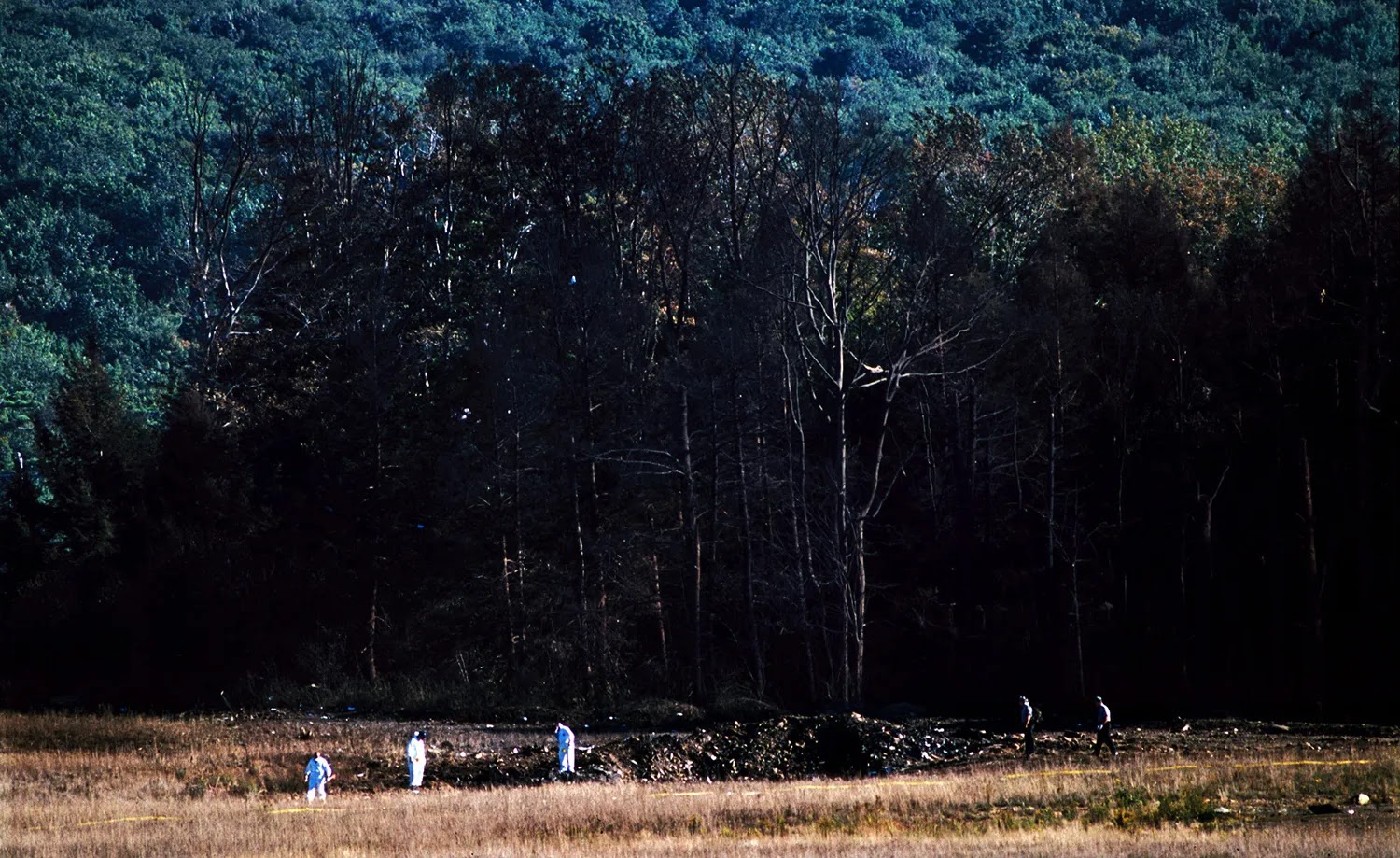 For the 22nd anniversary of the attacks of 9/11 Undicisettembre is offering its readers the personal account of former FBI agent Matthew Hoke who responded to the crash site of flight United 93 in Shanksville.
We would like to thank Matthew Hoke for his kindness and his help.
Undicisettembre: Can you give me a general account of what happened to you on 9/11?
 Matthew Hoke: On 9/11 I was the coordinator of the Huntington Violent Crime/Drug Task Force in Huntington, West Virginia, it was run by the FBI and included local and state police officers. We had been following a group of individuals who were acting unusually, they were renting a car from the airport near us on a Friday, driving like 3.000 miles returning the car on a Monday; that's a lot of driving and they did it several times. I had an hour to drive to go to work everyday, so I was listening to a national radio station and they reported that a plane had hit one of the World Trade Center towers. On the radio they made it sound like it was a small prop plane, so I didn't think much of it.
As I'm pulling into the parking lot of my office, which was an off-site that was unmarked because we did a lot of covert stuff such as drugs purchases and things like that, the second plane hit the South Tower. Like everybody else, immediately we understood we were dealing with something that was not a simple prop plane flying into the World Trade Center. Back then we didn't have cellphones, we had pagers. I was on the Evidence Response Team, which is a collateral voluntary duty of the FBI, and I received a page that told me to pack for two weeks because we were going to go to New York.
I drove home quickly and as I'm packing I received another page that said that a plane had crashed into a field in Shanksville, Pennsylvania, and we were being diverted because Shanskville is in the Pittsburgh Division of the FBIs territory and Pittsburgh was my headquarter city. We drove immediately to Shanksville, we were a group of twelve or fourteen agents, it's usually a five or six hour drive but we got there in four hours.
United Flight 93 had crashed in an open field which was an old strip mine, on a bluff there were still empty warehouses. With a quarter-of-a-mile road through the woods you could reach the field where the plane crashed. The crash site was a couple of hundred yards from the opening of the woods, just off the road. By the time we got there in the early afternoon there were like three hundred people and several buildings set up; the American Red Cross and The Salvation Army were there, portable cell towers for telephone service, air conditioned tents, and the people there were already gathering evidence from the crime scene.
What I was preparing myself for while I was driving up was an airplane wreck, but the plane, as we found out, was going so fast and at a such angle that when it hit the earth, the earth shot up into the air and landed back on the remains of the plane. So you wouldn't see what you normally see in a plane accident. Anybody who had never worked on anything similar, wouldn't think there was a plane accident there. You could see the outline of the wings where the earth was moved, but you could see no big pieces of the planes. They assigned leads to go and find evidence. There were large postal packages on the plane, letters and paper were scattered everywhere; the farthest away we found evidence was in backyards eight miles away, things got caught up in the jet stream and pushed that far away.
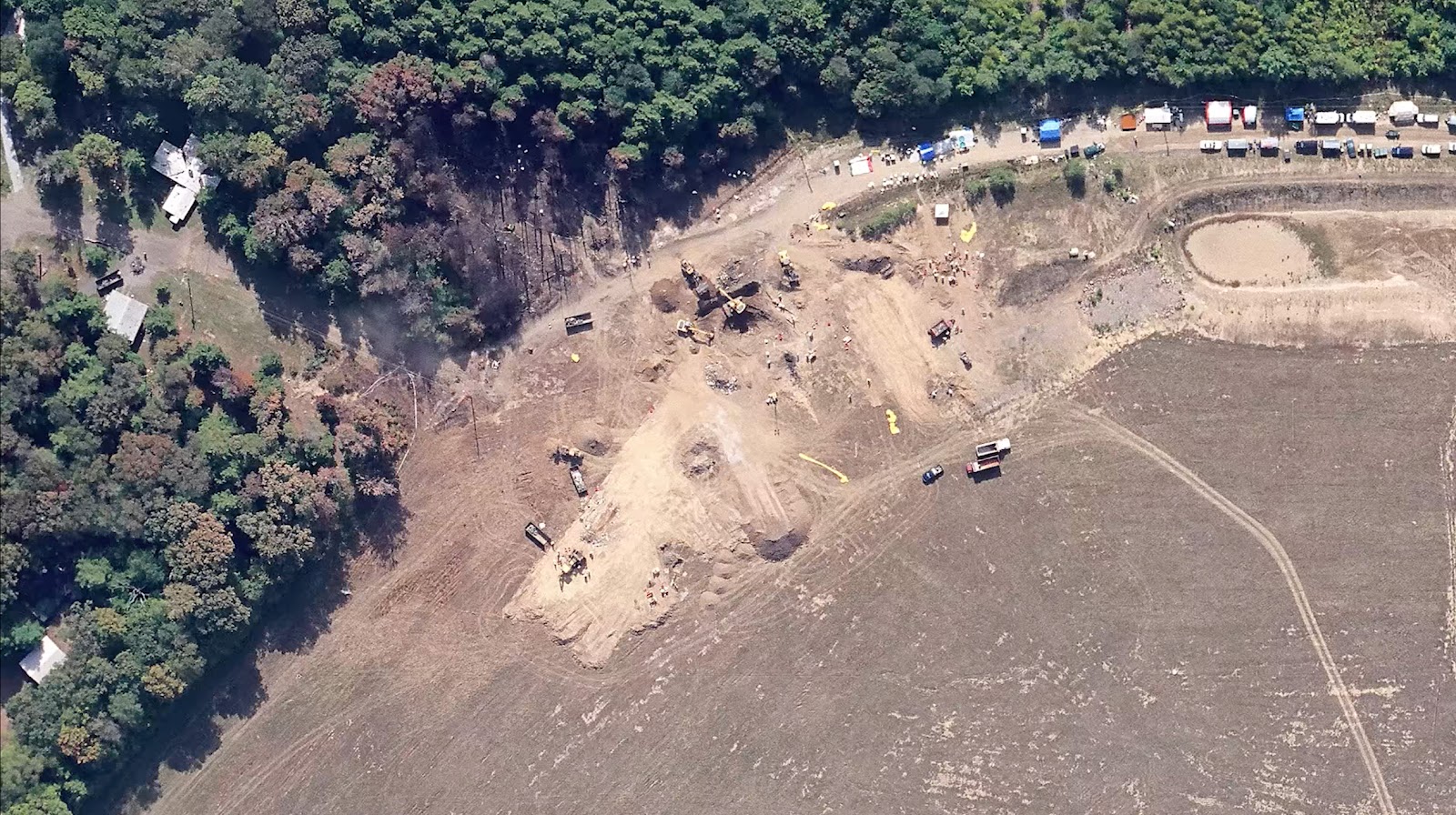
That was the beginning of it, which we did for fourteen days. They set up a morgue and a room for evidence recovery. The main function of my team was not only to find evidence but to find the two black boxes: the data box and the voice recording box. We began doing that and we ended up finding the voice recording box like 38 feet in the ground and the data box 28 feet in the ground.
At the same time there were excavations going on. The heavy things like the engines and the wheel wells didn't break up like the fuselage did, they got shot forward and we found one engine in a pond a quarter of a mile away. We did some amazing things while we were there that showed what we could do when we get rid of the bureaucracy and only cared about making things happen. After 9/11 it rained for a few days so the road from the warehouse to the crash site was just mud and vehicles were having a hard time getting in and out of that location; I left one night, came back the day after and they had paved that road overnight. Things like that, things you don't normally see, just happened; everything got done very quickly.
Undicisettembre: How long have you been there, sifting for evidence?
Matthew Hoke: The crime scene was two weeks. In those two weeks we did a lot of things, they brought Evidence Response Teams from five different divisions, it wasn't just the Pittsburgh Division but also Cincinnati, a team from Tennessee, a team from Chicago and Cleveland. There were a lot of us there, every team had their duty and since we were the team from the division the crash happened in, we were responsible for the crash site. Another team was responsible for the woods that got burned out because of the jet fuel, they had a tougher job in terms of smell and danger because of the air they were breathing.
We were in the open, in a field bringing out tons and tons of dirt, putting it through a sifter, a huge machine that sifted it down to a half of an inch, from that sifter we would create a pile and from that pile we would hand sift to a quarter inch. One of our main goals was to identify anybody who was on that plane and eventually we accomplished that, we identified all the victims and the terrorists on the plane based on DNA. But it wasn't like we were finding large body parts, we were finding teeth, small pieces of skin. They were going to the morgue where the identification process began.
I was happy to be there and to be part of the solution, but at the same time not one of us knew what was going on in the outside world: we didn't know if we were going to war or if we had already gone to war. We had a little revolt three or four days into the crime scene, because we weren't getting information; because of health issues we had masks on, so we could not listen to radios or to the news and we got no updates. We wanted to be informed of what was going on, so our revolt consisted in asking for briefings at the crime scene about what was going on in the rest of the world: they did that, they started briefing us twice a day and giving us information about what was going on. That made it a lot easier to continue with our assignment.
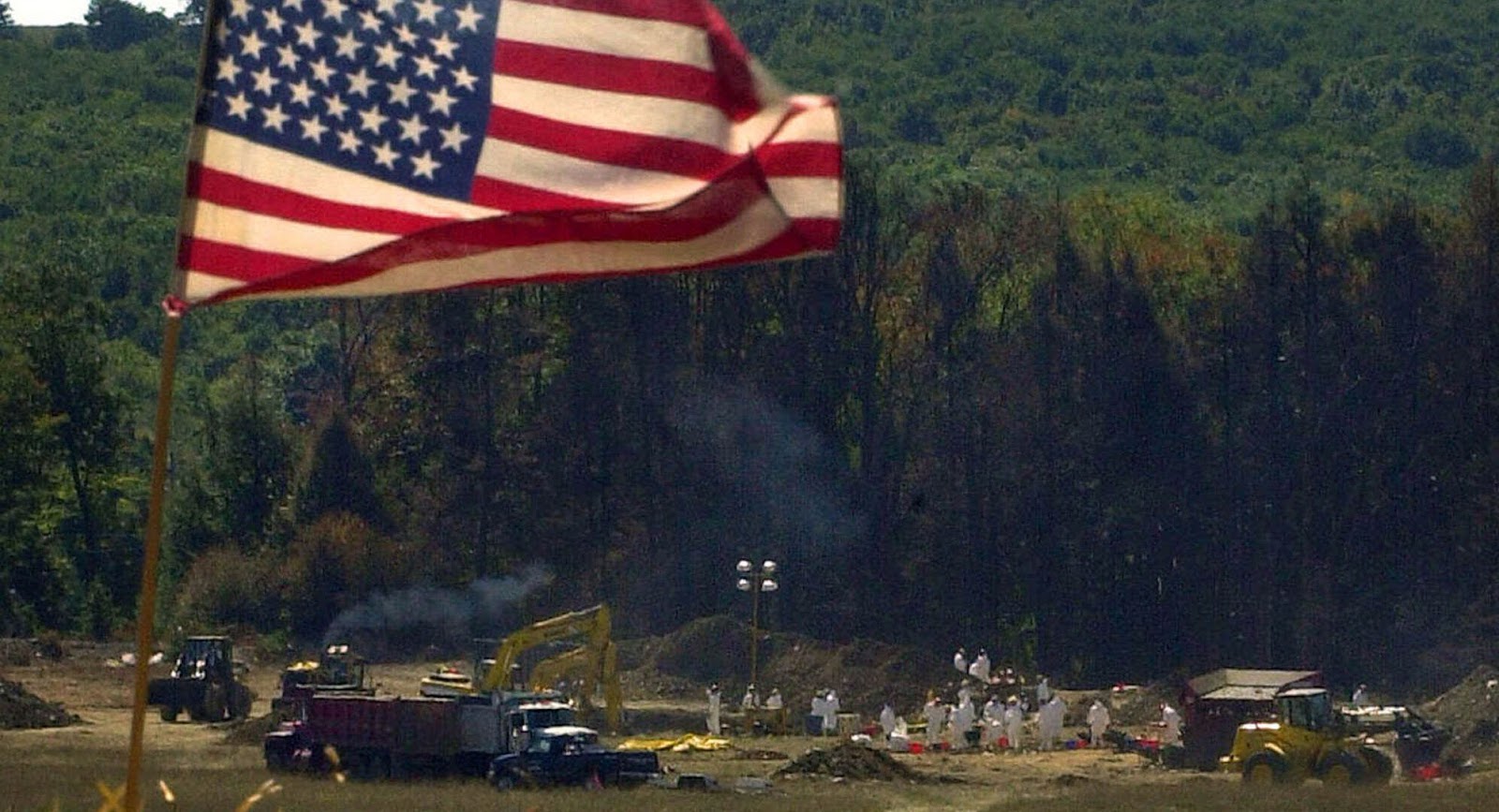
Undicisettembre: How much did you guys know while doing that of the reason why the plane came down? Did you guys assume right away that it was because of a revolt of the passengers?
Matthew Hoke: It was just rumors initially. A lot of the town's people thought the United States Government had military jets shoot the plane out of the air because it was on a path to either the White House or the Capitol. I never believed that.
Five days in, family members of the victims came to the scene; at that time we knew what the passengers had done, they were heroes, brave and strong as nobody else. When their families came, they were just as strong. There weren't a lot of tears, there was a sad but proud feeling. We had a ceremony with the families there at the bluff where the command post was. I was so impressed with the strength of those families and it made us want to do the best job possible, either sifting or whatever your duty was, they were inspirational.
I went to the memorial in 2019 for the first time, it took me 18 years to go to the memorial, I went with one of my friends who was in the Pittsburgh Division with me. It was very emotional, but that respect and inspiration from the families continued and was strengthened by seeing what they had done at the memorial.
Undicisettembre: You mentioned finding pieces of the airplane and human remains, did you guys also find objects, like luggage or things that people were bringing with themselves?
Matthew Hoke: Yes, we found a lot of clothing, pictures, personal identification documentation and things of that nature, but that was found mostly in the woods while I was at the crash site; I personally wasn't finding a lot of that stuff because I was sifting through the dirt brought to us from the actual crash site of United Flight 93 looking for human remains. But we did find many objects and we identified everything and everybody based on what we found and DNA testing from human remains.
Undicisettembre: You also mentioned the black boxes, have you seen them?
Matthew Hoke: Yes, I was there when we found them and that was the number one goal in the very beginning, we found them at nighttime and they were immediately flown to Seattle so they could be tested and they could get data off of them. Everything happened really fast, there was no delay and we cut right through any normal administrative issues. It was impressive.
Undicisettembre: You saw pieces of the airplane, you saw objects belonging to the victims, you saw human remains, so what's your reaction when you hear people saying it was staged and that no plane crashed there?
Matthew Hoke: Well, it's frustrating to even talk about this. A conspiracy this big would mean that no one said anything in more than twenty years, it's just an easy out of the ignorant. By ignorant here I mean people who don't take time to do their own due diligence and find their correct news sources.
This is not just a problem with 9/11, this is a problem in general and it's very bad right now in the United States, some people are lazy as far as where they get their news from and how they count that first news source they read as Gospel without checking, fact checking and back checking it.
So it's frustrating but anybody who has worked for the FBI or law enforcement deals or has dealt with it during their whole career because somebody is always questioning if something happened or not. And then there are agendas of people who use conspiracy theories to make money.
Undicisettembre: How does 9/11 affect your everyday life?
Matthew Hoke: I gave numerous talks about United 93 and my partners who were there have done the same. It's not something I think about everyday anymore, but it's something that I think about a lot. I wish we didn't require a disaster like 9/11 for our country to come together and cross political disagreements. And I'll never forget the strength and bravery of the victims of United 93, not only did they save the US Capitol or the White House, they also saved hundreds of lives in downtown Washington DC. I cannot even put to words the amount of respect I have for them.
In the United States we were spoiled, because we didn't have terrorism in the back of our minds. Before 9/11 very few US citizens thought of terrorism as a threat to their daily lives. I worked a lot with NCA in the UK, NABU in Ukraine and the Indonesian National Police; terrorism is something they live with everyday and have for a long long time. I think from 9/11 we became a safer country with respect to terrorism and taking the necessary steps to combat it. It is a part of our history and it will always be a tragedy. We are unfortunate that it happened but we now pay more attention than we used to.
We would like to thank Matthew Hoke for his kindness and his help.
Undicisettembre: Can you give me a general account of what happened to you on 9/11?

As I'm pulling into the parking lot of my office, which was an off-site that was unmarked because we did a lot of covert stuff such as drugs purchases and things like that, the second plane hit the South Tower. Like everybody else, immediately we understood we were dealing with something that was not a simple prop plane flying into the World Trade Center. Back then we didn't have cellphones, we had pagers. I was on the Evidence Response Team, which is a collateral voluntary duty of the FBI, and I received a page that told me to pack for two weeks because we were going to go to New York.
I drove home quickly and as I'm packing I received another page that said that a plane had crashed into a field in Shanksville, Pennsylvania, and we were being diverted because Shanskville is in the Pittsburgh Division of the FBIs territory and Pittsburgh was my headquarter city. We drove immediately to Shanksville, we were a group of twelve or fourteen agents, it's usually a five or six hour drive but we got there in four hours.
United Flight 93 had crashed in an open field which was an old strip mine, on a bluff there were still empty warehouses. With a quarter-of-a-mile road through the woods you could reach the field where the plane crashed. The crash site was a couple of hundred yards from the opening of the woods, just off the road. By the time we got there in the early afternoon there were like three hundred people and several buildings set up; the American Red Cross and The Salvation Army were there, portable cell towers for telephone service, air conditioned tents, and the people there were already gathering evidence from the crime scene.
What I was preparing myself for while I was driving up was an airplane wreck, but the plane, as we found out, was going so fast and at a such angle that when it hit the earth, the earth shot up into the air and landed back on the remains of the plane. So you wouldn't see what you normally see in a plane accident. Anybody who had never worked on anything similar, wouldn't think there was a plane accident there. You could see the outline of the wings where the earth was moved, but you could see no big pieces of the planes. They assigned leads to go and find evidence. There were large postal packages on the plane, letters and paper were scattered everywhere; the farthest away we found evidence was in backyards eight miles away, things got caught up in the jet stream and pushed that far away.
That was the beginning of it, which we did for fourteen days. They set up a morgue and a room for evidence recovery. The main function of my team was not only to find evidence but to find the two black boxes: the data box and the voice recording box. We began doing that and we ended up finding the voice recording box like 38 feet in the ground and the data box 28 feet in the ground.
At the same time there were excavations going on. The heavy things like the engines and the wheel wells didn't break up like the fuselage did, they got shot forward and we found one engine in a pond a quarter of a mile away. We did some amazing things while we were there that showed what we could do when we get rid of the bureaucracy and only cared about making things happen. After 9/11 it rained for a few days so the road from the warehouse to the crash site was just mud and vehicles were having a hard time getting in and out of that location; I left one night, came back the day after and they had paved that road overnight. Things like that, things you don't normally see, just happened; everything got done very quickly.
Undicisettembre: How long have you been there, sifting for evidence?
Matthew Hoke: The crime scene was two weeks. In those two weeks we did a lot of things, they brought Evidence Response Teams from five different divisions, it wasn't just the Pittsburgh Division but also Cincinnati, a team from Tennessee, a team from Chicago and Cleveland. There were a lot of us there, every team had their duty and since we were the team from the division the crash happened in, we were responsible for the crash site. Another team was responsible for the woods that got burned out because of the jet fuel, they had a tougher job in terms of smell and danger because of the air they were breathing.
We were in the open, in a field bringing out tons and tons of dirt, putting it through a sifter, a huge machine that sifted it down to a half of an inch, from that sifter we would create a pile and from that pile we would hand sift to a quarter inch. One of our main goals was to identify anybody who was on that plane and eventually we accomplished that, we identified all the victims and the terrorists on the plane based on DNA. But it wasn't like we were finding large body parts, we were finding teeth, small pieces of skin. They were going to the morgue where the identification process began.
I was happy to be there and to be part of the solution, but at the same time not one of us knew what was going on in the outside world: we didn't know if we were going to war or if we had already gone to war. We had a little revolt three or four days into the crime scene, because we weren't getting information; because of health issues we had masks on, so we could not listen to radios or to the news and we got no updates. We wanted to be informed of what was going on, so our revolt consisted in asking for briefings at the crime scene about what was going on in the rest of the world: they did that, they started briefing us twice a day and giving us information about what was going on. That made it a lot easier to continue with our assignment.
Undicisettembre: How much did you guys know while doing that of the reason why the plane came down? Did you guys assume right away that it was because of a revolt of the passengers?
Matthew Hoke: It was just rumors initially. A lot of the town's people thought the United States Government had military jets shoot the plane out of the air because it was on a path to either the White House or the Capitol. I never believed that.
Five days in, family members of the victims came to the scene; at that time we knew what the passengers had done, they were heroes, brave and strong as nobody else. When their families came, they were just as strong. There weren't a lot of tears, there was a sad but proud feeling. We had a ceremony with the families there at the bluff where the command post was. I was so impressed with the strength of those families and it made us want to do the best job possible, either sifting or whatever your duty was, they were inspirational.
I went to the memorial in 2019 for the first time, it took me 18 years to go to the memorial, I went with one of my friends who was in the Pittsburgh Division with me. It was very emotional, but that respect and inspiration from the families continued and was strengthened by seeing what they had done at the memorial.
Undicisettembre: You mentioned finding pieces of the airplane and human remains, did you guys also find objects, like luggage or things that people were bringing with themselves?
Matthew Hoke: Yes, we found a lot of clothing, pictures, personal identification documentation and things of that nature, but that was found mostly in the woods while I was at the crash site; I personally wasn't finding a lot of that stuff because I was sifting through the dirt brought to us from the actual crash site of United Flight 93 looking for human remains. But we did find many objects and we identified everything and everybody based on what we found and DNA testing from human remains.
Undicisettembre: You also mentioned the black boxes, have you seen them?
Matthew Hoke: Yes, I was there when we found them and that was the number one goal in the very beginning, we found them at nighttime and they were immediately flown to Seattle so they could be tested and they could get data off of them. Everything happened really fast, there was no delay and we cut right through any normal administrative issues. It was impressive.
Undicisettembre: You saw pieces of the airplane, you saw objects belonging to the victims, you saw human remains, so what's your reaction when you hear people saying it was staged and that no plane crashed there?
Matthew Hoke: Well, it's frustrating to even talk about this. A conspiracy this big would mean that no one said anything in more than twenty years, it's just an easy out of the ignorant. By ignorant here I mean people who don't take time to do their own due diligence and find their correct news sources.
This is not just a problem with 9/11, this is a problem in general and it's very bad right now in the United States, some people are lazy as far as where they get their news from and how they count that first news source they read as Gospel without checking, fact checking and back checking it.
So it's frustrating but anybody who has worked for the FBI or law enforcement deals or has dealt with it during their whole career because somebody is always questioning if something happened or not. And then there are agendas of people who use conspiracy theories to make money.
Undicisettembre: How does 9/11 affect your everyday life?
Matthew Hoke: I gave numerous talks about United 93 and my partners who were there have done the same. It's not something I think about everyday anymore, but it's something that I think about a lot. I wish we didn't require a disaster like 9/11 for our country to come together and cross political disagreements. And I'll never forget the strength and bravery of the victims of United 93, not only did they save the US Capitol or the White House, they also saved hundreds of lives in downtown Washington DC. I cannot even put to words the amount of respect I have for them.
In the United States we were spoiled, because we didn't have terrorism in the back of our minds. Before 9/11 very few US citizens thought of terrorism as a threat to their daily lives. I worked a lot with NCA in the UK, NABU in Ukraine and the Indonesian National Police; terrorism is something they live with everyday and have for a long long time. I think from 9/11 we became a safer country with respect to terrorism and taking the necessary steps to combat it. It is a part of our history and it will always be a tragedy. We are unfortunate that it happened but we now pay more attention than we used to.
2023/03/10
World Trade Center: an interview with survivor Ron DiFrancesco
by Leonardo Salvaggio. An Italian translation is available here.
Undicisettembre is offering today its readers the personal account of survivor Ron DiFrancesco who was working in Tower 2 and left his office moments before the second plane crashed into the tower.
We would like to thank Ron DiFrancesco for his kindness and his help.
Undicisettembre: Can you give us a general account of what you saw and experienced on 9/11?
 Ron DiFrancesco: I was living in New Jersey at that time but I worked in New York at the World Trade Center. I had left my house at about 5:30 in the morning to catch the 5:40 train, I took the train into Hoboken, New Jersey, and then I took the PATH train to go to the World Trade Center. I worked at the 84th floor of Tower 2. There were different elevators that you had to take to get there: I took the express elevator from ground floor to the 78th and then I transferred over to the smaller elevators to take me to the 84th floor. I arrived probably around 6:45.
My desk was in a trading room with three hundred and fifty people sitting there working, yelling, screaming and watching the world markets. The reason why I was there so early is that the Asian markets were closing at that hour, the Europeans markets were halfway through the day and we would continue from there. I sat at my desk and I was working and talking to my colleagues and to my clients on the phone, telling them what was going on in the markets. We were settled into the day when back to the right there was a loud explosion; we didn't know what it was but we looked to the right and we saw thousands of pieces of paper streaming in the air all around. We ran to the window to see what was going on and we saw a big gaping hole in the side of Tower 1. At that point a lot of people started to leave our floor.
I didn't know it was a terrorist attack, I think some of those who left understood it was a terrorist attack because they were there in 93. I am Canadian and was living in Canada at the time of the first attack, I had moved to New York in 2000. When we had started hearing the news they told us that a light aircraft had gone off course and crashed into the World Trade Center, I didn't know any different, I just knew from seeing people in the hole in the side of the building that it was pretty severe. Everybody in the world was watching on the news what was going on, but we were in the middle of it and still we had no clue and they kept telling us "Building 2 is secure, please go back to your desk", so I went back to my desk and I got a lot of phone calls from clients in Canada who were asking me what was going on but I really didn't know.
I got a call from a university friend who started yelling at me to get out of the building, I said I would go so I called my wife to tell her I was leaving and I would call her when I got downstairs. I grabbed a colleague of mine and him and I made our way towards the elevator banks and as we were leaving the second plane hit our building: the right wing went from the 78th to the 85th floor and sliced through our trading room.
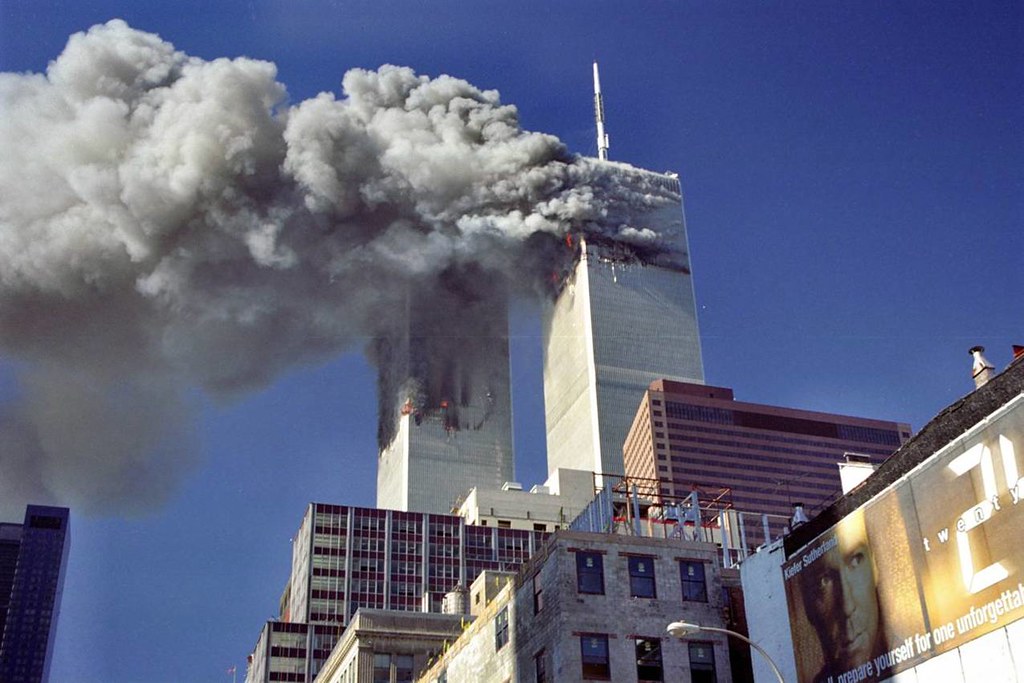
We got knocked down and battered, all the ceiling tiles came down from above. My colleague and I wiped the debris from ourselves, we met with our colleagues and we started running towards the stairwell. We started going down and after two or three floors we met two gentlemen and a lady coming up, the two men were helping the lady up, and they said we couldn't go down because there was too much fire. We heard someone crying for help so we went to assist this man whose name is Stanley. I was overcome with smoke, so I left this man with one of my colleagues and I went up the stairwell and reached maybe the 91st floor hoping to get to one of the floors but all the doors were locked for security reasons. Once we realized we couldn't get out of the stairwell our only choices were all the way up or all the way down. At that point panic really set in.
I wanted to get out the building, so we started going down and we got close to our floor or even a bit below and smoke overtook us. People started to lie down to try to get beneath the hot smoke,. I was lying down too when I heard a voice calling me saying "Get up and come this way"; so I got up and followed the voice, into the heaviest smoke area and pushed against a piece of drywall and it revealed the staircase down below. I slid down and ran down three flights of stairs that were on fire. After those three flights of stairs it was wet and cool, I think just because the sprinklers were working at those floors; so I started to run down as fast as I could. About halfway down I run into three firefighters coming up, I told them I was having trouble breathing, they checked me out and told me to get down below and I'll get help there.
About an hour after the crash I reached the lobby of my building which was facing the courtyard between the two towers, I just wanted to get out of the building and run but outside I could see lots of debris and bodies everywhere. I wanted to go out but they wouldn't let us because it was too dangerous and they made us go to the PATH train station to go out to Church Street on the farthest corner away from the World Trade Center. So I went down another flight of stairs, I started walking towards the exit and I run into a colleague of mine, an older gentleman who in his best days had troubles walking; as we were down there we heard this very loud, loud noise, I looked to my right and I saw this huge fireball coming at us. I yelled at my colleague "Run!", I ran as fast as I could and I woke up three days later in a hospital. I remember getting hit on the head and that's all I remember.
Undicisettembre: What did your family know or think happened to you after the attacks, when you could not get in touch with them?
Ron DiFrancesco: It was actually harder on my wife than it was on me, she could not get hold on me; I think they called her at 2 o'clock in the afternoon and told her that I was in the hospital and she then related the message to my family in Canada. They didn't know how badly I was injured and I of course wasn't aware of the panic that was going on with people frantically looking for people.
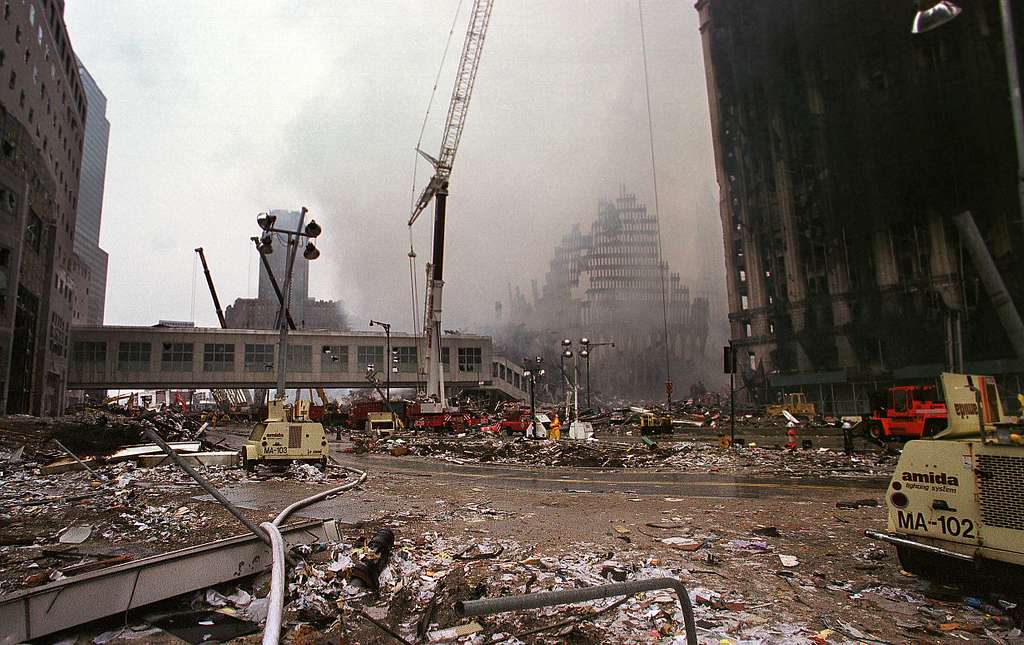
Undicisettembre: What happened next to you, in the following weeks and months?
Ron DiFrancesco: While most of the people either got out physically unscaved or they died, I was banged up quite badly, I had burns on 60% of my body, I had a broken bone in my back, my contact lenses were melted to my eyes and I was in rough shape. For days I hadn't known the World Trade Center had come down. When the plane hit our building I thought it was a generator down below blowing up, I didn't know it was a second plane. I found that out from my wife.
Undicisettembre: When was the first time you went back to downtown Manhattan after 9/11?
Ron DiFrancesco: I went back in November 2001 for a colleague's funeral, I went there and then I met my family uptown.
Undicisettembre: Did you decide to leave New York because of 9/11?
Ron DiFrancesco: Yes. I went back to work part time in March 2002 and full time in April. When I went back full time getting into the city was tough: you had to take the train to Hoboken and then the ferry across the Hudson river to get to our new office, which was moved away from the World Trade Center of course. Every night my kids would be sitting by the window wondering if I was coming home. We realized after a while there was no way for us to live there, so we moved back to Canada.
Undicisettembre: How does 9/11 affect your everyday life even today?
Ron DiFrancesco: I am blessed, I'm fortunate and I'm lucky that I'm still here, I have an immense sense of gratitude. I was in a dark spot for a few years, like "Why did I survive while so many of my colleagues did not?". But I'm now on a different place, a different mission too: to help people. If you think about what's happening in our world now, everybody has been struggling for the last few years and the mental health crisis is very tough. Everyday is not great for everyone, after 9/11 I didn't know if I wanted to live or die, I struggled for a while. Someone told me: "You need to tell your story about what you do to survive because it may help some people", so I studied positive psychology and tried to do the best I can day in day out in the hope of something better.
Now I have gratitude for smaller things and small things in life, because every day is a bonus for us. I could ask you what your problems are and maybe they are bigger than mine, but we both have a house and health and that's a bonus because many people don't have them.
Undicisettembre is offering today its readers the personal account of survivor Ron DiFrancesco who was working in Tower 2 and left his office moments before the second plane crashed into the tower.
We would like to thank Ron DiFrancesco for his kindness and his help.
Undicisettembre: Can you give us a general account of what you saw and experienced on 9/11?

My desk was in a trading room with three hundred and fifty people sitting there working, yelling, screaming and watching the world markets. The reason why I was there so early is that the Asian markets were closing at that hour, the Europeans markets were halfway through the day and we would continue from there. I sat at my desk and I was working and talking to my colleagues and to my clients on the phone, telling them what was going on in the markets. We were settled into the day when back to the right there was a loud explosion; we didn't know what it was but we looked to the right and we saw thousands of pieces of paper streaming in the air all around. We ran to the window to see what was going on and we saw a big gaping hole in the side of Tower 1. At that point a lot of people started to leave our floor.
I didn't know it was a terrorist attack, I think some of those who left understood it was a terrorist attack because they were there in 93. I am Canadian and was living in Canada at the time of the first attack, I had moved to New York in 2000. When we had started hearing the news they told us that a light aircraft had gone off course and crashed into the World Trade Center, I didn't know any different, I just knew from seeing people in the hole in the side of the building that it was pretty severe. Everybody in the world was watching on the news what was going on, but we were in the middle of it and still we had no clue and they kept telling us "Building 2 is secure, please go back to your desk", so I went back to my desk and I got a lot of phone calls from clients in Canada who were asking me what was going on but I really didn't know.
I got a call from a university friend who started yelling at me to get out of the building, I said I would go so I called my wife to tell her I was leaving and I would call her when I got downstairs. I grabbed a colleague of mine and him and I made our way towards the elevator banks and as we were leaving the second plane hit our building: the right wing went from the 78th to the 85th floor and sliced through our trading room.
We got knocked down and battered, all the ceiling tiles came down from above. My colleague and I wiped the debris from ourselves, we met with our colleagues and we started running towards the stairwell. We started going down and after two or three floors we met two gentlemen and a lady coming up, the two men were helping the lady up, and they said we couldn't go down because there was too much fire. We heard someone crying for help so we went to assist this man whose name is Stanley. I was overcome with smoke, so I left this man with one of my colleagues and I went up the stairwell and reached maybe the 91st floor hoping to get to one of the floors but all the doors were locked for security reasons. Once we realized we couldn't get out of the stairwell our only choices were all the way up or all the way down. At that point panic really set in.
I wanted to get out the building, so we started going down and we got close to our floor or even a bit below and smoke overtook us. People started to lie down to try to get beneath the hot smoke,. I was lying down too when I heard a voice calling me saying "Get up and come this way"; so I got up and followed the voice, into the heaviest smoke area and pushed against a piece of drywall and it revealed the staircase down below. I slid down and ran down three flights of stairs that were on fire. After those three flights of stairs it was wet and cool, I think just because the sprinklers were working at those floors; so I started to run down as fast as I could. About halfway down I run into three firefighters coming up, I told them I was having trouble breathing, they checked me out and told me to get down below and I'll get help there.
About an hour after the crash I reached the lobby of my building which was facing the courtyard between the two towers, I just wanted to get out of the building and run but outside I could see lots of debris and bodies everywhere. I wanted to go out but they wouldn't let us because it was too dangerous and they made us go to the PATH train station to go out to Church Street on the farthest corner away from the World Trade Center. So I went down another flight of stairs, I started walking towards the exit and I run into a colleague of mine, an older gentleman who in his best days had troubles walking; as we were down there we heard this very loud, loud noise, I looked to my right and I saw this huge fireball coming at us. I yelled at my colleague "Run!", I ran as fast as I could and I woke up three days later in a hospital. I remember getting hit on the head and that's all I remember.
Undicisettembre: What did your family know or think happened to you after the attacks, when you could not get in touch with them?
Ron DiFrancesco: It was actually harder on my wife than it was on me, she could not get hold on me; I think they called her at 2 o'clock in the afternoon and told her that I was in the hospital and she then related the message to my family in Canada. They didn't know how badly I was injured and I of course wasn't aware of the panic that was going on with people frantically looking for people.
Undicisettembre: What happened next to you, in the following weeks and months?
Ron DiFrancesco: While most of the people either got out physically unscaved or they died, I was banged up quite badly, I had burns on 60% of my body, I had a broken bone in my back, my contact lenses were melted to my eyes and I was in rough shape. For days I hadn't known the World Trade Center had come down. When the plane hit our building I thought it was a generator down below blowing up, I didn't know it was a second plane. I found that out from my wife.
Undicisettembre: When was the first time you went back to downtown Manhattan after 9/11?
Ron DiFrancesco: I went back in November 2001 for a colleague's funeral, I went there and then I met my family uptown.
Undicisettembre: Did you decide to leave New York because of 9/11?
Ron DiFrancesco: Yes. I went back to work part time in March 2002 and full time in April. When I went back full time getting into the city was tough: you had to take the train to Hoboken and then the ferry across the Hudson river to get to our new office, which was moved away from the World Trade Center of course. Every night my kids would be sitting by the window wondering if I was coming home. We realized after a while there was no way for us to live there, so we moved back to Canada.
Undicisettembre: How does 9/11 affect your everyday life even today?
Ron DiFrancesco: I am blessed, I'm fortunate and I'm lucky that I'm still here, I have an immense sense of gratitude. I was in a dark spot for a few years, like "Why did I survive while so many of my colleagues did not?". But I'm now on a different place, a different mission too: to help people. If you think about what's happening in our world now, everybody has been struggling for the last few years and the mental health crisis is very tough. Everyday is not great for everyone, after 9/11 I didn't know if I wanted to live or die, I struggled for a while. Someone told me: "You need to tell your story about what you do to survive because it may help some people", so I studied positive psychology and tried to do the best I can day in day out in the hope of something better.
Now I have gratitude for smaller things and small things in life, because every day is a bonus for us. I could ask you what your problems are and maybe they are bigger than mine, but we both have a house and health and that's a bonus because many people don't have them.
2023/01/03
World Trade Center: an interview with former NYPD detective Vic Ferrari
by Leonardo Salvaggio. An Italian translation is available here.
Undicisettembre is offering its readers today the personal account of former NYPD detective Vic Ferrari, who was on duty on 9/11 and arrived on the scene after the collapse of both towers.
We would like to thank Vic Ferrari for his kindness and time.
Undicisettembre: What happened to you on 9/11? Can you give us an account of what you saw and experienced on that day?
 Vic Ferrari: I had worked twenty years for the NYPD, when 9/11 happened I had fourteen years in. That day was Tuesday and it was election day, my office was in the Bronx which is a forty-five minutes to an hour drive from the Twin Towers. Previous to that I had arrested a guy who was selling stolen vehicles, he was in jail in Manhattan, and on that day I was going to the court in Manhattan with my sergeant and we were going to meet with his defense attorney. I was going to take him out of jail because he was going to become an informant, he was going to provide people who were selling stolen cars and he knew a guy who was working in the Department of Motor Vehicles who was selling phoney driver licenses.
We were going to meet at nine in Manhattan. So I came into the Bronx at seven. At eight o'clock my sergeant, who was supposed to come with me, was nowhere to be found. He arrived some minutes later and I was looking at my watch and said "Come one, we have got to go! It's going to take us an hour to go into Manhattan and find parking". He was taking his time, dragging his feet. Our office was at the second floor of the police station, one of the police officers ran upstairs, entered the detective squad and said "Turn the TV on, a plane has just hit the World Trade Center". We put the TV on and were watching it like everybody else. New York city has three major airports within 40 miles from each other, so we thought either the pilot had a heart attack or a small plane had hit the building; nobody knew anything. As we were watching this the second plane came and hit the second tower, then we knew it was terrorism.
We were told to get into our uniforms and stand by. Around noon we received the order to go, so we jumped into our unmarked police cars, drove through the west side highway of Manhattan, parked our cars and by 13 or 13:15 I was down there. It was chaos, they had us in uniforms but they didn't really know what to do with us; my lieutenant volunteered and said "I'll take my people from my team and we'll march in", which we did. They gave us these masks that we put on our mouths, but it was just a paper mask, not a very good one. We walked in and it was wild, there were a couple of buildings on fire, one of which was World Trade Center 7. We were a couple of blocks away and we could feel the heath and see flames coming out of the windows of these buildings.
The closer you got to the World Trade Center the darker it got, because when the buildings collapsed you had this volcanic ash and dust that was thrown into the air: concrete, asbestos, anything else that got pulverized went up into the air. So the closer you got the more difficult it was for sunlight to get through the particles, it was like a twilight in broad daylight. Everything was covered with this ash. And one thing I'll never forget is there were thousands and thousands of pairs of women high heel shoes, because a lot of women who worked in the financial district were wearing them but when you have to run you can't run in high heel shoes, so they took them off and just threw them in the street and took off. It looked like a movie: you had hot dog trucks abandoned, everything else you can think of was abandoned and covered with that ash. It was very hot and itchy in those polyester uniforms because of the toxic dust blowing all around us. It was a ghost town down there. For a while, it felt like my co-workers and I were the only people in the area.
As we got up to the World Trade Center, a piece of the facade had come down thousands of feet and embedded itself in the concrete in front of this tremendous pile. It looked like the last scene of "The Planet of the Apes" when Charlton Heston sees the head of the Statue of Liberty on the beach. I had seen many terrible things: car accidents, people stabbed or people shot, but I could not wrap my head around what I was looking at.
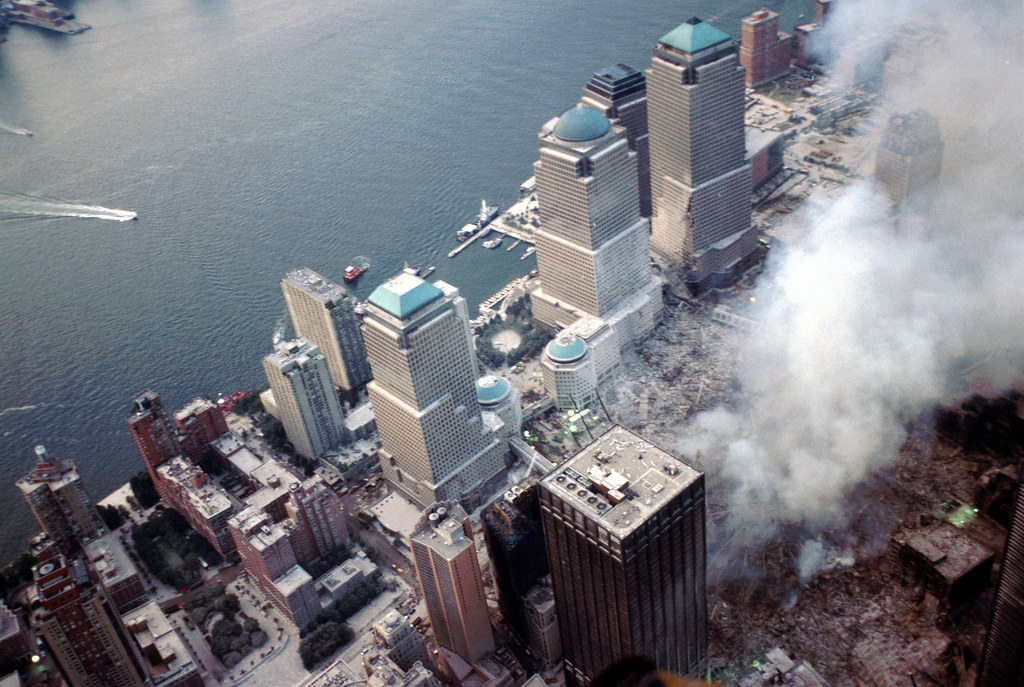
Nothing was open, so you couldn't get water or use the bathroom. So we started looking for a place to take a break, and that's where we found an office building on Broadway with some of the maintenance workers hadn't leaved. They let us into the building to take a break, to take our masks off and get some water. One of the guys who worked in that building was from Afghanistan but had worked in the United States more than twenty years and he explained us, chapter and verse, what was going on, he explained us about the Taliban and Osama bin Laden. I knew who the Taliban were and I knew about Osama bin Laden, that he was behind the two attacks to the embassies in Africa and that he was on the FBI most wanted terrorists list, I knew he was making noise about hitting the United States, but this man explained us the details about how the Taliban came in, took over his country and gave refuge to all these jihadists. Everything started to make sense, as much sense as it could make.
It was so chaotic. I remember when we walked up to the pile on day one a guy walked passed us in something that looker a space suit and he had some kind of device that looked like a Geiger counter. We looked at him and said "Does this guy work for the government or is he just a random nut with a Geiger counter who thought 'Today is the day I'm going to use my Geiger counter'?"
The first day we didn't have a perimeter set around the area like we had in following days when you couldn't get down there unless you could produce ID and explain what you had to do in the area.
I remained there till 5 or 6 the morning after, they told us to go home, run our clothes through a washing machine because the dust was toxic and we were required to show up at the Bronx at 5:30 pm. By 7:30 at night I was at Ground Zero again and stayed there till 6 o'clock in the morning, I did that for the first couple of days. But we didn't really do rescue and recovery because there was no real organization, it was still cahos. By the second day there were a lot of different police agencies from other states and some squads with cadaver dogs. A day or two later there was a Winnebago camper with a bunch of cops from Chicago, I remember thinking "Wow! How fast do these guys drive to be here in a day and a half?"
All the cars in the area that were not crashed had ash all over. Cops have like a gallows humor and I remember walking past a car and someone had written in the ash "Fuck you bin Laden. We are coming for you".
The days after they put a perimeter so that people couldn't get in and start stealing things, but that happened anyway and the police were catching imposters pretending to be off duty police officers, people showing up in firemen costumes, bogus charities that didn't exist trying to raise money. People would also go down there to try to steal motorized scooters or power generators and were getting caught.
There was nobody alive in the rubble, it was clear to us after a few days but we couldn't say that because there were thousands of people hoping that their loved ones could somehow get out of that. But being down there we knew no one was going to come out of that. It was like pulverization of humanity.
My team and I were going building to building in the outskirts of Ground Zero and we would go to the roof to look for remains of the aircrafts. We went on the roof of a building in Murray Street and we found a piece of landing gear, it went several blocks away from the Towers.
After a week they pulled us out, I was not there for a couple of weeks and then they sent us back to do the bucket brigade. We were like ants on a pile of sugar, we were a single line of a hundred cops and firemen, we were bringing debris down in a five gallon bucket and everybody was passing it down the line. At the certain point they said "We have to speed this up" and they brought in heavy equipment that started pulling large sections out. After that in Staten Island in an abandoned dump that the city had closed decades before they brought large sections of debris from the World Trade Center so that we could sift through them to look for evidence or remains. I got sent there and since my team worked in auto crime we were give special equipment like the Jaws of Life to cut and open cars, trucks and firetrucks that got pulled out to make sure no one had perished inside.
The NYPD treated us well during that period. There was a church a couple of blocks away from Ground Zero where you can go to take a break; there was a woman playing the piano and they had professional masseuses giving massages. We weren't used to that treatment in NYPD. Also famous people volunteered their time to came to visit us. I saw Robert De Niro who came while we were taking a break and he shook everybody's hands.
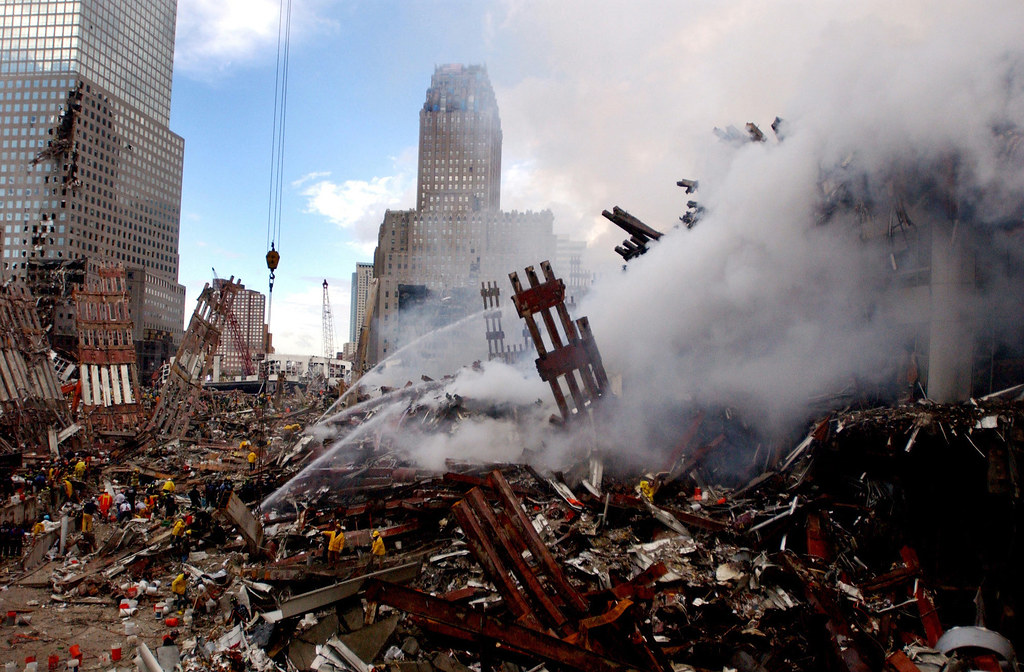
Undicisettembre: Have you seen World Trade Center 7 collapse?
Vic Ferrari: No, but we heard it. We went passed it while making our way to a bus a block or two away, we heard it and we jumped out of the bus, even out of the windows, and run for our lives because we didn't know if it was going to come over us. It was a tremendous sound.
Undicisettembre: How does 9/11 affect your everyday life, if it does?
Vic Ferrari: Today it doesn't. It was a terrible and horrific thing, but I don't have nightmares from it. It was one of the worst things I've even seen, but to be successful in the line of work that I was in you have to be able to compartmentalize things. Especially when going through something like that you have to tell yourself "Yes, this is bad but I can't go to pieces; I have to fight through this, things will get better, I have to push through this".
There were people who had problems as a result of this and I can call myself very lucky. Probably it's my personality type. It's one of the worst days in American history and in my lifetime but I moved passed it.
Undicisettembre: You now live far away from New York so I understand you cannot easily attend celebrations like for the anniversaries, but what do you think of those?
Vic Ferrari: It's a good thing to remember so people don't forget it because in the United States we tend to forget about things and that day should not be forgotten. There are a lot of people who lost their lives as a result of that, I knew people who died on the first day and I know a lot of cops and firemen who died of cancer in the following years as a result of being down there. They told us in the first couple of days that the air was safe, but it wasn't. I also have to go every year to cancer screening, so it's always on the back of my mind.
Undicisettembre: What is your personal opinion about what happened in Afghanistan? Was going away like that the only possible thing to do or was there another option?
Vic Ferrari: There's always another option, we never learn from our mistakes. We pushed the Soviets out and provided Afghans with stinger missiles that ended up in the hands of the Taliban and of the other jihadists. We tend to leave something alone and create a vacuum, then some scumbag takes over and this is what happened this time too.
Undicisettembre is offering its readers today the personal account of former NYPD detective Vic Ferrari, who was on duty on 9/11 and arrived on the scene after the collapse of both towers.
We would like to thank Vic Ferrari for his kindness and time.
Undicisettembre: What happened to you on 9/11? Can you give us an account of what you saw and experienced on that day?

We were going to meet at nine in Manhattan. So I came into the Bronx at seven. At eight o'clock my sergeant, who was supposed to come with me, was nowhere to be found. He arrived some minutes later and I was looking at my watch and said "Come one, we have got to go! It's going to take us an hour to go into Manhattan and find parking". He was taking his time, dragging his feet. Our office was at the second floor of the police station, one of the police officers ran upstairs, entered the detective squad and said "Turn the TV on, a plane has just hit the World Trade Center". We put the TV on and were watching it like everybody else. New York city has three major airports within 40 miles from each other, so we thought either the pilot had a heart attack or a small plane had hit the building; nobody knew anything. As we were watching this the second plane came and hit the second tower, then we knew it was terrorism.
We were told to get into our uniforms and stand by. Around noon we received the order to go, so we jumped into our unmarked police cars, drove through the west side highway of Manhattan, parked our cars and by 13 or 13:15 I was down there. It was chaos, they had us in uniforms but they didn't really know what to do with us; my lieutenant volunteered and said "I'll take my people from my team and we'll march in", which we did. They gave us these masks that we put on our mouths, but it was just a paper mask, not a very good one. We walked in and it was wild, there were a couple of buildings on fire, one of which was World Trade Center 7. We were a couple of blocks away and we could feel the heath and see flames coming out of the windows of these buildings.
The closer you got to the World Trade Center the darker it got, because when the buildings collapsed you had this volcanic ash and dust that was thrown into the air: concrete, asbestos, anything else that got pulverized went up into the air. So the closer you got the more difficult it was for sunlight to get through the particles, it was like a twilight in broad daylight. Everything was covered with this ash. And one thing I'll never forget is there were thousands and thousands of pairs of women high heel shoes, because a lot of women who worked in the financial district were wearing them but when you have to run you can't run in high heel shoes, so they took them off and just threw them in the street and took off. It looked like a movie: you had hot dog trucks abandoned, everything else you can think of was abandoned and covered with that ash. It was very hot and itchy in those polyester uniforms because of the toxic dust blowing all around us. It was a ghost town down there. For a while, it felt like my co-workers and I were the only people in the area.
As we got up to the World Trade Center, a piece of the facade had come down thousands of feet and embedded itself in the concrete in front of this tremendous pile. It looked like the last scene of "The Planet of the Apes" when Charlton Heston sees the head of the Statue of Liberty on the beach. I had seen many terrible things: car accidents, people stabbed or people shot, but I could not wrap my head around what I was looking at.
Nothing was open, so you couldn't get water or use the bathroom. So we started looking for a place to take a break, and that's where we found an office building on Broadway with some of the maintenance workers hadn't leaved. They let us into the building to take a break, to take our masks off and get some water. One of the guys who worked in that building was from Afghanistan but had worked in the United States more than twenty years and he explained us, chapter and verse, what was going on, he explained us about the Taliban and Osama bin Laden. I knew who the Taliban were and I knew about Osama bin Laden, that he was behind the two attacks to the embassies in Africa and that he was on the FBI most wanted terrorists list, I knew he was making noise about hitting the United States, but this man explained us the details about how the Taliban came in, took over his country and gave refuge to all these jihadists. Everything started to make sense, as much sense as it could make.
It was so chaotic. I remember when we walked up to the pile on day one a guy walked passed us in something that looker a space suit and he had some kind of device that looked like a Geiger counter. We looked at him and said "Does this guy work for the government or is he just a random nut with a Geiger counter who thought 'Today is the day I'm going to use my Geiger counter'?"
The first day we didn't have a perimeter set around the area like we had in following days when you couldn't get down there unless you could produce ID and explain what you had to do in the area.
I remained there till 5 or 6 the morning after, they told us to go home, run our clothes through a washing machine because the dust was toxic and we were required to show up at the Bronx at 5:30 pm. By 7:30 at night I was at Ground Zero again and stayed there till 6 o'clock in the morning, I did that for the first couple of days. But we didn't really do rescue and recovery because there was no real organization, it was still cahos. By the second day there were a lot of different police agencies from other states and some squads with cadaver dogs. A day or two later there was a Winnebago camper with a bunch of cops from Chicago, I remember thinking "Wow! How fast do these guys drive to be here in a day and a half?"
All the cars in the area that were not crashed had ash all over. Cops have like a gallows humor and I remember walking past a car and someone had written in the ash "Fuck you bin Laden. We are coming for you".
The days after they put a perimeter so that people couldn't get in and start stealing things, but that happened anyway and the police were catching imposters pretending to be off duty police officers, people showing up in firemen costumes, bogus charities that didn't exist trying to raise money. People would also go down there to try to steal motorized scooters or power generators and were getting caught.
There was nobody alive in the rubble, it was clear to us after a few days but we couldn't say that because there were thousands of people hoping that their loved ones could somehow get out of that. But being down there we knew no one was going to come out of that. It was like pulverization of humanity.
My team and I were going building to building in the outskirts of Ground Zero and we would go to the roof to look for remains of the aircrafts. We went on the roof of a building in Murray Street and we found a piece of landing gear, it went several blocks away from the Towers.
After a week they pulled us out, I was not there for a couple of weeks and then they sent us back to do the bucket brigade. We were like ants on a pile of sugar, we were a single line of a hundred cops and firemen, we were bringing debris down in a five gallon bucket and everybody was passing it down the line. At the certain point they said "We have to speed this up" and they brought in heavy equipment that started pulling large sections out. After that in Staten Island in an abandoned dump that the city had closed decades before they brought large sections of debris from the World Trade Center so that we could sift through them to look for evidence or remains. I got sent there and since my team worked in auto crime we were give special equipment like the Jaws of Life to cut and open cars, trucks and firetrucks that got pulled out to make sure no one had perished inside.
The NYPD treated us well during that period. There was a church a couple of blocks away from Ground Zero where you can go to take a break; there was a woman playing the piano and they had professional masseuses giving massages. We weren't used to that treatment in NYPD. Also famous people volunteered their time to came to visit us. I saw Robert De Niro who came while we were taking a break and he shook everybody's hands.
Undicisettembre: Have you seen World Trade Center 7 collapse?
Vic Ferrari: No, but we heard it. We went passed it while making our way to a bus a block or two away, we heard it and we jumped out of the bus, even out of the windows, and run for our lives because we didn't know if it was going to come over us. It was a tremendous sound.
Undicisettembre: How does 9/11 affect your everyday life, if it does?
Vic Ferrari: Today it doesn't. It was a terrible and horrific thing, but I don't have nightmares from it. It was one of the worst things I've even seen, but to be successful in the line of work that I was in you have to be able to compartmentalize things. Especially when going through something like that you have to tell yourself "Yes, this is bad but I can't go to pieces; I have to fight through this, things will get better, I have to push through this".
There were people who had problems as a result of this and I can call myself very lucky. Probably it's my personality type. It's one of the worst days in American history and in my lifetime but I moved passed it.
Undicisettembre: You now live far away from New York so I understand you cannot easily attend celebrations like for the anniversaries, but what do you think of those?
Vic Ferrari: It's a good thing to remember so people don't forget it because in the United States we tend to forget about things and that day should not be forgotten. There are a lot of people who lost their lives as a result of that, I knew people who died on the first day and I know a lot of cops and firemen who died of cancer in the following years as a result of being down there. They told us in the first couple of days that the air was safe, but it wasn't. I also have to go every year to cancer screening, so it's always on the back of my mind.
Undicisettembre: What is your personal opinion about what happened in Afghanistan? Was going away like that the only possible thing to do or was there another option?
Vic Ferrari: There's always another option, we never learn from our mistakes. We pushed the Soviets out and provided Afghans with stinger missiles that ended up in the hands of the Taliban and of the other jihadists. We tend to leave something alone and create a vacuum, then some scumbag takes over and this is what happened this time too.
Iscriviti a:
Post (Atom)