Visualizzazione post con etichetta UA93. Mostra tutti i post

2023/09/11

United 93: an interview with former FBI agent Matthew Hoke

by Leonardo Salvaggio. An Italian translation is available here.
For the 22nd anniversary of the attacks of 9/11 Undicisettembre is offering its readers the personal account of former FBI agent Matthew Hoke who responded to the crash site of flight United 93 in Shanksville.

We would like to thank Matthew Hoke for his kindness and his help.


Undicisettembre: Can you give me a general account of what happened to you on 9/11?

Matthew Hoke:
On 9/11 I was the coordinator of the Huntington Violent Crime/Drug Task Force in Huntington, West Virginia, it was run by the FBI and included local and state police officers. We had been following a group of individuals who were acting unusually, they were renting a car from the airport near us on a Friday, driving like 3.000 miles returning the car on a Monday; that's a lot of driving and they did it several times. I had an hour to drive to go to work everyday, so I was listening to a national radio station and they reported that a plane had hit one of the World Trade Center towers. On the radio they made it sound like it was a small prop plane, so I didn't think much of it.

As I'm pulling into the parking lot of my office, which was an off-site that was unmarked because we did a lot of covert stuff such as drugs purchases and things like that, the second plane hit the South Tower. Like everybody else, immediately we understood we were dealing with something that was not a simple prop plane flying into the World Trade Center. Back then we didn't have cellphones, we had pagers. I was on the Evidence Response Team, which is a collateral voluntary duty of the FBI, and I received a page that told me to pack for two weeks because we were going to go to New York.

I drove home quickly and as I'm packing I received another page that said that a plane had crashed into a field in Shanksville, Pennsylvania, and we were being diverted because Shanskville is in the Pittsburgh Division of the FBIs territory and Pittsburgh was my headquarter city. We drove immediately to Shanksville, we were a group of twelve or fourteen agents, it's usually a five or six hour drive but we got there in four hours.

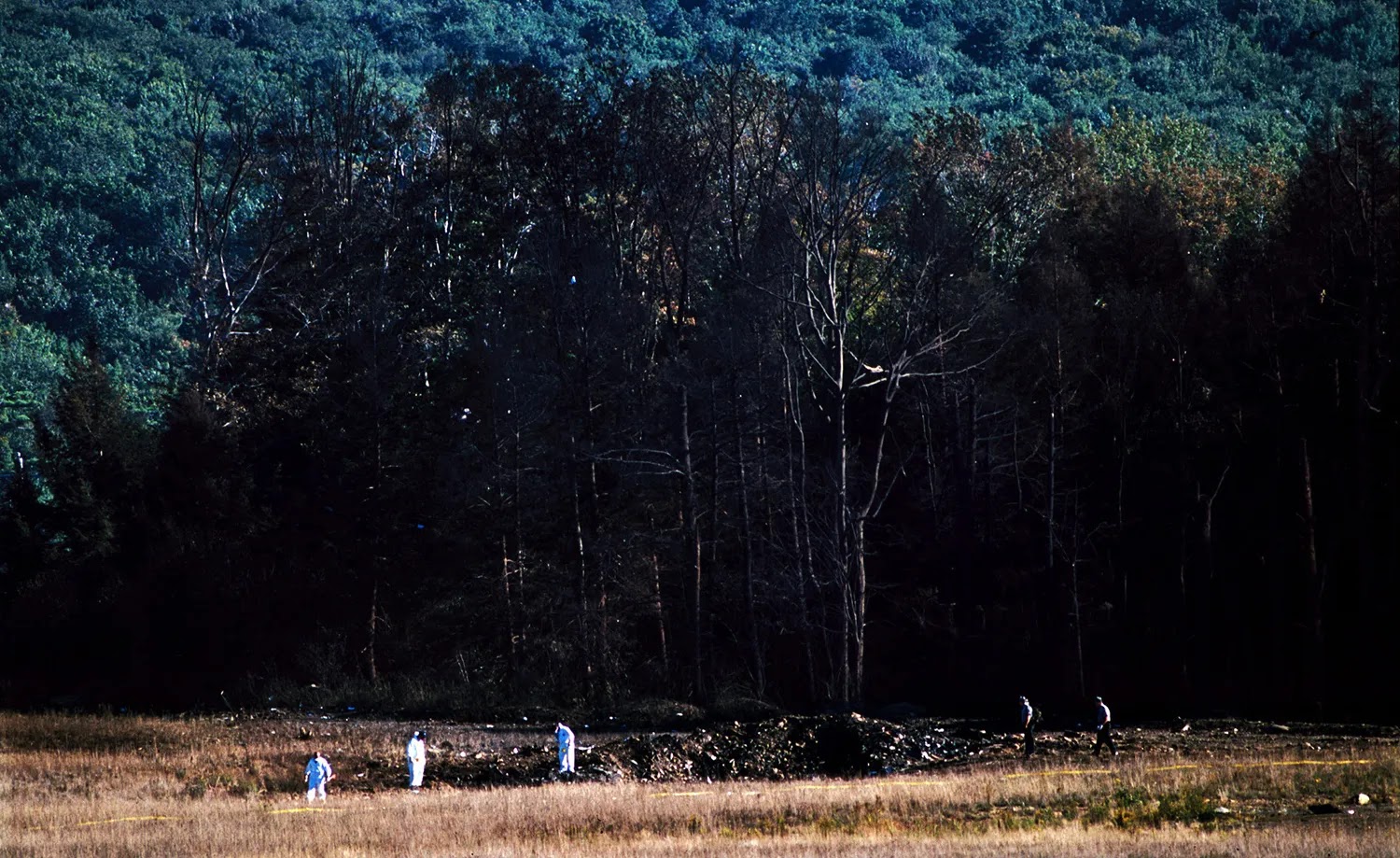
United Flight 93 had crashed in an open field which was an old strip mine, on a bluff there were still empty warehouses. With a quarter-of-a-mile road through the woods you could reach the field where the plane crashed. The crash site was a couple of hundred yards from the opening of the woods, just off the road. By the time we got there in the early afternoon there were like three hundred people and several buildings set up; the American Red Cross and The Salvation Army were there, portable cell towers for telephone service, air conditioned tents, and the people there were already gathering evidence from the crime scene.

What I was preparing myself for while I was driving up was an airplane wreck, but the plane, as we found out, was going so fast and at a such angle that when it hit the earth, the earth shot up into the air and landed back on the remains of the plane. So you wouldn't see what you normally see in a plane accident. Anybody who had never worked on anything similar, wouldn't think there was a plane accident there. You could see the outline of the wings where the earth was moved, but you could see no big pieces of the planes. They assigned leads to go and find evidence. There were large postal packages on the plane, letters and paper were scattered everywhere; the farthest away we found evidence was in backyards eight miles away, things got caught up in the jet stream and pushed that far away.
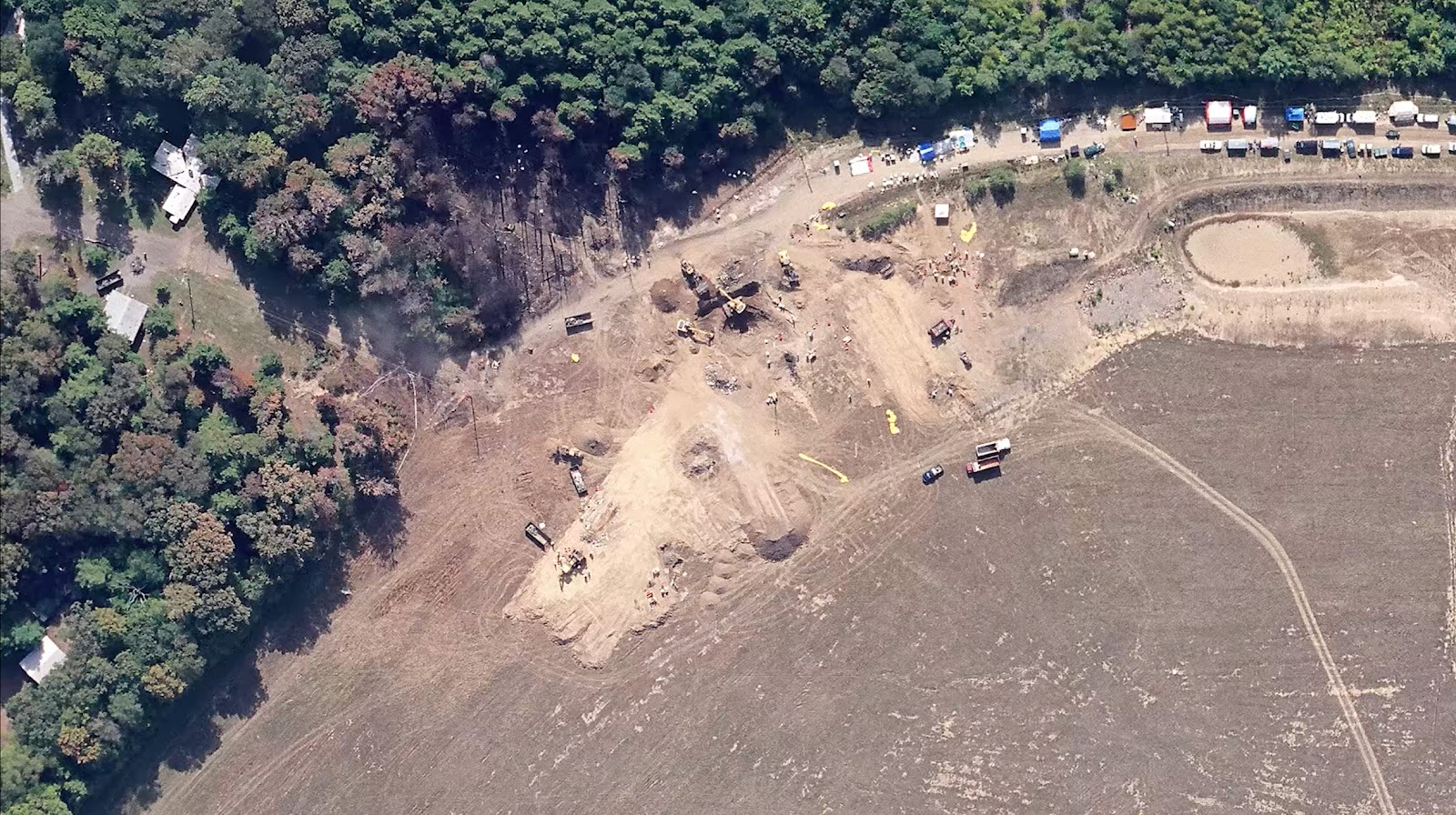

That was the beginning of it, which we did for fourteen days. They set up a morgue and a room for evidence recovery. The main function of my team was not only to find evidence but to find the two black boxes: the data box and the voice recording box. We began doing that and we ended up finding the voice recording box like 38 feet in the ground and the data box 28 feet in the ground.

At the same time there were excavations going on. The heavy things like the engines and the wheel wells didn't break up like the fuselage did, they got shot forward and we found one engine in a pond a quarter of a mile away. We did some amazing things while we were there that showed what we could do when we get rid of the bureaucracy and only cared about making things happen. After 9/11 it rained for a few days so the road from the warehouse to the crash site was just mud and vehicles were having a hard time getting in and out of that location; I left one night, came back the day after and they had paved that road overnight. Things like that, things you don't normally see, just happened; everything got done very quickly.


Undicisettembre: How long have you been there, sifting for evidence?

Matthew Hoke: The crime scene was two weeks. In those two weeks we did a lot of things, they brought Evidence Response Teams from five different divisions, it wasn't just the Pittsburgh Division but also Cincinnati, a team from Tennessee, a team from Chicago and Cleveland. There were a lot of us there, every team had their duty and since we were the team from the division the crash happened in, we were responsible for the crash site. Another team was responsible for the woods that got burned out because of the jet fuel, they had a tougher job in terms of smell and danger because of the air they were breathing.

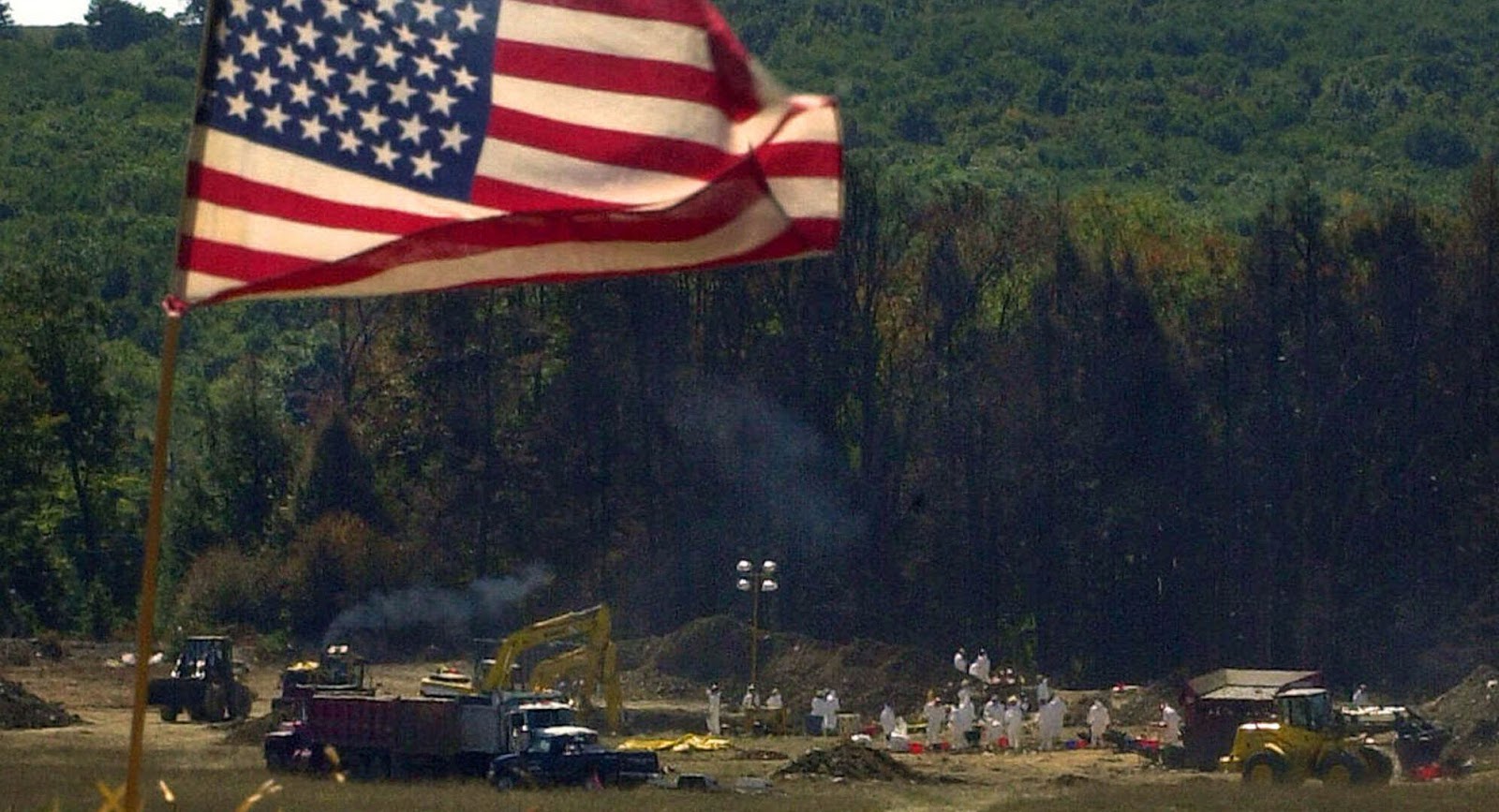
We were in the open, in a field bringing out tons and tons of dirt, putting it through a sifter, a huge machine that sifted it down to a half of an inch, from that sifter we would create a pile and from that pile we would hand sift to a quarter inch. One of our main goals was to identify anybody who was on that plane and eventually we accomplished that, we identified all the victims and the terrorists on the plane based on DNA. But it wasn't like we were finding large body parts, we were finding teeth, small pieces of skin. They were going to the morgue where the identification process began.

I was happy to be there and to be part of the solution, but at the same time not one of us knew what was going on in the outside world: we didn't know if we were going to war or if we had already gone to war. We had a little revolt three or four days into the crime scene, because we weren't getting information; because of health issues we had masks on, so we could not listen to radios or to the news and we got no updates. We wanted to be informed of what was going on, so our revolt consisted in asking for briefings at the crime scene about what was going on in the rest of the world: they did that, they started briefing us twice a day and giving us information about what was going on. That made it a lot easier to continue with our assignment.

Undicisettembre: How much did you guys know while doing that of the reason why the plane came down? Did you guys assume right away that it was because of a revolt of the passengers?

Matthew Hoke: It was just rumors initially. A lot of the town's people thought the United States Government had military jets shoot the plane out of the air because it was on a path to either the White House or the Capitol. I never believed that.

Five days in, family members of the victims came to the scene; at that time we knew what the passengers had done, they were heroes, brave and strong as nobody else. When their families came, they were just as strong. There weren't a lot of tears, there was a sad but proud feeling. We had a ceremony with the families there at the bluff where the command post was. I was so impressed with the strength of those families and it made us want to do the best job possible, either sifting or whatever your duty was, they were inspirational.

I went to the memorial in 2019 for the first time, it took me 18 years to go to the memorial, I went with one of my friends who was in the Pittsburgh Division with me. It was very emotional, but that respect and inspiration from the families continued and was strengthened by seeing what they had done at the memorial.


Undicisettembre: You mentioned finding pieces of the airplane and human remains, did you guys also find objects, like luggage or things that people were bringing with themselves?

Matthew Hoke: Yes, we found a lot of clothing, pictures, personal identification documentation and things of that nature, but that was found mostly in the woods while I was at the crash site; I personally wasn't finding a lot of that stuff because I was sifting through the dirt brought to us from the actual crash site of United Flight 93 looking for human remains. But we did find many objects and we identified everything and everybody based on what we found and DNA testing from human remains.


Undicisettembre: You also mentioned the black boxes, have you seen them?

Matthew Hoke: Yes, I was there when we found them and that was the number one goal in the very beginning, we found them at nighttime and they were immediately flown to Seattle so they could be tested and they could get data off of them. Everything happened really fast, there was no delay and we cut right through any normal administrative issues. It was impressive.


Undicisettembre: You saw pieces of the airplane, you saw objects belonging to the victims, you saw human remains, so what's your reaction when you hear people saying it was staged and that no plane crashed there?

Matthew Hoke: Well, it's frustrating to even talk about this. A conspiracy this big would mean that no one said anything in more than twenty years, it's just an easy out of the ignorant. By ignorant here I mean people who don't take time to do their own due diligence and find their correct news sources.

This is not just a problem with 9/11, this is a problem in general and it's very bad right now in the United States, some people are lazy as far as where they get their news from and how they count that first news source they read as Gospel without checking, fact checking and back checking it.

So it's frustrating but anybody who has worked for the FBI or law enforcement deals or has dealt with it during their whole career because somebody is always questioning if something happened or not. And then there are agendas of people who use conspiracy theories to make money.


Undicisettembre: How does 9/11 affect your everyday life?

Matthew Hoke: I gave numerous talks about United 93 and my partners who were there have done the same. It's not something I think about everyday anymore, but it's something that I think about a lot. I wish we didn't require a disaster like 9/11 for our country to come together and cross political disagreements. And I'll never forget the strength and bravery of the victims of United 93, not only did they save the US Capitol or the White House, they also saved hundreds of lives in downtown Washington DC. I cannot even put to words the amount of respect I have for them.

In the United States we were spoiled, because we didn't have terrorism in the back of our minds. Before 9/11 very few US citizens thought of terrorism as a threat to their daily lives. I worked a lot with NCA in the UK, NABU in Ukraine and the Indonesian National Police; terrorism is something they live with everyday and have for a long long time. I think from 9/11 we became a safer country with respect to terrorism and taking the necessary steps to combat it. It is a part of our history and it will always be a tragedy. We are unfortunate that it happened but we now pay more attention than we used to.

United 93: intervista all'ex agente dell'FBI Matthew Hoke

di Leonardo Salvaggio. L'originale in inglese è disponibile qui.
Per il ventiduesimo anniversario degli attentati dell'11/9, Undicisettembre offrei ai suoi lettori il racconto personale dell'ex agente dell'FBI Matthew Hoke che intervenne sulla scena dello schianto del volo United 93 a Shanksville.

Ringraziamo Matthew Hoke per la sua cortesia e disponibilità.


Undicisettembre: Puoi farci un racconto generale di ciò che ti è successo l'11 settembre?

Matthew Hoke:
L'11 settembre ero il coordinatore della Task Force sui crimini violenti e sulla droga di Huntington nel West Virginia, era diretta dall'FBI e comprendeva anche agenti della polizia locale e statale. Stavamo seguendo un gruppo di persone dal comportamento insolito, noleggiavano un'auto dall'aeroporto vicino a noi di venerdì, guidavano per circa 5.000 chilometri e restituivano l'auto di lunedì; è tanta strada e l'hanno fatto varie volte. Dovevo fare un'ora di strada in macchina per andare al lavoro tutti i giorni, stavo ascoltando una stazione radio nazionale quando dissero che un aereo aveva colpito una delle torri del World Trade Center. Da quanto sentii alla radio sembrava che fosse un piccolo aereo a elica, quindi non ci pensai molto.

Mentre entravo nel parcheggio del mio ufficio, che era una sede periferica senza insegne perché facevamo molte operazioni sotto copertura come comprare droga e cose del genere, il secondo aereo si schiantò contro la Torre Sud. Come tutti gli altri, capimmo che avevamo a che fare con qualcosa che non era un semplice aereo a elica che aveva colpito il World Trade Center. Al tempo non avevamo i cellulari, ma c'erano i cercapersone. Facevo parte dell'Evidence Response Team, che è un'attività volontaria collaterale dell'FBI, e ricevetti un messaggio che mi diceva di fare i bagagli perché saremmo andati a New York per due settimane.

Tornai a casa in fretta e mentre stavo facendo le valigie ricevetti un altro messaggio che diceva che un aereo si era schiantato in un campo a Shanksville, in Pennsylvania, e che saremmo andati lì perché Shanskville si trova nella divisione di Pittsburgh, che era il mio quartier generale, del territorio dell'FBI. Andammo subito a Shanksville, eravamo un gruppo di dodici o quattordici agenti, di solito ci vogliono cinque o sei ore di guida ma ci arrivammo in quattro ore.

Il volo United 93 si era schiantato in un campo aperto che era una vecchia miniera a cielo aperto, su un promontorio c'erano ancora i magazzini rimasti vuoti. Percorrendo una strada di circa 400 metri attraverso i boschi si raggiungeva il campo dove si era schiantato l'aereo. Il luogo dell'incidente era a un paio di centinaia di metri dall'inizio del bosco, appena fuori dalla strada. Quando arrivammo nel primo pomeriggio c'erano già circa trecento persone e vari edifici allestiti; c'erano la Croce Rossa e l'Esercito della Salvezza, ripetitori per i cellulari, tende con aria condizionata, e le persone sul luogo stavano già raccogliendo le prove dalla scena del crimine.

Ciò a cui mi stavo preparando mentre guidavo era un incidente aereo, ma l'aereo, come abbiamo scoperto, andava così veloce e con un'angolazione tale che quando colpì il terreno la terra si alzò in aria e atterrò sui resti dell'aereo. Quindi non si vedeva ciò che normalmente si vede in un incidente aereo. Chiunque non abbia mai lavorato a qualcosa di simile, non avrebbe pensato che ci fosse stato un incidente aereo in quel luogo. Si vedeva il contorno delle ali dove si era spostata la terra, ma non si vedevano grossi pezzi dell'aereo. Ci diedero piste da seguire per cercare i resti. Sull'aereo c'erano grossi pacchi postali, c'erano lettere e carta sparsi ovunque; gli oggetti più lontani che trovammo erano in giardini privati a otto miglia di distanza, questi oggetti erano finiti nella corrente a getto ed erano stati lanciati lontano.


Quello fu l'inizio, facemmo questo per quattordici giorni. Vennero allestiti un obitorio e una stanza dove venivano raccolte le evidenze. L'obiettivo principale della mia squadra non era solo quella di trovare evidenze, ma anche di trovare le due scatole nere: la scatola dei dati e la scatola delle registrazioni vocali. Iniziammo a cercarle e trovammo la scatola di registrazione vocale a 12 metri di profondità e la scatola dati a 8 metri di profondità.

Contemporaneamente erano in corso gli scavi. Gli oggetti pesanti come i motori e i passaruota non si erano frantumati come la fusoliera, erano stati gettati lontano e trovammo un motore in uno stagno a un quarto di miglio di distanza. Nel periodo che passammo lì facemmo cose incredibili che mostrarono cosa sappiamo fare quando ci liberiamo della burocrazia e ci concentriamo sul fare le cose in concreto. Dopo l'11 settembre piovve per alcuni giorni, quindi la strada dal magazzino al luogo dell'incidente divenne fangosa e i veicoli avevano difficoltà a entrare e uscire; me ne andai una sera e quando tornai il giorno dopo trovai che la strada era stata asfaltata durante la notte. Cose del genere, che normalmente non si vedono, lì accadevano; tutto veniva fatto molto velocemente.


Undicisettembre: Quanto tempo sei rimasto lì a cercare evidenze sulla scena?

Matthew Hoke: La scena del crimine è durata due settimane. In quelle due settimane facemmo molte cose, arrivò l'Evidence Response Team da cinque diverse divisioni, non solo dalla divisione di Pittsburgh ma anche da quella di Cincinnati, una squadra dal Tennessee, una da Chicago e una da Cleveland. Eravamo in molti, ogni squadra aveva il suo compito e siccome noi eravamo la squadra della divisione in cui è avvenuto l'incidente, eravamo responsabili della gestione del luogo dell'incidente. Un'altra squadra era responsabile dei boschi andati a fuoco a causa del carburante degli aerei e il loro compito era più difficile per via dell'odore e del pericolo dato dall'aria che respiravano.

Eravamo in un campo all'aperto ed estraevamo tonnellate e tonnellate di terra che poi veniva setacciata, c'era un macchinario enorme che la divideva in pezzi da un centimetro e mezzo, da lì veniva creato un mucchio che poi veniva diviso in pezzi da meno di un centimetro. Uno dei nostri obiettivi principali era identificare chiunque fosse stato su quell'aereo e alla fine ci riuscimmo, identificammo tutte le vittime e i terroristi grazie al DNA. Ma non c'erano grandi parti di corpo, trovavamo denti o piccoli pezzi di pelle. Poi venivano portati all'obitorio dove iniziava la procedura di identificazione.

Ero felice di essere lì e di essere parte della soluzione, ma allo stesso tempo nessuno di noi sapeva cosa stesse succedendo nel mondo esterno: non sapevamo se stavamo per andare in guerra o se era già iniziata. Tre o quattro giorni dopo che era stata dichiarata la scena del crimine facemmo una piccola rivolta perché non avevamo informazioni; a causa dei rischi per la salute indossavamo le mascherine, quindi non potevamo ascoltare la radio o i notiziari e non ricevevamo aggiornamenti. Volevamo essere informati su quello che stava succedendo, quindi la nostra rivolta consistette nel chiedere di ricevere briefing sulla scena del crimine su quello che stava succedendo nel resto del mondo: lo ottenemmo, iniziarono a informarci due volte al giorno e a darci informazioni su quanto stava succedendo. Ciò rese molto più facile continuare con il nostro lavoro.


Undicisettembre: Cosa sapevate in quelle fasi del motivo per cui l'aereo era precipitato? Avete pensato subito che fosse a causa di una rivolta dei passeggeri?

Matthew Hoke: All'inizio c'erano solo ipotesi. Molte persone della città pensavano che il governo degli Stati Uniti avesse fatto abbattere l'aereo dai jet militari perché era diretto alla Casa Bianca o al Campidoglio. Non ci ho mai creduto.

Cinque giorni dopo, i familiari delle vittime arrivarono sulla scena; in quel momento sapevamo già cosa avevano fatto i passeggeri, erano stati degli eroi, coraggiosi e forti come nessun altro. Quando arrivarono le loro famiglie, si rivelarono altrettanto forti. Pochi piangevano, c'era tristezza ma anche orgoglio. Tenemmo una cerimonia con le famiglie sul promontorio dove si trovava il posto di comando. Rimasi molto colpito dalla forza di quelle famiglie e ci spinse a fare il miglior lavoro possibile, che si trattasse di setacciare o qualunque altra cosa, furono per noi fonte di ispirazione.

Sono andato al memoriale nel 2019 per la prima volta, mi ci sono voluti 18 anni per decidermi, sono andato con uno dei miei amici che era nella divisione di Pittsburgh con me. È stato molto emozionante, e il rispetto per le famiglie e l'ispirazione che ne abbiamo tratto continuano e sono stati rafforzati vedendoli al memoriale.


Undicisettembre: Hai parlato del ritrovamento di pezzi dell'aereo e resti umani, avete trovato anche oggetti, come bagagli o cose che le persone portavano con sé?

Matthew Hoke: Sì, trovammo molti vestiti, foto, documenti di identificazione e cose del genere, ma vennero trovati principalmente nei boschi mentre io ero sul luogo dell'incidente; personalmente non ho trovato molte di quelle cose perché stavo setacciando i detriti che erano stati estratti dal luogo dell'incidente del volo United 93 in cerca di resti umani. Ma abbiamo trovato molti oggetti e identificammo tutto e tutti grazie a ciò che abbiamo trovato e al test del DNA sui resti umani.


Undicisettembre: Hai parlato anche delle scatole nere, le hai viste?

Matthew Hoke: Sì, ero lì quando la mia squadra le ha trovate, era l'obiettivo numero uno all'inizio, le trovammo di notte e furono immediatamente trasportate in aereo a Seattle in modo che potessero essere verificate e che i dati potessero essere estratti. Tutto è successo molto velocemente, non ci sono stati ritardi e abbiamo eliminato tutti i normali problemi amministrativi. È stato impressionante.


Undicisettembre: Hai visto pezzi dell'aereo, hai visto oggetti appartenenti alle vittime, hai visto resti umani, quindi qual è la tua reazione quando senti la gente dire che è stata messa in scena e che nessun aereo si è schiantato lì?

Matthew Hoke: Beh, è frustrante anche solo parlarne. Una cospirazione così grande significherebbe che nessuno ha detto niente in più di vent'anni, è solo una via d'uscita semplice per persone ignoranti. Per ignorante intendo persone che non si prendono il tempo per fare il proprio dovere e trovare fonti di notizie corrette.

Il problema non è limitato all'11 settembre, è un problema generale ed è un brutto momento in questo senso negli Stati Uniti, alcune persone sono pigre per quanto concerne la scelta delle fonti delle informazioni e il modo in cui considerano Vangelo la prima fonte che trovano senza controllare, senza verificare i fatti e verificare a posteriori.

È frustrante, ma chiunque abbia lavorato all'FBI o nelle forze dell'ordine se ne occupa o se n'è occupato prima o poi durante la sua carriera perché qualcuno mette sempre in dubbio se una cosa è successa davvero. E poi ci sono persone che intenzionalmente usano le teorie del complotto per fare soldi.


Undicisettembre: L'11 settembre come influisce sulla tua vita quotidiana?

Matthew Hoke: Ho tenuto molte conferenze su United 93 e i miei colleghi che erano lì hanno fatto lo stesso. Non è più qualcosa a cui penso ogni giorno, ma comunque ci penso molto. Vorrei che non avessimo bisogno di un disastro come l'11 settembre perché il nostro paese si unisse e superasse i disaccordi politici. E non dimenticherò mai la forza e il coraggio delle vittime di United 93, non solo hanno salvato il Campidoglio o la Casa Bianca, ma hanno anche salvato centinaia di vite nel centro di Washington. Non riesco nemmeno a esprimere a parole la quantità di ammirazione che ho per loro.

Negli Stati Uniti eravamo viziati, perché non avevamo in mente il terrorismo. Prima dell'11 settembre pochissimi cittadini statunitensi pensavano al terrorismo come a una minaccia per la loro vita quotidiana. Ho lavorato molto con la NCA nel Regno Unito, la NABU in Ucraina e la polizia nazionale indonesiana; il terrorismo è qualcosa con cui convivono ogni giorno da molto tempo. Penso che dall'11 settembre siamo diventati un paese più sicuro nei confronti del terrorismo e stiamo prendendo le misure necessarie per combatterlo. Fa parte della nostra storia e sarà sempre una tragedia. È una disgrazia che sia successo, ma ora prestiamo più attenzione di prima.

2021/06/25

United 93: an interview with former Red Cross executive director Jeffrey Varnes

by Leonardo Salvaggio. An Italian translation is available here.

We offer today our readers the personal account of former Red Cross executive director Jeffrey Varnes who directed the Red Cross response to the United 93 incident on 9/11.

We would like to thank Jaffrey Vernes for his kindness and willingness to help.


Undicisettembre: Can you give us a general account of what you saw and experienced on 9/11?

Jeffrey Varnes:
I was the executive director of the York County, Pennsylvania, Chapter. The day started off with a meeting with my staff because there had been a tragedy at the York Fair the night before, when a young boy was injured and died on an amusement ride. Since the Red Cross had the first aid station responsibility there, I wanted to determine how we might have been involved in the incident, so I dispatched two individuals to go out to the fairgrounds and determine what our role might have been in the incident. Shortly after dispatching them I received a call from my wife who told me that a small plane had hit the World Trade Center. The feeling at the time was that this was a very small plane.

I was a member and a leader of the American National Red Cross Air Incident Response Team. As part of our training, whenever there is a plane incident we were instructed to call in and indicate our availability. Knowing the limited amount of information that I had, I called in to our headquarters and indicated I would have been available to go to New York if they should require me.

Our Chapter was located in a temporary facility because our permanent facility was being renovated, so we did not have a lot of infrastructure available to us but I was able to get to a television somewhere in the building so I could see what was going on. By the time I was able to do that the second airplane hit the World Trade Center; virtually everybody knew this was more than just a small plane. I had been put on stand-by then for New York City and for my own family protocol my wife was beginning to get my things ready to leave. Shortly after that, the news reports indicated that there was a plane that went into the Pentagon and there was a rumor there was a bomb outside the State Department.

When I went home to get my luggage we heard that a plane had crashed in Pennsylvania as well, in Shansksville which is close to Somerset. Shortly after that I got a call from our national headquarters that changed my assignment from New York City to Shanksville and I was instructed to report to our headquarters in Johnstown, Pennsylvania, which was the Chapter that had jurisdiction over Shanksville. I traveled across Pennsylvania, which was a three and a half hour trip on the Pennsylvania Turnpike, and as I was going across the state I listened to the radio to get the latest news. I had a call with our national headquarters and at that point I had no understanding of the role I was going to play, so I asked “What do you want me to do? What would be my role in the operation?” and they advised I would be directing the Red Cross response to the United 93 incident. This changed my whole prospective, rather than thinking of the small role I might have had in New York I understood the magnitude of being the director of the Red Cross response.

The Red Cross had always relied of me to go to high profile incidents because of my experience in working with high government officials and business leaders in addition to the disasters responsibility that I had. When I realized I would be directing the operation I began to formulate my plans for how I would approach the situation. In an air incident the Red Cross has traditionally been similar to a subcontractor for the NTSB, so most of my experience in mass casualties incidents was working with NTSB and our job was to care for families of people who perished or had survived the incident. Also one of our prime responsibilities was to conduct a memorial service for those who were on the aircraft. When I arrived in Johnstown I got a briefing on the geographical area that I’d be working. This might seem a little strange but one of the first things I had to do was to set up our headquarters from which all of us would be operating and set up all the communication elements that were needed.

Late that afternoon I was able to identify several potential headquarters sites, I completed my job in Johnstown and then proceeded to go first to Shanksville and then to Somerset, where the hotel was located. When I went to my room I started to contemplate what the next day would look like. It was overwhelming, I felt so alone at the time and with a lot of responsibility on my shoulders and kind of wondering how I would get through it.


The following day rather than the NTSB being in charge, it was the FBI who was in charge and it was the first time I worked with them so directly. My first meeting was with a number of agencies and it was convened by the FBI and the ATF; their first mission, I heard in the briefing, was they would be going through the field where the aircraft had crashed and identify pieces of evidence that could be plane parts, body parts or anything else associated with the incident, and they were instructed to put small “evidence” flags on the ground where they found anything. This was my first clue about some of the services we would need to provide in addition to our services to the families. Because many of these agents had never experienced a mass casualty situation before and they were going to see things they had never seen before, so that would have a mental and psychological effect on them that the Red Cross could provide mental health support for.

Following that meeting I went and identified a headquarters which was in a church right outside Somerset and it was located between the incident site and where we would be housing the families of the victims. We brought our communications team in and they were able to set up quickly their phone and internet lines. It’s important to underline that in the Red Cross we dispatch people who have expertise in various areas to help on an operation: logistics, mental health, physical health, social work, mass care. So I had never worked with the people who were on my team before, so one of the challenges was to assemble my team and understand the strength and the weaknesses of them so that you can arrange them to become a cohesive unit as quickly as possible. We set out headquarters, I got a system for credentialing our workers and we established our presence both at the Seven Springs Hotel, where the families were going to stay, and at the incident site, where we were providing food and beverages to workers.

Right in front of the canteen, there were mental health people, these people were trained to engage in conversations and debrief the workers when they came out of the crash scene so they could describe what they had seen as opposed to keep it inside and not talking to anybody about it. Most of the workers would prefer to engage our people rather than their agency’s assistance programs because they feared there would have been a record kept of the conversation and law enforcement people don’t like that kind of image. Our people kept no records of those conversations, so it was a valuable service to provide to them.

At the Seven Springs Hotel we set up an assembly room with roundtables and chairs, sandwiches and snacks for the families. We had our mental health and spiritual care workers who could listen to them if they wanted to talk about their loved ones. One of the problems was the plane took off from Newark to San Francisco, so there were East Coast and West Coast passengers on the plane and in those days after 9/11 no planes were flying; so we had families from the East Coast, because they drove to Shanksville from the New York area, but not from the West Coast initially.

There was also a command center in the basement of the hotel which assembled all of the agencies that were working with the families. I visited it several times to get briefed by my staff that were responsible for that area.

That went on for days, then the pieces of bodies were uncovered and sent to a mortuary which was another service site for the Red Cross. It was staffed with what they called DMORT, Disaster MORtuary Teams, which are made up of morticians from around the country who came in to support local officials; Somerset is a very small town so it needed all the help it could get to be able to identify the bodies. One of the first procedures that the DMORT does is to interview the families and try to acquire from them any DNA material that they could bring: a toothbrush, a hair comb, anything like that. For the families it’s very dramatic to go through those interviews and our mental health people were there to help them.

The DMORT members never faced mass casualty incidents like this either, so they were facing mental health issues too; we made an area outside of the mortuary where they could come on their breaks to get food and beverages and we staffed that area with mental health people too.

This lasted maybe five days at most and from a Red Cross point of view what we accomplished in a day was what we would normally accomplish in a week. I was on the phone constantly, sometimes two phones, to resolve issues or to meet certain problems. One of the things the director has to do is make decisions; if you make the wrong decision you correct it, but if you don’t make decisions you paralyze the whole operation.

We also had a political decision to make. A couple of nights after the event there was a memorial event at the Somersest County seat, which I was privileged to attend, it was an emotional event and they recognized all of the individuals who perished on the plane except for the perpetrators. So how were we going to recognize the lives that were lost on the aircraft? It was a very political decision as to whether we should have considered everyone or just the passengers. So we only had one candle to represent all the lives that were lost and people could include in that whoever they wanted to.

We also had to make a decision on the memorial service because the East Coast people were already there and were going to be going home soon; while the West Coast people were just starting to arrive. So we had two memorial services, one for the early arrivals and one for the late arrivals.

The families were wondering why they hadn’t heard from any federal officials: federal officials were at the Pentagon, in New York City, but no one came to Shanksville. That came to my attention, I was aware of the bureaucracy of the Red Cross and understood I could not meet the need of the families if I went that route. I was good friends with our congressman in my hometown, York, Pennsylvania, so I reached out to him, explained the situation and asked if the White House was interested in sending some representatives. He contacted the congressional liaison to the White House. Late in the afternoon before the memorial service I had a call from the White House and they told me that the President and the Vice President were not coming to the memorial service because of meetings they were involved with, but they would contact me shortly with the individual who would be representing the federal government at the memorial service. After that I received a second call from the White House who said “I’m able to tell you but you can’t tell anybody, you have to be on a hard line.” I let him know the number he could reach me at and he said “The person that will be coming is going to be Mrs Bush.” but I was not able to tell anyone in my team until I would get the secure call from the White House. I got back to the headquarters and I got the secure call from the White House and I was then able to brief my team. They had wanted me on a hard line because if we were on a cellphone some of the conversation could be overheard.

Shortly after that the Secret Service arrived and they conducted a surveillance of the area where she was going to be. When she arrived there was a line on each side of EMS personnel to greet her. When she got out of the car rather than go into the room they had prepared for her, she wanted to handshake with all the EMS people who turned out. I had never seen cars moving so fast, reposition themselves, and Secret Service agents move so fast to accommodate her wishes. She was the best person to come, rather than the President because she put a compassionate and empathetic face on the response to the administration, the President would have had to put a warlike face.

For the second service, Mrs Cheney came. She did an equally fine job with the families, when we went to the luncheon she went to each table and greeted them. I’ll never forget the families did not say anything about themselves, they said “We pray for you, for the President and the Vice President as you are facing this situation.”, they reached out with words of comfort to Mrs Cheney when she was trying to do the same.


Undicisettembre: How would you describe the crash site?

Jeffrey Varnes: The crash site was like a hole in the ground. I wasn’t allowed to get close to the crash site, I had to stay back because it was a crime scene. They only allowed credentialed law enforcement officials to be in the crime scene itself.


Undicisettembre: You mentioned working with the NTSB many times before 9/11, so what made this case unique when compared to the others?

Jeffrey Varnes: First of all the NTSB was not in charge, the FBI was. So everything needed to be treated as a crime scene. I had to daily fax to the FBI the names of the volunteers who were going to be on the scene so they could have complete knowledge and accountability of who was going to be there, I never had to do that when NTSB was in charge. Working with a federal law enforcement agency was a totally different responsibility or experience for me.

Another thing I would say was very different was the media intensity. They wanted to interview the families, the Red Cross traditionally tries to protect the families from media intrusion unless they desire to speak to the media. In this case what we did was to try to facilitate that. We briefed the families on the options they had to present to the media: they could do it in a press conference, a one on one interview, they could make a statement, make a statement and then open themselves up for questions.


Undicisettembre: Since you had to work on pieces of dead bodies, how do you react when you hear folks saying it was all staged and no plane crashed there?

Jeffrey Varnes: That’s completely false, there was a plane that crashed there. I was there. I experienced the smell and I saw the grief of the families; those were not fake families.


Undicisettembre: Are you involved with the response to the COVID-19 pandemic too at the moment?

Jeffrey Varnes: I am.


Undicisettembre: How would you compare the crisis after 9/11 to the crisis the country is living now for the pandemic?

Jeffrey Varnes: COVID-19 is an international phenomenon, while the initial phases of 9/11 were more domestic in nature. The loss of life was sudden, while with COVID it can drag out. COVID struck fear in many more people than 9/11 as to whether they can be personally involved. COVID had a mental effect on people who were required to be isolated for a long period of time. So the immensity of the impact of COVID on people is much more pervasive than 9/11 even if the shock to the nation was sudden rather than a growing kind of thing then with COVID-19.

We were able to sponsor vaccination clinics in the community where I reside now in Nevada and we were able to involve over two hundred of our residents to volunteering to help with the administration of the vaccine. What I didn’t anticipate was the effect that would have on our volunteers, it let them come out of their homes and do something that was good for other people and also made them socialize in a way they hadn’t done in the previous fourteen months. It had a very positive impact of our community. We now feel like we are on our way to recovery but we don’t know for sure.

United 93: intervista all'ex direttore esecutivo della Croce Rossa Jeffrey Varnes

di Leonardo Salvaggio. L'originale inglese è disponibile qui.

Offriamo oggi ai nostri lettori il racconto personale del direttore esecutivo della Croce Rosse Jeffrey Varnes, che l'11/9 fu il direttore delle operazioni della Croce Rossa per l'incidente del volo United 93.

Ringraziamo Jeffrey Varnes per la sua cortesia e disponibilità.


Undicisettembre: Puoi farci un racconto generale di ciò che hai visto e vissuto l'11 settembre?

Jeffrey Varnes:
Ero il direttore esecutivo del Chapter [nome dell’edificio dove ha sede la Croce Rossa, NdT] di York County, Pennsylvania. La giornata iniziò con una riunione con il mio staff perché la sera prima c'era stata una tragedia alla Fiera di York, un ragazzino era rimasto coinvolto in un incidente su una giostra in seguito al quale è morto. Dato che la Croce Rossa aveva la responsabilità del pronto soccorso, volevo capire quale era stato il nostro ruolo nell'incidente, quindi inviai due persone alla fiera per accertarlo. Poco dopo ricevetti una telefonata da mia moglie che mi disse che un piccolo aereo aveva colpito il World Trade Center. La sensazione in quel momento era che si trattasse di un aereo molto piccolo.

Ero un membro e uno dei capi dell'American National Red Cross Air Incident Response Team. In base alla nostra formazione, ogni volta che si verificava un incidente aereo ci veniva chiesto di chiamare e indicare le nostre disponibilità. In base alla quantità limitata di informazioni che avevo, chiamai la nostra sede e dissi che sarei stato disponibile ad andare a New York se avessero avuto bisogno di me.

La nostra sede era in una struttura temporanea perché la nostra struttura abituale era in fase di ristrutturazione, quindi non avevamo molte infrastrutture a nostra disposizione, ma riuscii a trovare un televisore da qualche parte nell'edificio in modo da poter vedere cosa stava succedendo. Proprio in quel momento, il secondo aereo colpì il World Trade Center; praticamente tutti capimmo che era più grave dell’incidente di un piccolo aereo. In quel momento ero stato messo in lista di attesa per andare a New York e per la mia procedura di famiglia mia moglie stava iniziando a preparare le mie cose per partire. Poco dopo, i notiziari dissero che c'era un aereo che si era schiantato contro il Pentagono e c'erano voci secondo cui c'era una bomba fuori dal Dipartimento di Stato.

Quando arrivai a casa per prendere i bagagli sentimmo che un aereo si era schiantato anche in Pennsylvania, a Shansksville, vicino al Somerset. Poco dopo ricevetti una telefonata dal nostro quartier generale nazionale che aveva cambiato il mio incarico da New York City a Shanksville e mi fu ordinato di presentarmi al nostro quartier generale a Johnstown, in Pennsylvania, che era la sede che aveva giurisdizione su Shanksville. Attraversai la Pennsylvania, che era un viaggio di tre ore e mezza, sulla Pennsylvania Turnpike, e mentre attraversavo lo stato ascoltavo la radio per sentire le ultime notizie. Ricevetti una telefonata dalla nostra sede nazionale e a quel punto non sapevo ruolo che avrei avuto, quindi chiesi “Cosa volete che faccia? Quale sarà il mio ruolo nell'operazione?" e mi hanno detto che sarei stato il responsabile della Croce Rossa per l'incidente di United 93. Questo cambiò tutta la mia prospettiva, invece di pensare al ruolo minore che avrei avuto a New York capii l’importanza di essere il direttore delle operazioni della Croce Rossa.

La Croce Rossa aveva sempre fatto affidamento su di me per affrontare incidenti di alto profilo a causa della mia esperienza nel lavorare con alti funzionari governativi e leader aziendali oltre alla responsabilità in caso di disastri che avevo. Quando capii che sarei stato io a dirigere l'operazione, iniziai a formulare dei piani su come affrontare la situazione. In un incidente aereo la Croce Rossa è tradizionalmente simile a un subappaltatore per l’NTSB, quindi gran parte della mia esperienza in incidenti con molte vittime era di aver lavorato con l’NTSB e il nostro lavoro era prenderci cura delle famiglie delle persone morte o sopravvissute nell'incidente. Inoltre, una delle nostre principali responsabilità era quella di condurre un servizio commemorativo per coloro che erano sull'aereo. Quando arrivai a Johnstown mi fecero un briefing sull'area geografica in cui avrei lavorato. Potrebbe sembrare un po' strano, ma una delle prime cose che dovetti fare fu organizzare la sede da cui tutti noi avremmo operato e attivare i servizi di comunicazione necessari.

Nel tardo pomeriggio sono individuai diverse potenziali sedi, completai il mio lavoro a Johnstown e poi andai prima a Shanksville e poi a Somerset, dove si trovava l'hotel. Quando arrivai in camera cominciai a pensare a come sarebbe stato il giorno dopo. Fu opprimente, mi sentivo così solo in quel momento e con molte responsabilità sulle mie spalle e mi chiedevo come avrei fatto a superarlo.


Il giorno seguente, invece dell'NTSB, fu l’FBI ad essere in comando e fu la prima volta che lavoravo con loro in modo così diretto. La mia prima riunione fu con molte agenzie diverse e fu convocata dall'FBI e dall'ATF; la loro prima missione, dissero nel briefing, sarebbe stata ispezionare il campo in cui l'aereo si era schiantato e identificare elementi di prova come parti di aereo, parti di corpi o qualunque altra cosa correlata all'incidente, e fu detto loro di porre piccole bandiere che indicassero i luoghi dove trovavano qualcosa. Questa fu la prima indicazione su ciò che avremmo dovuto fare oltre ai consueti servizi per le famiglie. Molti di questi agenti non avevano mai vissuto un disastro di massa e avrebbero visto cose che non avevano mai visto prima, questo avrebbe avuto conseguenze psicologiche su di loro e la Croce Rossa avrebbe potuto fornire supporto per la loro salute mentale.

Dopo quell'incontro andai a stabilire dove sarebbe stato il nostro quartier generale, che era in una chiesa appena fuori Somerset che si trovava tra il luogo dell'incidente e dove avrebbero alloggiato le famiglie delle vittime. Coinvolgemmo anche il nostro team di telecomunicazioni che riuscì a configurare rapidamente le linee telefoniche e la connessione a internet. È importante sottolineare che la Croce Rossa invia per operazioni di questo tipo persone che hanno esperienza in vari settori: logistica, salute mentale, salute fisica, lavoro sociale, assistenza di massa. Quindi non avevo mai lavorato con le persone che erano nella mia squadra prima, e una delle sfide era assemblare la squadra e comprenderne i punti di forza e di debolezza in modo da poterla organizzare in modo che diventasse un'unità coesa il più rapidamente possibile. Stabilii il quartier generale, allestii un sistema per accreditare i nostri lavoratori e stabilimmo la nostra presenza sia al Seven Springs Hotel, dove sarebbero rimaste le famiglie, sia nel luogo dell'incidente, dove fornivamo cibo e bevande ai lavoratori.

Proprio di fronte alla mensa, c'erano persone che si occupavano di salute mentale, queste persone erano formate su come condurre conversazioni e fare domande ai lavoratori quando uscivano dalla scena dell'incidente in modo che potessero descrivere ciò che avevano visto anziché tenerlo dentro e non parlarne a nessuno. La maggior parte dei lavoratori preferiva affidarsi al nostro personale piuttosto che ai programmi di assistenza delle loro agenzie perché temevano che ci fosse un registro delle conversazioni e alle forze dell'ordine non piace dare quel tipo di immagine. Il nostro personale non teneva traccia di quelle conversazioni, quindi fu un servizio molto utile da dar loro.

Al Seven Springs Hotel allestimmo una sala riunioni con tavoli rotonde e sedie, panini e snack per le famiglie. C’erano i nostri operatori della salute mentale e della cura spirituale che potevano ascoltarli se volevano parlare dei loro cari. Uno dei problemi era che l'aereo era decollato da Newark ed era diretto a San Francisco, quindi c'erano passeggeri della costa orientale e della costa occidentale e in quei giorni dopo l'11 settembre il traffico aereo fu sospeso; quindi c’erano famiglie della costa orientale, perché erano arrivate a Shanksville dall'area di New York, ma inizialmente non c’era nessuno dalla costa occidentale. C'era anche un centro di comando nel seminterrato dell'hotel che riuniva tutte le agenzie che stavano lavorando con le famiglie. Lo visitai diverse volte per essere informato dal mio staff che era responsabile di quell'area.

Andò avanti così per giorni, poi vennero trovati i pezzi dei corpi che vennero dissotterrati e inviati all'obitorio che era un altro dei luoghi dove la Croce Rossa prestava servizio. Era presente il gruppo chiamato DMORT, Disaster MORtuary Teams, che è composto da esperti di servizi mortuari provenienti da tutto il paese che vennero in aiuto dei funzionari locali; Somerset è una città molto piccola, quindi aveva bisogno di tutto l'aiuto possibile per identificare i corpi. Una delle prime procedure che fa il DMORT è intervistare le famiglie e cercare di acquisire da loro qualsiasi frammento di DNA che possano recuperare: uno spazzolino da denti, un pettine, cose del genere. Per le famiglie è molto doloroso affrontare quelle interviste e le nostre persone che si occupano di salute mentale erano lì per aiutarle.

Anche i membri del DMORT non avevano mai affrontato incidenti di massa come questo, quindi dovettero affrontare anche problemi di salute mentale; creammo un'area fuori dall'obitorio dove potevano venire durante le pause a prendere cibo e bevande e mettemmo del personale per la salute mentale anche in quell'area.

Tutto questo durò circa cinque giorni e dal punto di vista della Croce Rossa quello che realizzammo in un giorno era ciò che normalmente avremmo realizzato in una settimana. Ero costantemente al telefono, a volte due telefoni, per risolvere questioni o problemi di varia natura. Una delle cose che il direttore deve fare è prendere decisioni; se prendi la decisione sbagliata la correggi, ma se non prendi decisioni paralizzi l'intera operazione.

Dovemmo anche prendere una decisione politica. Un paio di sere dopo l'incidente ci fu una commemorazione nella sede della contea di Somersest, a cui ebbi l’onore di partecipare, fu un evento emozionante in cui omaggiarono tutte le persone morte sull'aereo tranne i perpetratori. E noi come avremmo dovuto ricordare le vite perse sull'aereo? Se avessimo dovuto considerare tutti o solo i passeggeri era una decisione molto politica. Quindi ponemmo una sola candela per rappresentare tutte le vite perse e i partecipanti potevano includervi chi volevano.

Dovemmo prendere una decisione sul servizio funebre perché la famiglie della costa orientale erano già arrivate e presto sarebbero tornate a casa; mentre quelle della costa occidentale stavano appena iniziando ad arrivare. Quindi decidemmo di fare due servizi commemorativi, uno per i primi arrivati e uno per chi arrivò dopo.

Le famiglie si chiedevano perché non ci fossero notizie di rappresentanti federali che venissero sul luogo: i funzionari federali andavano al Pentagono e a New York City, ma nessuno era ancora venuto a Shanksville. Questo fatto arrivò alla mia attenzione, conoscevo bene la burocrazia della Croce Rossa e capii che non sarei riuscito ad accontentare le famiglie se avessi preso quella strada. Ero molto amico del membro del congresso della mia città natale, York, Pennsylvania, quindi lo contattai, gli spiegai la situazione e chiesi se la Casa Bianca era interessata a inviare dei rappresentanti. Lui contattò l’ufficiale alle relazioni con il congresso della Casa Bianca. Nel tardo pomeriggio prima del servizio commemorativo ricevetti una telefonata dalla Casa Bianca e mi dissero che il presidente e il vicepresidente non sarebbero venuti al servizio commemorativo a causa di incontri in cui erano coinvolti, ma mi avrebbero contattato a breve con per dirmi chi avrebbe rappresentato il governo federale al servizio commemorativo. In seguito ricevetti una seconda chiamata dalla Casa Bianca che diceva: "Possiamo dirlo a te ora ma tu non puoi riferirlo a nessuno, devi essere su una linea fissa". Gli comunicai il numero a cui poteva contattarmi e disse "La persona che verrà sarà la signora Bush" ma non potevo dirlo a nessuno della mia squadra fino a quando non me lo avessero detto nella telefonata su linea fissa con la Casa Bianca. Tornai al quartier generale e ricevetti la chiamata su linea fissa dalla Casa Bianca e potei quindi informare la mia squadra. Mi avevano voluto parlare su una linea fissa perché se fossimo stati al cellulare parte della conversazione avrebbe potuto essere intercettata.

Poco dopo arrivarono i servizi segreti e condussero una sorveglianza dell'area in cui la signora Bush si sarebbe trovata. Quando arrivò c'era una doppia fila di personale medico a salutarla. Quando scese dall'auto invece andare nella stanza che avevano preparato per lei, volle stringere la mano a tutto il personale medico che era venuto. Non avevo mai visto automobili muoversi così velocemente, riposizionarsi, e agenti dei servizi segreti muoversi così velocemente per soddisfare i suoi desideri. Era la persona migliore che potesse venire, meglio anche del presidente perché fu compassionevole e comprensiva, il presidente avrebbe dovuto tenere un atteggiamento bellicoso.

Per il secondo memoriale venne la signora Cheney. Fece un lavoro altrettanto eccellente con le famiglie, quando andammo al pranzo passò per tutti i tavoli a salutarle. Non dimenticherò mai che le famiglie non parlarono di sé stesse, dissero "Preghiamo per lei, per il presidente e il vicepresidente che state affrontando questa situazione", le rivolsero parole di conforto mentre lei cercava di fare lo stesso.


Undicisettembre: Come descriveresti il luogo dell'incidente?

Jeffrey Varnes: Il luogo dell'incidente era come un buco nel terreno. Non mi fu permesso di avvicinarmi al luogo dell'incidente, dovetti rimanere indietro perché era una scena del crimine. Permisero solo alle forze dell'ordine accreditate di accedere alla scena del crimine stessa.


Undicisettembre: Hai menzionato di aver lavorato con l'NTSB molte volte prima dell'11 settembre, cosa ha reso questo caso unico rispetto agli altri?

Jeffrey Varnes: Prima di tutto l'NTSB non era in comando, lo era l'FBI. Quindi tutto doveva essere trattato come una scena del crimine. Dovevo inviare quotidianamente via fax all'FBI i nomi dei volontari che sarebbero stati sulla scena in modo che sapessero e avessero la responsabilità di chi sarebbe stato presente, non lo avevo mai fatto nei casi in cui l'NTSB era in comando. Lavorare con un'agenzia federale delle forze dell'ordine fu per me una responsabilità e un'esperienza completamente diversa.

Un'altra cosa che direi sia stata molto diversa era l'attenzione dei media. Volevano intervistare le famiglie, la Croce Rossa di solito cerca di proteggere le famiglie dall'intrusione dei media a meno che siano loro a voler parlare con i media. In questo caso quello che abbiamo fatto è stato cercare di facilitarlo. Informammo le famiglie sulle opzioni che avevano per parlare con i media: potevano farlo in una conferenza stampa, un'intervista individuale, potevano fare una dichiarazione, fare una dichiarazione e poi rendersi disponibili alle domande.


Undicisettembre: Dato che hai dovuto lavorare su pezzi di cadaveri, come reagisci quando senti la gente dire che era tutta una messinscena e che nessun aereo si è schiantato in quel luogo?

Jeffrey Varnes: È completamente falso, c'era un aereo che si è schiantato lì. Ero lì. Ho sentito l'odore e ho visto il dolore delle famiglie; quelle non erano famiglie false.


Undicisettembre: Anche tu sei coinvolto nella risposta alla pandemia di COVID-19 in questo momento?

Jeffrey Varnes: Sì. Lo sono.

Undicisettembre: Come paragoneresti la crisi dopo l'11 settembre con la crisi che il paese sta vivendo ora per la pandemia?

Jeffrey Varnes: Il COVID-19 è un fenomeno internazionale, mentre le fasi iniziali dell'11 settembre erano di natura più nazionale. La perdita delle vite è stata improvvisa, mentre con il COVID è un processo lungo. Il COVID ha suscitato paura in molte più persone rispetto all'11 settembre, sul fatto che possano essere coinvolte personalmente. Il COVID ha avuto un effetto mentale sulle persone che dovevano essere isolate per un lungo periodo di tempo. Quindi l'immensità dell'impatto del COVID sulle persone è molto più pervasivo dell'11 settembre, anche se lo shock per la nazione fu improvviso invece di una crescita costante come nel caso del COVID-19.

Abbiamo patrocinato cliniche per la vaccinazione nella comunità in cui risiedo ora in Nevada e abbiamo coinvolto oltre duecento dei nostri residenti nel volontariato per aiutare con la somministrazione del vaccino. Quello che non mi aspettavo era l'effetto che avrebbe avuto sui nostri volontari, li ha fatti uscire di casa e li ha portati a fare qualcosa di buono per le altre persone e li ha anche fatti socializzare come non avevano potuto fare nei precedenti quattordici mesi. Ha avuto un impatto molto positivo sulla nostra comunità. Ora la sensazione è che siamo sulla buona strada per il recupero, ma non lo sappiamo per certo.

2021/04/24

United 93: an interview with former air traffic controller Mahlon Fuller

by Leonardo Salvaggio. An Italian translation is available here.

We are offering our readers today the personal account of former air traffic controller Malhon Fuller who was working at the Pittsburgh International Airport when United 93 was hijacked by terrorists and when it crashed close to Shanksville.

We would like to thank Mahlon Fuller for his kindness and willingness to help.


Undicisettembre: Can you give us a general account of what you saw and experienced on 9/11?

Mahlon Fuller:
I was the watch supervisor at the control tower and radar room at the Greater Pittsburgh International Airport, which at the time was among the ten or twelve busiest airports in the nation; after 9/11 that changed significantly. USAirways was principal user of the airport but moved to another primary base of operations, reducing traffic significantly. After the pandemic hit American Airlines parked about a hundred planes there because they are not using them. Traffic dropped even more.

On 9/11/01 when I got at work it was such a beautiful day, I recall the sky and it was bluer than I had ever even in Wyoming or Montana. I remember saying to myself “What a great day to be alive.”

I got to work at 6:30 and at the time US Airways ran what they called “banks of departures” and “of arrivals”; for example between forty and eighty aircrafts would arrive in a short period of time, people would deplane, most of them would change plane and forty minutes later all these planes would taxi out and take off. So you had times when it was very busy with arrivals and times when it was very busy with departures.

The second arrival rush had landed and it took about forty minutes to turn their planes around. A controller who was on break came into the radar room and said “The World Trade Center has been hit”. When an air traffic controller says “hit” in that context he means “by an airplane”. I talked to our traffic management coordinator, who we called OJ; you might have heard there was the FAA command center in Herndon, Virginia, that controlled the flow of traffic across the United States, OJ’s job was to keep in touch with them and our parent radar facility in Cleveland, Ohio, to keep the traffic moving well into our area and out of it. So I called him and said “Listen to the phones for a few minutes so I can go and see what’s going on on the TV.” OJ had not yet received any information on the first two hijackings.

I went into the break room and they were watching CNN, there was the North Tower with a gaping hole on a side and like most of the people I went into a state of denial, I thought this couldn’t possibly be an airliner but it had to be some small civil plane that somehow lost its course and spun into the tower. So I went back and told OJ what I had seen, he was not getting any information from the command center because they were trying to assess what was going on; we could understand there was disruption in the New York and Boston area, it turned out it was because of the hijacking but at the moment we didn’t know why. I said “Let me go and look again” and as I walked into the break room the second aircraft hit. That’s when I knew we were either at war or going to war, the question was “With whom?”

The command center stopped all departures nationwide. They do that if there are, for instance, thunderstorms or snowstorms or in case navigation or radars go down in a single airport; but in the whole nation it's something that never happened before. A few minutes after that, the Pentagon was hit and the word came down to land all airplanes at the closest airport, so all of a sudden we were working inbounds we hadn't even talked to before. When I did my oral history to the National Park Service my recollection was that we probably landed several dozen airplanes, but we actually landed about four; it was a day which ran both in fast forward and slow motion. Two minutes after the order was given I got a call from our parent facility in Cleveland who told us about a target which happened to be in our radar scope and that was not being tracked by the computers, it later turned out that aircraft was United 93.

The control tower of the Pittsburgh International Airport

The controller who got that information yelled “Mal, I need you here”, I ran over to the scope and he pointed to the radar target. It was the primary return only, the primary is the aircraft; when the transponder is turned on the aircraft you would get the call sign, altitude, ground speed and type of aircraft. On three out of four highjacked airplanes the terrorists turned off the transponder so they were harder to track; so at that time we didn’t know it was United 93. At that point the Towers and the Pentagon were already hit and we, as air traffic control, thought incorrectly that we had more than ten hijacked planes throughout the system. The controller said “This is a 757, it has been hijacked over Cleveland, they don't know where it's going and they think it has a bomb on board.”

I talked to the controller who worked this plane in the Cleveland center and when he heard them on the radio saying “We have a bomb”, he wondered if it was a nuclear device, TNT, or another explosive. He heard this because the hijackers were not familiar with the communication systems in the airplane and transmitted on the air traffic frequency instead of the interphone system used to speak to the passengers.

Two sweeps of the radar confirmed two things about the airplane. First, it was heading directly to the airport. The control tower at the airport is 230 feet off the surface of the Earth and it's among the tallest structures in the area; downtown Pittsburgh has much taller buildings but it's 500 feet below the elevation of the airport and the airplane's track was “airport first, downtown second”. So thinking we were a legitimate target I made the announcement to vacate the facility. We evacuated and I was the last one out because we had several people in wheelchairs and I wanted to make sure that they were safe and taken out of the facility. So I walked back to the radar room when the building was empty and at that point the target was ten miles from the airport, my estimation was it was flying eight miles a minute. I thought “By the time I get out of this facility the plane will either pass or hit us.”

Whenever you close an air traffic facility for whatever reason you have to call and report what you have done, so I opened my cell phone but couldn't get a line. I was standing next to the tower supervisor, Joe, and said “Do you think the KC135’s will take off?” KC135 is a military Boeing 707 which is just a flying gas station; there were about twenty KC135's. And Joe said “Yes, I called the command post and told them we were evacuating and they said they were going ‘Bust Out’”. It was a procedure during the Cold War days in the event of a nuclear exchange between the Soviet Union and the USA, the KC135’s would take off fully loaded go to an airborne control frequency and get instruction on where to go and who to refuel. There was also a procedure called SCATANA that also was for nuclear exchanges, we would put all planes on the ground and release the air space to the military, and that's what we did. So the FAA and the military responded as if we were under nuclear attack.

All the KC135’s took off and they all came back. Their instructions in case of EWO, Emergency War Operations, is when they are refueling airplanes they continue refueling whoever they are working with until there are almost out of gas for their tanker. At that point they reduce the throttle, thrust, drop the flaps and gears and go into a cruise until the engines burn out, because at that speed the crew has the possibility to bail out and probably survive. When you are at war everything is expendable.

I went back into the building myself to see if there was still a threat at the airport and United 93 was off the scope. The range of the Pittsburgh radar was 60 nautical miles, Shanksville is 6 or 8 miles beyond the range of our radar. So when I returned into the building United 93 was either crashing or about to crash. We later found out about the “Let’s roll” call from Todd Beamer, the flight attendants preparing hot water to throw at the terrorists and people making their phone calls to say “Goodbye”; all happened under the Pittsburgh radar coverage and we couldn't do a thing for them.

No controller wants to lose an airplane, and we lost four. But to lose that plane on that day was unbelievable.


Undicisettembre: How would you describe the confusion among controllers on that day?

Mahlon Fuller: It was like a thousand people playing “whisper down the lane”. For example the military never found out about United 93 till after it crashed, the FAA said to the military “The plane is down” and the military interpreted this as “It’s landed.” It was like we were at war. It still amazes me that we were able to put four thousand planes on the ground without an incident. It was a time of doing what was best and trying to figure out what everyone else was doing.


Undicisettembre: Before 9/11 what would have been the procedure to understand if a plane was hijacked?

Mahlon Fuller: There was a specific transponder code that the pilot would dial, that would alert air traffic control of the situation. Also if a plane called itself Flight 93 instead of United 93 would have meant there was trouble in the cockpit.


Undicisettembre: As far as you know had there been many false alarms on 9/11?

Mahlon Fuller: There was a time when we though there were a dozen plane missing, at the command center they started to get a census of planes air traffic control was not talking with. It’s a common problem: having a plane between frequencies and not talking to anybody


Undicisettembre: Can you elaborate a bit on what happens when a plane turns off the transponder, making it more difficult for you guys to identify it?

Mahlon Fuller: That happened at the Cleveland facility, so I can’t speak for them, but we had a good return on the primary so they followed them till the very end of the coverage of the radar. Our radar recording revealed that United 93 passed directly over the airport.

Anyway a non transponder aircraft is not that uncommon, sometimes they break and in flight they fail. There was a procedure for that, at the time you could do the data track on the primary target and the computer would follow it. That was twenty years ago, the technology changed significantly since then.


Undicisettembre: What do you think of conspiracy theories according to which 9/11 was an inside job and United 93 never even existed?

Mahlon Fuller: Here’s what I tell my audiences when I give my talks: last time I checked there were five or six truthers websites which said the radar room in Pittsburgh was evacuated so that the controllers couldn’t see the airplane shot down. I would go any place and take a lie detector test to confirm I evacuated the facility because I was legitimately concerned for the people working for me . I don’t know where the truthers got that information but that’s an example of the research they do.


Undicisettembre: What “lesson learned” did you get from 9/11?

Mahlon Fuller: Well, the air traffic system is certainly not perfect. I learned that you can’t ignore what’s going on in the world and I think to a degree the United States had done that for a while. The social disruption and wars that happen should be addressed sooner than later. I don’t understand what drove the terrorists to do what they did. What had the world done to them to make them feel that way? I don’t hold them blameless, but what can we do to change the way society interacts with different cultures or those less fortunate?

United 93: intervista all'ex controllore del traffico aereo Mahlon Fuller

di Leonardo Salvaggio. L'originale inglese è disponibile qui.

Offriamo oggi ai nostri lettori il racconto personale del controllore del traffico aereo Mahlon Fuller, che era al lavoro presso l'aeroporto di Pittsburgh quando i terroristi dirottarono l'aereo e quando lo stesso si schiantò nelle vicinanze di Shanksville.

Ringraziamo Mahlon Fuller per la sua cortesia e disponibilità.


Undicisettembre: Puoi farci un racconto generale di ciò che hai visto e vissuto l'11 settembre?

Mahlon Fuller:
Ero il supervisore della torre di controllo e della sala radar del Greater Pittsburgh International Airport, che all'epoca era tra i dieci o dodici aeroporti più trafficati della nazione; dopo l'11 settembre è cambiato molto. La USAirways era la compagnia che maggiormente utilizzava l'aeroporto, ma da allora si è trasferita in un'altra base operativa primaria, riducendo così di molto il suo traffico lì. Dopo la pandemia, l'American Airlines ha parcheggiato lì un centinaio di aerei perché non li utilizzavano. Il traffico è diminuito ancora di più.

L'11 settembre 2001, quando arrivai al lavoro, era una giornata bellissima, ricordo il cielo che era più blu di quanto lo avessi mai visto anche nel Wyoming o nel Montana. Ricordo di aver pensato "Che bella giornata per essere vivi".

Arrivai al lavoro alle 6:30 e all'epoca era la US Airways che gestiva quelle che erano chiamate in gergo "ondate di partenze" e "di arrivi", ad esempio arrivavano tra i quaranta e gli ottanta aeromobili in un breve periodo di tempo; la maggior parte delle persone cambiavano aereo e quaranta minuti dopo tutti quegli aerei si rimettevano in pista e partivano. Quindi c’erano momenti in cui eravamo molto impegnati con gli arrivi e altri in cui eravamo molto impegnati con le partenze.

La seconda ondata di arrivo era atterrata e ci vollero circa quaranta minuti affinché gli aerei si preparassero per partire. Un controllore che era in pausa entrò nella stanza del radar e disse "Il World Trade Center è stato colpito". Quando un controllore del traffico aereo dice "colpito" in quel contesto, significa "da un aereo". Parlai con il nostro coordinatore della gestione del traffico, che era soprannominato OJ; come forse sai c'era il centro di comando della FAA a Herndon, in Virginia, che controllava il flusso del traffico in tutti gli Stati Uniti, il lavoro di OJ era quello di rimanere in contatto con loro e con la sede da cui dipendevamo a Cleveland, Ohio, per fare in modo che il traffico entrasse e uscisse correttamente dalla nostra zona. Così lo chiamai e gli dissi "Ascolta i telefoni per qualche minuto così posso andare a vedere cosa sta succedendo in TV". OJ non aveva ancora ricevuto alcuna informazione sui primi due dirottamenti.

Entrai nella sala ristoro e stavano guardando la CNN, c'era la Torre Nord con un buco su un lato e come la maggior parte delle persone entrai in uno stato di rifiuto, pensavo che non potesse essere un aereo di linea ma doveva essere un piccolo aereo civile che in qualche modo aveva perso la propria rotta ed era finito contro la torre. Tornai indietro e dissi a OJ quello che avevo visto, non stava ottenendo alcuna informazione dal centro di comando perché stavano cercando di valutare cosa stava succedendo; capivamo che c'erano dei disordini nell'area di New York e Boston, scoprimmo poi che era a causa dei dirottamenti ma al tempo non lo sapevamo. Dissi "Fammi andare a vedere di nuovo" e mentre entravo nella sala ristoro il secondo aereo colpì. Fu allora che capii che eravamo in guerra o che saremmo entrati in guerra, la domanda era "Con chi?"

Il centro di comando fermò tutte le partenze a livello nazionale. Succede di solito se ci sono, ad esempio, temporali o tempeste di neve o nel caso i sistemi di navigazione o i radar smettano di funzionare in un singolo aeroporto; ma in tutta la nazione non era mai successo prima. Pochi minuti dopo, il Pentagono fu colpito e arrivò l’ordine di far atterrare tutti gli aeroplani nell'aeroporto più vicino, quindi all'improvviso lavorammo con aerei in ingresso con cui non avevamo nemmeno comunicato prima. Quando rilasciai la mia testimonianza al National Park Service [agenzia federale degli Stati Uniti che si occupa della gestione dei parchi, NdT], il mio ricordo fu che avevamo fatto atterrare decine di aerei, ma in realtà ne abbiamo fatti atterrare circa quattro; fu una giornata che andò sia in fast forward che al rallentatore. Due minuti dopo che era stato dato l'ordine, ricevetti una chiamata dalla struttura da cui dipendevamo, a Cleveland, che informò di un obiettivo che si trovava nel raggio del nostro radar e che non veniva tracciato dai computer, in seguito si scoprì che l'aereo era United 93.

La torre di controllo dell'aeroporto di Pittsburgh

Il controllore che aveva ottenuto quell'informazione urlò “Mal, ho bisogno di te”, corsi al monitor e lui indicò l'obiettivo del radar. Era solo il ritorno primario, che è l'aereo stesso; quando il transponder è acceso sul velivolo si ottengono il segnale di chiamata, l'altitudine, la velocità al suolo e il tipo di aereo. Su tre dei quattro aeroplani dirottati i terroristi avevano spento il transponder in modo che fosse più difficile identificarli; quindi in quel momento non sapevamo che fosse United 93. Le Torri e il Pentagono erano già stati colpiti e noi, come controllo del traffico aereo, pensavamo erroneamente che ci fossero più di dieci aerei dirottati in tutta la nazione. Il controllore disse "Questo è un 757, è stato dirottato sopra a Cleveland, non sanno dove sta andando e pensano che abbia una bomba a bordo".

Parlai con il controllore che era stato in comunicazione con questo aereo al centro di Cleveland e quando li sentì alla radio dire "Abbiamo una bomba", si era chiesto se fosse un ordigno nucleare, TNT o un altro esplosivo. Riuscì a sentirli perché i dirottatori non avevano familiarità con i sistemi di comunicazione dell'aereo e trasmisero sulla frequenza del traffico aereo invece che sul sistema di interfono usato per parlare ai passeggeri.

Due passaggi del radar confermarono due cose di quell'aereo. Innanzitutto, si stava dirigendo direttamente verso l'aeroporto. La torre di controllo dell'aeroporto è alta settanta metri ed è tra le strutture più alte della zona; il centro di Pittsburgh ha edifici molto più alti ma è quarantacinque metri al di sotto del livello dell'aeroporto e la traiettoria dell'aereo era "aeroporto primo, centro della città secondo". Quindi, pensando ragionevolmente di essere un possibile obiettivo, diedi l’ordine di abbandonare la struttura. Evacuammo l’edificio e io fui l'ultimo a uscire perché c’erano molte persone in sedia a rotelle e volevo assicurarmi che fossero al sicuro e portate fuori dalla struttura. Tornai nella stanza del radar quando l'edificio era vuoto e a quel punto l'obiettivo era a quindici chilometri dall'aeroporto, la mia stima era che volasse a tredici chilometri al minuto. Pensai "Nel tempo che ci metto a uscire di qui, l’aereo ci avrà sorvolato o colpito".

Ogni volta che chiudi una struttura di controllo del traffico aereo per qualsiasi motivo devi chiamare e riferire le tue azioni, quindi aprii il cellulare non riuscii a ottenere la linea. Ero in piedi accanto al supervisore della torre, Joe, e dissi "Pensi che i KC135 decolleranno?" Il KC135 è un Boeing 707 militare che funziona come una stazione di rifornimento volante; ce n’erano una ventina a disposizione. E Joe disse "Sì, ho chiamato il posto di comando e ho detto loro che stavamo evacuando e hanno detto che stavano attivando la procedura 'Bust Out'". Era una procedura prevista durante la Guerra Fredda in caso di guerra nucleare tra l'Unione Sovietica e gli Stati Uniti, il KC135 sarebbe decollato a pieno carico, sarebbe entrato in una frequenza di controllo aereo e avrebbe ricevuto istruzioni su dove andare e a chi fare rifornimento. C'era anche una procedura chiamata SCATANA anch’essa per l’eventualità di guerra nucleare, avremmo fatto atterrare tutti gli aerei e liberato lo spazio aereo per i militari, e fu ciò che avvenne. Quindi la FAA e i militari reagirono come se fossimo sotto attacco nucleare.

Tutti i KC135 decollarono e tornarono indietro. Le istruzioni per loro in caso di EWO [Emergency War Operations, NdT], operazioni di emergenza in caso di guerra, sono che quando fanno rifornimento agli aeroplani continuano a rifornire tutti quelli con cui lavorano fino a quando non sono quasi senza carburante nel serbatoio. A quel punto riducono l'accelerazione, la spinta, abbassano le alette e le marce e vanno in crociera fino a quando i motori si spengono, perché a quella velocità l'equipaggio ha la possibilità di salvarsi e probabilmente sopravvivere. In guerra tutto è sacrificabile.

Tornai io stesso nell'edificio per vedere se c'era ancora pericolo per l'aeroporto e se United 93 era fuori campo. La portata del radar di Pittsburgh era di centodieci chilometri, Shanksville è dieci o tredici chilometri oltre la portata del nostro radar. Quindi, tornai nell'edificio, United 93 si stava schiantando o ci mancava poco. In seguito scoprimmo della telefonata "Let's roll" di Todd Beamer, degli assistenti di volo che fecero bollire l’acqua da gettare sui terroristi e delle persone che telefonarono per dire "Addio"; tutto avvenne sotto la copertura radar di Pittsburgh e non potemmo fare nulla per loro.

Nessun controllore vuole perdere un aereo e noi ne perdemmo quattro. Ma perdere quell'aereo quel giorno fu incredibile.


Undicisettembre: Come descriveresti la confusione tra i controllori di volo quel giorno?

Mahlon Fuller Era come se migliaia di persone stessero giocando a "telefono senza fili". Ad esempio, i militari non seppero di United 93 fino a quando si è schiantato, l’FAA disse ai militari "L'aereo è a terra" e i militari interpretarono come "È atterrato". Era come essere in guerra. Mi stupisce ancora che siamo riusciti a fare atterrare quattromila aerei senza incidenti. Fu il momento di fare del nostro meglio e cercare di capire cosa stavano facendo tutti gli altri.


Undicisettembre: Prima dell'11 settembre quale sarebbe stata la procedura per capire se un aereo era stato dirottato?

Mahlon Fuller C'era un codice specifico che il pilota doveva inserire nel transponder, che avrebbe avvisato il controllo del traffico aereo della situazione. Inoltre, se un aereo si identificava come Volo 93 invece di United 93 significava che c'erano problemi nell'abitacolo.


Undicisettembre: Per quanto ne sai ci sono stati molti falsi allarmi l'11 settembre?

Mahlon Fuller C'è stato un momento in cui pensavamo di aver perso una dozzina di aerei, al centro di comando iniziarono a stilare un censimento degli aerei con cui il controllo del traffico aereo non stava comunicando. È un problema comune: avere un aereo tra due frequenze che non comunica con nessuno dei due.


Undicisettembre: Puoi spiegare meglio cosa succede quando un aereo spegne il transponder, rendendo più difficile per voi identificarlo?

Mahlon Fuller Accadde alla struttura di Cleveland, quindi non posso parlare per loro, ma c’era un buon ritorno del segnale primario, quindi li hanno seguiti fino alla fine della copertura del radar. La nostra registrazione radar ha rivelato che lo United 93 è passato direttamente sopra l'aeroporto.

Comunque un aereo senza transponder non è così raro, il transponder si può rompere oppure può non funzionare bene durante il volo. C'era una procedura per questa eventualità, al tempo si poteva tracciare il segnale primario e il computer l'avrebbe seguito. Vent’anni fa funzionava così, la tecnologia è cambiata molto da allora.


Undicisettembre: Cosa ne pensi delle teorie del complotto secondo cui l'11 settembre era un lavoro interno e United 93 non è mai esistito?

Mahlon Fuller Questo è ciò che dico al pubblico quando tengo i miei discorsi: l'ultima volta che ho controllato c'erano cinque o sei siti web di complottisti che dicevano che la sala radar di Pittsburgh era stata evacuata in modo che i controllori non potessero vedere l'aereo che veniva abbattuto. Andrei dovunque a fare un test della macchina della verità per confermare che avevo dato l’ordine di evacuare la struttura perché ero legittimamente preoccupato per le persone che lavoravano per me. Non so da dove i complottisti abbiano preso quell'informazione, ma questo è un esempio di come fanno ricerca.


Undicisettembre: Quale lezione ti ha insegnato l’11 settembre?

Mahlon Fuller Beh, il sistema del traffico aereo non è certo perfetto. Ho imparato che non puoi ignorare quello che succede nel mondo e penso che in una certa misura gli Stati Uniti lo abbiano fatto per un po'. Lo sconvolgimento sociale e le guerre che avvengono dovrebbero essere affrontati il prima possibile. Non capisco cosa abbia spinto i terroristi a fare quello che hanno fatto. Cosa aveva fatto loro il mondo per farli sentire in quel modo? Non li considero senza colpa, ma cosa possiamo fare per cambiare il modo in cui la società interagisce con culture diverse o con i meno fortunati?